
TL;DR

Get garden gear delivered free — and shop member deals
- Fast, free delivery on millions of items
- Access to Prime Big Deal Days deals on October 6–7
- Prime Video, Amazon Music and more included
Gardening Know How reports that Martha Stewart’s Halloween decorating uses late-season flowers, dried seed heads and grasses rather than relying on traditional pumpkin-heavy décor. The approach gives gardeners ideas for using some fading plants indoors or leaving seed heads in place, though plant needs and wildlife benefits vary.
Gardening Know How has spotlighted a Halloween display associated with Martha Stewart that uses fading flowers, dried seed heads and ornamental grasses as seasonal décor. The report presents the arrangement as an alternative to conventional pumpkins and plastic decorations, and suggests gardeners can reuse some plants already growing in their yards.
The display draws on the forms and colors plants take on late in the growing season: dark seed heads, dried stems and muted foliage. Gardening Know How describes the result as closer to an autumn still life than a traditional Halloween arrangement. It also notes that Stewart’s display includes a skull and skeletal hands, while emphasizing that the plants provide most of the visual effect.
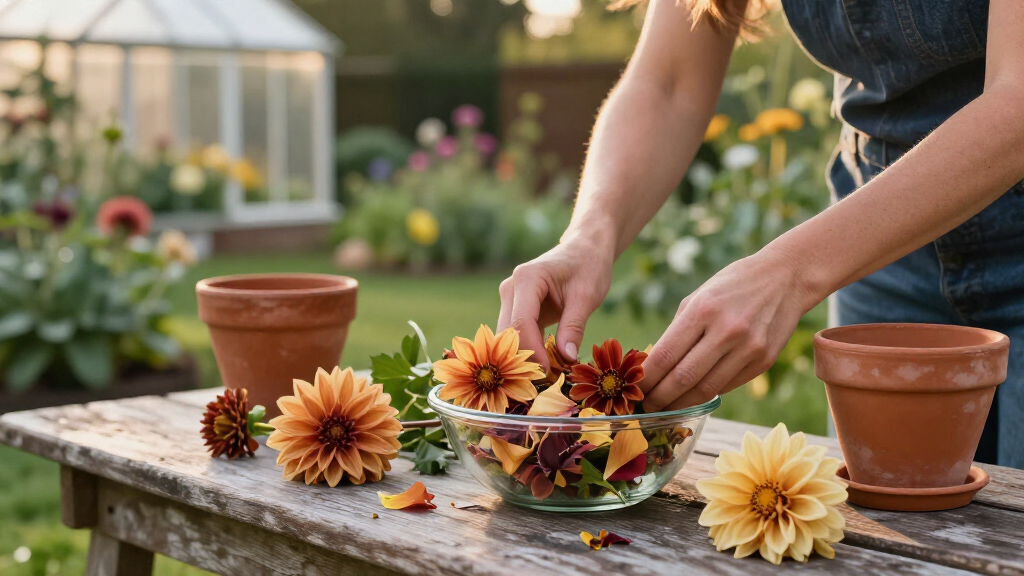
The report names several plants that can contribute different shapes and textures. Scabiosa seed heads and coneflower cones can remain visually distinctive after flowering; dried alliums and airy ornamental grasses add structure. Faded hydrangeas may take on muted green, mauve and brown tones, while spent dahlias and roses can bring darker colors to an arrangement. These are examples from the report, not a guarantee that every plant will look the same in every garden.
For the palette, Gardening Know How recommends deep reds, burgundies, browns and muted greens, rather than relying only on orange and black. A black taper candle or a small decorative accent can finish the display. The central idea is to inspect the garden before seasonal cleanup and select suitable material, instead of growing flowers specifically for Halloween.
A Second Use for Late-Season Blooms
The idea offers gardeners a practical way to make use of plants that might otherwise be cut back and discarded. Faded does not always mean unusable: dried flowers and seed heads can provide shape, color and texture for indoor décor. That can also make a seasonal arrangement feel connected to the garden rather than assembled entirely from store-bought ornaments.
There is a trade-off to keep in mind. The report says some seed heads can provide food and shelter for wildlife and add structure to winter borders. Taking stems indoors or cutting them back may remove some of that benefit. Gardeners can choose a few stems for an arrangement and leave others standing, while following care needs for the plants they grow.
dried flower Halloween decorations
As an affiliate, we earn on qualifying purchases.
As an affiliate, we earn on qualifying purchases.
How the Garden Supplies the Display
Late-season gardens change as petals fall and seed heads develop. Gardening Know How frames that change as the basis for Stewart’s Halloween styling, rather than treating the end of flowering as a signal that every plant must immediately be removed. The report says Stewart has also used dried pods and rose hips in seasonal arrangements.
The source gives decorating suggestions, not a detailed tutorial or a full account of the specific plants and steps used to create Stewart’s pictured display. It mentions a commercially available skull planter as another way to introduce a skeletal motif, but the arrangement’s defining feature is its use of naturally aged garden materials.
“The idea is less about finding a perfect black flower and more about bringing together unusual shapes and textures.”
— Gardening Know How
Details the Report Does Not Specify
The source does not state when Stewart created or shared the display, where it was exhibited, or whether the arrangement was made from plants grown in her own garden. It also does not provide a complete plant list, instructions for assembling the display, or information about how long the stems last indoors.
Plant care varies by species and local conditions. The report’s decorating suggestions should not be taken to mean that all seed heads should be left standing or that every plant benefits from avoiding deadheading. Gardeners may need to check the needs of individual plants and consider local wildlife and seasonal conditions before cutting material.
What Gardeners Can Do Now
Readers interested in the look can inspect their gardens for interesting dried stems, seed heads and muted blooms before tidying beds. They can bring a limited selection indoors and leave other seed heads in place for winter structure or wildlife. No follow-up event or further update is identified in the source; the report functions as seasonal decorating guidance rather than an announcement of a scheduled project.
Key Questions
What is Martha Stewart’s Halloween flower trick?
Gardening Know How describes a display that uses fading flowers, dried seed heads and grasses to create seasonal décor, with a few skeletal details.
Which garden plants does the report suggest using?
It mentions scabiosa, coneflowers, alliums, ornamental grasses, hydrangeas, dahlias and roses. The appearance of each plant depends on its condition and growing environment.
Do gardeners need to buy special flowers for the display?
No. The report’s approach is to look for suitable material already in the garden, including spent blooms and dried stems, rather than growing something specifically for Halloween.
Should all seed heads be left in the garden?
No. The report notes that some seed heads can support wildlife and add winter structure, but plant care varies. Gardeners should check the needs of individual plants and decide which stems to leave or cut.
Source: rss
Halloween Picks
halloween
As an affiliate, we earn on qualifying purchases.