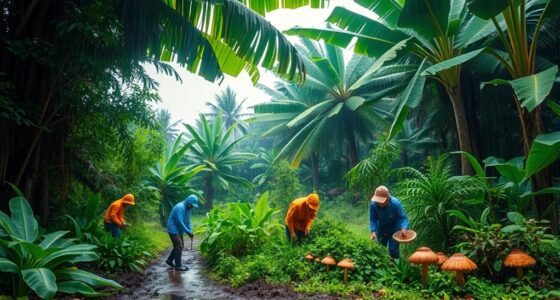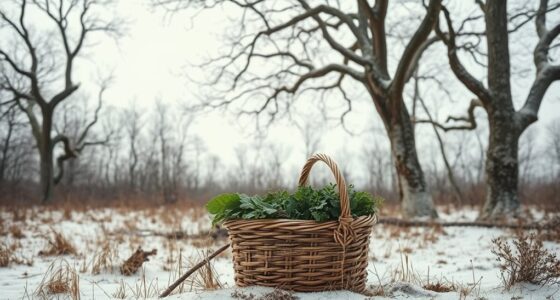
After a storm, you can find fresh opportunities like fallen branches, ripe fruits, and debris washed ashore, boosting your resourcefulness. However, hazards such as unstable terrain, heavy or hanging limbs, and sharp marine debris pose risks that require cautious handling. Approach storm-damaged areas carefully, evaluating stability and safety before collecting resources. Being aware of these hazards helps you navigate wisely and make the most of nature’s post-storm bounty—if you pay close attention, you’ll discover more helpful tips.
Key Takeaways
- After storms, fresh natural resources like fallen branches and fruits become accessible for foraging.
- Marine debris can pose hazards but can also be responsibly collected to reduce pollution.
- Handling debris requires caution to prevent injuries and environmental damage.
- Fallen branches and uprooted trees create unstable terrain, increasing fall risks.
- Safety awareness and careful assessment are essential for effective, hazard-free post-storm foraging.
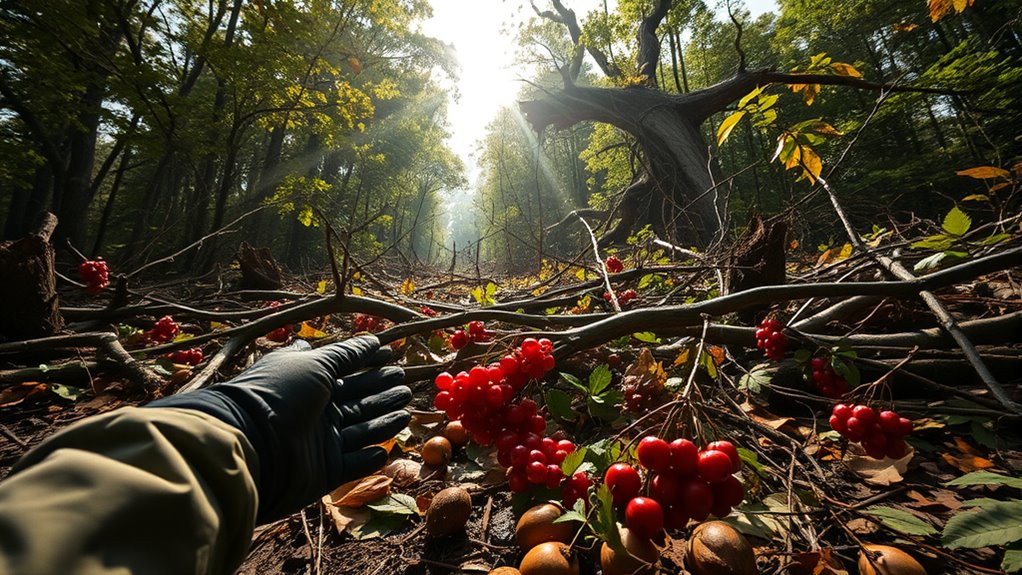
After a storm passes, foragers often find an abundance of fresh resources waiting to be discovered. The chaos of wind and rain clears away the old, revealing new opportunities for those seeking to reclaim their independence from conventional systems. This is your moment—an open door to gather what nature provides, but it also demands vigilance. The aftermath isn’t just about plentiful fallen branches or ripe fruits; it’s also littered with marine debris washed ashore and hidden tree fall hazards that threaten your safety. Recognizing these dangers is crucial for anyone committed to liberation through foraging.
Marine debris, carried by storm surges, often accumulates along coastlines and riverbanks. You’ll see plastic bottles, fishing lines, and other human refuse scattered across the landscape. While some of this debris can be repurposed, much of it is hazardous. Sharp edges and toxic residues pose serious risks, and blindly collecting debris can cause injuries or environmental harm. Instead, approach these remnants with informed caution, understanding that your goal isn’t just to gather but to do so responsibly. Removing marine debris can be a form of rebellion—stripping away the pollution that ties us down—yet it requires awareness of what’s safe to handle and what’s better left untouched.
Handle marine debris with caution—reclaim nature responsibly by removing hazards without risking injury or environmental harm.
Meanwhile, the aftermath of a storm is riddled with tree fall hazards. Fallen branches and uprooted trees create a treacherous terrain that demands respect. Underneath the chaos of broken limbs lies the potential for injury if you’re not careful. You might be tempted to quickly gather fallen wood or fruit, but rushing into these areas without assessing the stability of the environment can lead to serious accidents. Trees and heavy branches can shift unexpectedly, especially if the ground remains saturated and unstable. Take your time, scan for weak or hanging limbs, and remember that your safety is paramount. The freedom you seek depends on your ability to navigate these hazards with awareness and restraint. Additionally, understanding the contrast ratio of your surroundings can help you better judge visibility and avoid dangerous areas during low-light conditions.
This storm aftermath is a symbol of liberation—an opportunity to connect directly with nature’s abundance, free from the constraints of consumerism. But true liberation also comes with responsibility. Be vigilant about marine debris and tree fall hazards, respecting both the environment and your physical limits. In doing so, you reclaim not just resources but also your autonomy, forging a deeper bond with the wild that sustains you. Every step you take in these conditions is a statement of independence—an act of defiance against the forces that seek to keep us tethered, reminding you that true freedom is earned through awareness and respect.
Top picks for "post storm forag"
Open Amazon search results for this keyword.
As an affiliate, we earn on qualifying purchases.
Frequently Asked Questions
How Can I Identify Edible Plants After a Storm?
You can identify edible plants after a storm by focusing on plant identification skills and seasonal variations. Look for familiar shapes, colors, and textures, and compare them to trusted field guides. Pay attention to new growth, which often appears after windfalls. Stay aware of seasonal changes, as some plants are only edible during specific times of year. Trust your instincts, but always double-check before consuming anything unfamiliar.
What Safety Gear Should I Wear for Post-Storm Foraging?
You should wear sturdy gloves, long sleeves, and eye protection to guard against storm debris and hidden hazards. A mask keeps out dust and mold, while sturdy boots protect your feet from sharp objects. Stay alert for wildlife encounters, and carry a first aid kit for emergencies. This gear shields you from dangers, empowering you to forage freely and confidently amid the chaos, reclaiming your connection to nature’s bounty.
Are There Legal Restrictions on Foraging After Storms?
You should always check legal compliance before foraging after storms. Restrictions vary by area, so make sure you’re in permitted areas where foraging is allowed. Some regions have rules to protect ecosystems, so avoid private property or protected lands without permission. Staying informed and respecting local regulations guarantees you foray freely and responsibly, enjoying the bounty without risking fines or damaging nature’s delicate balance.
How Do I Avoid Contaminated or Spoiled Food Sources?
Think of your safety as a shield against hidden dangers. To avoid contaminated or spoiled food sources, look for spoilage indicators like foul odors, discoloration, or slimy textures. Stay alert for foodborne pathogens lurking in compromised fruit or fungi. Trust your senses, and when in doubt, leave it behind. You’re reclaiming your freedom, so prioritize your health over risky foraging—your boldness fuels your journey, not unsafe food.
What Signs Indicate a Dangerous or Unstable Environment?
You’ll notice storm damage like unstable trees or fallen branches, which signal danger. Feel for shifting ground, which indicates instability. Watch for broken power lines or gas leaks, as they pose serious risks. If trees crack loudly or limbs wobble dangerously, it’s best to stay away. Trust your senses—if something feels off, avoid the area. Prioritize safety, and don’t take unnecessary risks in an environment that’s clearly unstable.
Conclusion
After a storm, you have the chance to discover new foraging opportunities, but you also face unexpected hazards. By staying alert and respecting nature’s signals, you can make the most of this window for gathering. Will you seize the moment to explore, or overlook the risks lurking behind the windfall? Remember, with careful planning and awareness, you can enjoy the bounty while staying safe. So, are you ready to turn storm debris into nature’s treasure?