TL;DR

Get garden gear delivered free with Prime
- Fast, free delivery on millions of items
- Prime Video, Amazon Music and more included
- Member-only deals all year
A dormant amaryllis bulb may take weeks to flower, so buyers planning a December display should check the supplier’s timing and the bulb’s current growth stage. A plant with a developed bud is a more practical choice for an imminent event, but no stage guarantees a particular bloom date.
Shoppers hoping for amaryllis flowers in December should match the bulb’s growth stage to the date they need it, according to a seasonal report from Planet Natural. A dormant kit can take several weeks to flower, while a plant with a substantial bud is a more practical choice for an event that is close, though no bulb guarantees a specific bloom day.
The report distinguishes among dormant boxed bulbs, pre-started potted bulbs and budded plants. A dormant bulb offers the experience of growing the plant from an earlier stage, but gives buyers the least immediate indication of when flowers will open. For a near-term centerpiece, the report recommends looking for a plant with a substantial flower bud and an upright, undamaged stalk. An opening flower offers a clearer picture of the display but may have less time remaining before it fades.
Package timing is a planning aid, not a date reservation. Iowa State guidance cited in the report gives examples of some cultivars commonly supplied from South Africa flowering about three to five weeks after potting, while many Dutch-produced cultivars take roughly six to eight weeks. The report cautions that these examples reflect different production schedules, not a dependable rule based on where a bulb was grown. Buyers should use the range stated for the particular bulb and check what growth stage that estimate assumes.
As an illustration, a bulb labeled for six to eight weeks from planting would suggest planting around October 10–24 for a December 5 event, or October 30–November 13 for December 25. Those dates are approximate calculations, not a promise. The report says room temperature, differences among bulbs, shipping delays and the starting stage can all shift flowering. If the suggested window has passed, it advises choosing a genuinely started plant or a budded specimen rather than expecting a dormant bulb to catch up.
Match the Bulb to the Occasion
The distinction matters because a holiday purchase can have two different goals: flowers on a particular date or a bulb the recipient can grow over winter. A dormant kit given in December may still be a suitable gift if the expectation is to watch it develop in January. It is a poorer fit when the flowers are meant to serve as a centerpiece for a dinner only days away. Making that expectation clear can prevent a living plant from being judged against a schedule the seller never guaranteed.
For event planners, the practical choice is to buy early enough to use the full timing range printed on the package. If the event is close, visible development matters more than the promise on a generic box: leaves alone do not show that an open flower is imminent, and even a tight flower bud still needs time to develop. Where flowers are essential to a gathering, the report recommends keeping a backup plan because timing estimates can vary.
The guidance also discourages trying to force a purchased holiday bulb onto a borrowed schedule. Retail bulbs intended for indoor flowering have generally already received preparatory treatment, according to the report. Refrigerating a newly purchased kit or restarting its rest period is not a reliable way to advance a December deadline.
amaryllis bulb kit dormant with pot and growing medium
As an affiliate, we earn on qualifying purchases.
As an affiliate, we earn on qualifying purchases.
Why Holiday Bulbs Flower on Different Schedules
The plant sold as an indoor holiday amaryllis is usually a Hippeastrum hybrid, rather than the South African plant botanically called Amaryllis. Its flowering schedule can reflect cultivar, supplier preparation, current growth stage and conditions inside the home. That combination is why a single countdown cannot reliably describe every bulb in a store.
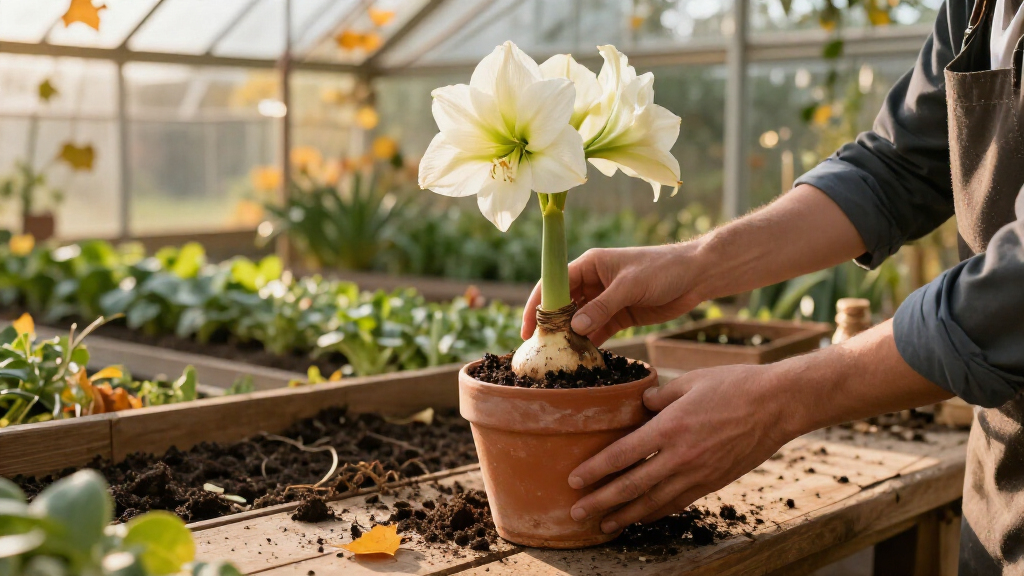
For a rooted bulb, the report recommends a stable pot with drainage holes, roughly an inch or two wider than the bulb, and fresh, well-drained potting mix. Leave about the upper third to half of the bulb above the mix; water after planting and let excess drain. Keep watering restrained while growth is just starting, then provide bright light as it develops. A warm location around 70–75°F supports initial growth, but the pot should not sit in water or directly beside a heating register or cold windowpane. Turn it periodically if the stalk leans toward the light.
Once a tall stalk becomes top-heavy, support it with a stake placed at the pot’s edge, avoiding the bulb, and a loose tie. After flowers open, a cooler display position with bright indirect light may help them last. Waxed bulbs are a separate product: they are sold to flower using stored reserves without soil or routine watering, so buyers should follow the product label rather than treat the coating like a conventional planted bulb.
Bloom Dates Remain Estimates
The source provides general timing ranges and an illustrative calendar calculation, not a guarantee for any specific cultivar or retail bulb. It does not identify the exact varieties, suppliers or preparation dates of bulbs currently available in stores, nor establish how long a particular shipment or home environment may delay flowering. A package range may also depend on whether the count starts at purchase, potting or another stage; buyers should check the wording on the individual label.
It is also not possible to tell from the report whether any particular bulb will flower in time for a specific December event. A plant showing a bud gives a more immediate indication of development than a dormant kit, but the bud still has to open and flowers eventually fade. The report does not provide a day-specific guarantee for either choice.
Check the Label Before Buying
Before purchasing, compare the occasion date with the supplier’s stated planting-to-flowering range, and ask when a pre-started plant was started if that information is available. Inspect the bulb for firmness and signs of mold or soft spots; on potted specimens, check whether visible growth is a flower stalk or leaves. For a close event, favor a healthy plant with a substantial bud and keep an alternative display option if flowers are essential.
After bringing a rooted bulb home, follow its package instructions, use a draining pot and adjust watering to how quickly the mix dries. Continue to watch the stalk as it grows and add support before it becomes top-heavy. For waxed bulbs, follow the separate label directions. The actual bloom date will become clearer as the plant develops, but the source’s central advice remains to plan around the bulb’s stage and stated range rather than assume a calendar promise.
Key Questions
How long does an amaryllis take to flower?
It depends on the cultivar and its starting stage. The Iowa State guidance cited by Planet Natural gives examples of about three to five weeks after potting for some cultivars and roughly six to eight weeks for many others. These are examples, not guarantees for every bulb.
Which bulb should I buy for a December event?
For an event that is close, look for a healthy plant with a substantial flower bud rather than a dormant kit. A budded plant is a more practical choice for a near-term display, but it still does not promise flowers on a particular day.
Can I make a dormant bulb flower sooner by refrigerating it?
The report advises against applying a tulip-forcing schedule to a newly purchased holiday amaryllis kit. Retail bulbs intended for indoor flowering have generally already received preparatory treatment; follow the supplier’s directions instead.
How should I pot a conventional amaryllis bulb?
Use a stable pot with drainage, roughly an inch or two wider than the bulb, and well-drained mix. Leave about the upper third to half of the bulb above the surface, water after planting and let excess water drain away.
Do waxed amaryllis bulbs need watering?
Waxed bulbs are sold to flower from stored reserves without soil or routine watering. Follow the product label and do not treat the wax-coated bulb like a conventional rooted bulb in a draining pot.
Source: rss
Halloween Picks
halloween
As an affiliate, we earn on qualifying purchases.