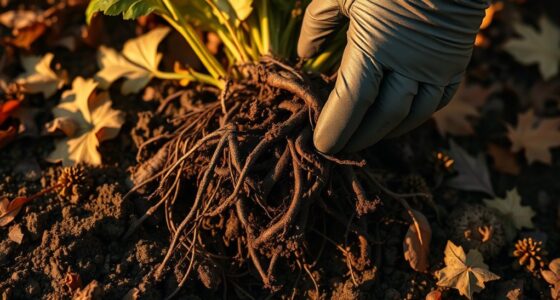
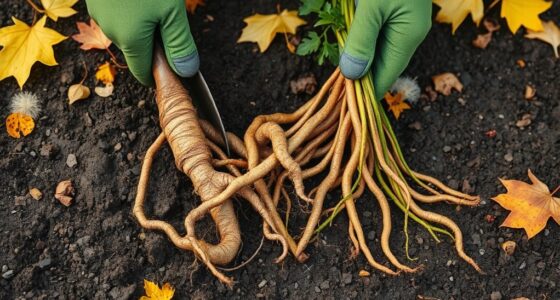
In winter, shoreline foraging becomes easier and safer as cold weather reveals abundant seaweed and shells. Focus on harvesting hearty kelp and resilient wracks carefully by cutting or tearing holdfasts to encourage regrowth, and handle shells delicately to avoid cuts. Keep an eye on natural cues like tide receding signs or environmental signals to optimize your gathering. If you want to grasp practical tips for safe, sustainable harvesting, there’s more to discover below.
Key Takeaways
- Winter offers abundant, less slippery seaweed, making collection safer with proper cutting techniques to promote regrowth.
- Receding tides reveal shells and mollusks, but only collect empty, washed shells to maintain ecological balance.
- Use sharp tools like scissors or knives to gently harvest seaweed and avoid damaging the holdfasts for sustainability.
- Recognize environmental cues and natural signs to determine optimal harvesting times and ensure safety during foraging.
- Be mindful of seasonal changes, storm activity, and frost to reduce risks while collecting shells and seaweed in winter.
Even in the cold depths of winter, the shoreline offers a surprising bounty for foragers willing to brave the chill. As you step onto the frosty sand, you realize that the sea’s offerings are more abundant than they seem. With the right harvesting techniques, you can gather seaweed, shells, and other treasures that nourish both body and spirit. This season’s seasonal variations mean that not everything is available year-round. Instead, you learn to read the cues of nature, understanding when certain species thrive and are easiest to harvest. For example, winter brings an abundance of hearty kelp and wracks, which are resilient to the cold and abundant during this time.
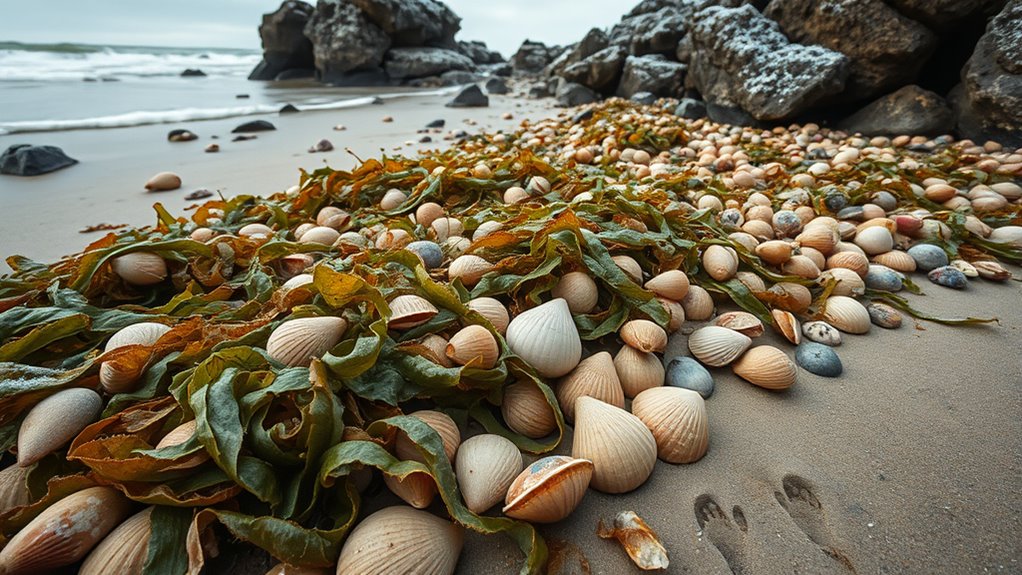
Your first step is mastering harvesting techniques that respect the environment and maximize your yield. When collecting seaweed, gently cut or tear the holdfasts, avoiding damage to the base so it can regrow. Use scissors or knives to make clean cuts, steering clear of pulling or tearing, which can harm the plant and reduce future harvests. Seasonal variations influence which species are accessible and abundant; in winter, look for large, lush, dark green kelp and brown seaweeds along rocky shores. These are the most nutritious and easiest to harvest now, as they tend to be more plentiful and less slippery than in other seasons.
Shells are another winter treasure. As the tide recedes, you can spot clam, mussel, and oyster shells scattered across the sand and rocks. When collecting shells, handle them carefully to avoid cuts, and always prioritize sustainability. Pick shells that are empty and washed clean, leaving behind those still inhabited or damaged, so you don’t disrupt the natural balance. Seasonal variations also affect shell availability; winter can bring an influx of certain mollusks, especially after storms that stir up the seabed, making them easier to find. Recognizing that prophetic dreams often involve symbols from nature can help foragers interpret signs from the environment, guiding when and where to harvest.
Frequently Asked Questions
What Are the Best Tools for Winter Sea Foraging?
You need a sturdy, sharp knife for harvesting seaweed and shells, making collection easier and safer. A mesh bag helps with seaweed drying, preventing moisture buildup, while a small trowel or shell scoop improves shell collection techniques. Don’t forget gloves to protect your hands from cold and sharp shells. These tools give you the freedom to forage efficiently, enjoying the winter shoreline while ensuring your safety and successful harvests.
How Do I Identify Edible Versus Toxic Seaweed?
Seaweed identification is your ultimate key to freedom at the shoreline. To distinguish toxic versus edible seaweed, learn to spot color, texture, and growth patterns—edible varieties are often bright green or brown, with smooth or leafy textures. Avoid seaweed with slimy coatings, unusual odors, or bright colors like orange or red. Trust your instincts, stay informed, and always double-check with reputable guides—your liberation from confusion begins with confident identification.
Are There Legal Restrictions on Sea Foraging in Winter?
You should check local regulations compliance before foraging in winter, as some areas have seasonal permits required or restrictions on seaweed collection. Laws vary depending on the region, and ignoring them could lead to fines or environmental harm. Embrace the freedom of foraging, but do so responsibly—research the rules beforehand to enjoy your winter sea adventures legally and sustainably.
How Can I Prevent Injuries While Foraging in Icy Conditions?
You must prioritize ice safety and slip prevention to avoid injuries. Wear sturdy, slip-resistant boots and walk slowly, testing ice thickness as you go. Keep your hands free for balance and carry a walking stick for extra stability. Stay alert, avoid thin or cracking ice, and never forage alone. By taking these precautions, you can confidently explore icy shores and enjoy the thrill of winter foraging.
What Are Sustainable Practices for Winter Sea Harvesting?
You can practice sustainable winter sea harvesting by following seasonal harvesting guidelines, ensuring you don’t overexploit marine resources. Respect marine conservation practices by avoiding protected areas and taking only what you need. Use gentle techniques to minimize habitat disturbance, and leave plenty for wildlife and future foragers. By embracing these practices, you empower yourself to forage responsibly while preserving the ocean’s bounty for others to enjoy and explore freely.
Conclusion
As you explore the winter shoreline, remember that over 1,700 species of seaweed thrive in these chilly waters, offering nutritious and sustainable bounty. With careful foraging, you can enjoy fresh, wild harvests even in colder months. Just stay mindful of tides and safety tips to protect yourself and the environment. Embrace the winter sea’s hidden treasures—it’s a unique adventure that rewards both your curiosity and your plate. Happy foraging!