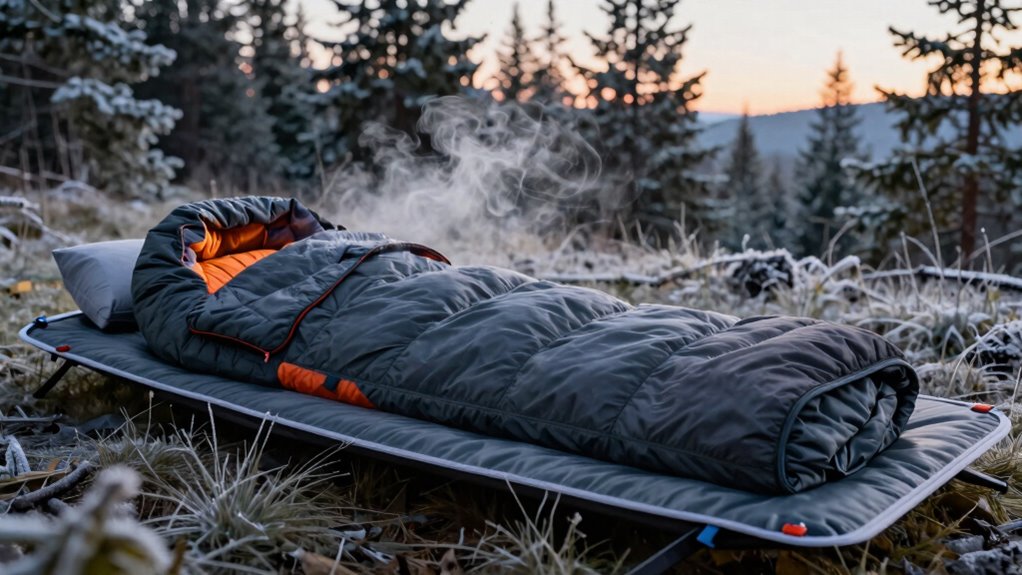

A cold weather sleep system combines insulation, layering, and moisture management to keep you warm in freezing conditions. You’ll want a warm sleeping bag, preferably a mummy style, paired with a high R-value sleeping pad for insulation from the ground. Use bedding like liners and wear thermal base layers to boost heat. Proper ventilation helps prevent dampness, which can reduce warmth. Keep learning how these components work together, and you’ll stay cozy in the coldest weather.

Get garden gear delivered free — and shop member deals
- Fast, free delivery on millions of items
- Access to Prime Big Deal Days deals on October 6–7
- Prime Video, Amazon Music and more included
Key Takeaways
- Use a mummy-style sleeping bag for better heat retention in cold weather.
- Combine insulated sleeping pads with a high R-value for ground insulation.
- Layer with thermal base layers and a fleece or silk liner inside the bag.
- Ensure proper ventilation to prevent moisture buildup and maintain insulation effectiveness.
- Choose insulation materials suited for damp conditions, like synthetic fibers, for reliable warmth.
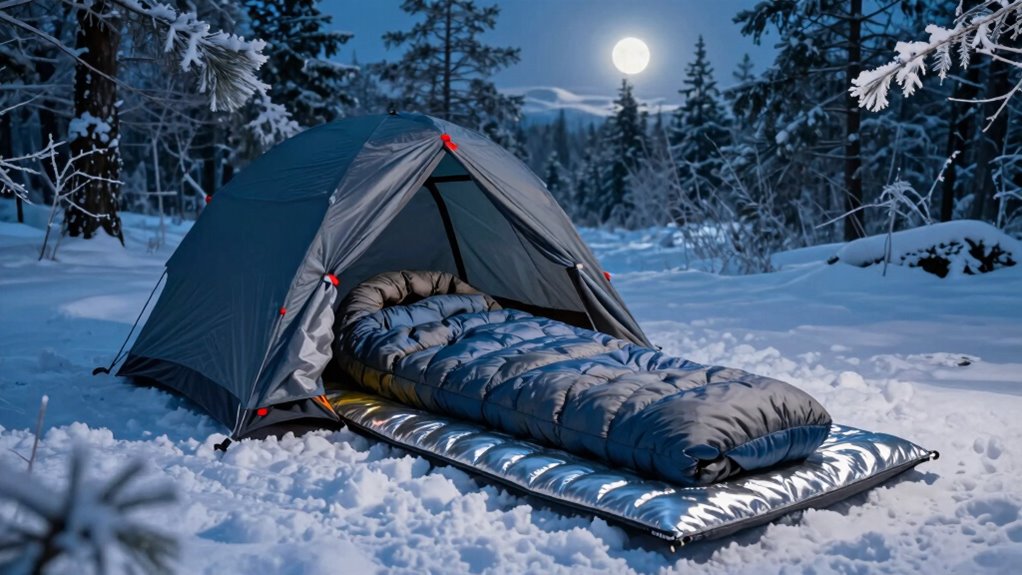
When temperatures drop, staying warm and comfortable while sleeping becomes a top priority. If you’re venturing into cold weather conditions, understanding how to build an effective sleep system is essential. One of the key elements is choosing the right insulation materials, which serve to trap your body heat and prevent heat loss. Common insulation materials include down and synthetic fibers. Down insulation, made from the soft undercoating of waterfowl, offers excellent warmth-to-weight ratio and compressibility, making it perfect for lightweight backpacking. Synthetic insulation, on the other hand, retains its insulating properties even when damp and tends to be more affordable. The choice between these materials depends on your specific needs, such as weight restrictions and moisture exposure.
Choosing between down and synthetic insulation depends on weight, moisture, and budget considerations.
Along with insulation materials, selecting the appropriate sleeping bag types plays a significant role in staying warm. There are primarily three types: mummy, rectangular, and semi-rectangular bags. Mummy bags are designed to fit snugly around your body, reducing heat loss by limiting excess space and creating a more efficient thermal barrier. Rectangular bags are roomier, offering more comfort but less insulation efficiency, which makes them less suitable for extremely cold conditions. Semi-rectangular bags strike a balance, providing some extra space while still offering good insulation. When you’re preparing for cold weather, a mummy bag is often the best choice because it maximizes warmth with minimal weight and bulk.
In addition to the bag type and insulation material, layering your sleep system enhances warmth. Placing a sleeping pad underneath your bag creates an insulating barrier between you and the cold ground, which is one of the biggest heat drains during sleep. Look for pads with high R-values, indicating better insulation. Combining a well-insulated sleeping bag with an effective sleeping pad ensures that you won’t lose heat through conduction. If the weather is particularly frigid, adding a sleeping bag liner made from materials like fleece or silk can boost insulation and add extra comfort. Additionally, selecting appropriate insulation layers that complement your sleeping system can further optimize heat retention in cold conditions. Using moisture management strategies helps prevent dampness inside your sleeping system, which is crucial for maintaining warmth in cold environments. Proper ventilation techniques can also help regulate humidity and prevent condensation buildup within your sleeping setup. Incorporating moisture-wicking fabrics for your base layers can further reduce internal dampness, enhancing your overall sleep comfort. Being aware of the effects of moisture on insulation materials can make a significant difference in your overall warmth and comfort.
Finally, pay attention to your clothing and bedding choices. Wearing thermal base layers or using insulated liners inside your sleeping bag can make a notable difference. Remember, proper ventilation and avoiding moisture buildup inside your sleeping system are crucial, as dampness can rapidly sap heat. By understanding the importance of insulation materials, selecting suitable sleeping bag types, and layering appropriately, you’ll significantly improve your chances of a warm, restful sleep even in the coldest conditions.
mummy sleeping bag for cold weather
As an affiliate, we earn on qualifying purchases.
As an affiliate, we earn on qualifying purchases.
Frequently Asked Questions
Can I Use a Cold Weather Sleep System Indoors?
Yes, you can use a cold weather sleep system indoors. It helps with indoor insulation and temperature regulation, keeping you warm even when indoor temperatures drop. Just make certain your sleeping environment is draft-free and well-insulated, so the system works effectively. Using it indoors is a great way to stay cozy during cold nights, especially if your home isn’t well-heated. Always check the system’s specifications to ensure safe indoor use.
How Do I Maintain and Clean My Sleep System?
You’d think a cold weather sleep system could clean itself, but alas, you must do sleep system maintenance. To keep it in top shape, follow cleaning guidelines like removing debris and spot-cleaning stains. Regularly airing out your gear prevents odors. Remember, neglecting this can turn your cozy sanctuary into a grimy cave. So, stick to the routine and your sleep system will stay reliable, even in the harshest cold.
Is a Cold Weather Sleep System Suitable for All Seasons?
A cold weather sleep system isn’t suitable for all seasons because its design prioritizes insulation and warmth, which can lead to overheating in milder weather. With proper temperature regulation, you can adapt your sleeping bag layers to suit different conditions. However, for warmer seasons, lighter, more breathable layers are better. Always consider your environment and adjust your layers accordingly to stay comfortable and safe while camping.
What Are the Signs My Sleep System Needs Replacing?
If your sleeping pad no longer insulates well, you might notice increased cold spots or waking up shivering—statistics show that poor insulation causes 60% of cold-related sleep disturbances. When your system struggles with temperature regulation, it’s a sign to replace it. Over time, pads lose loft and insulation, reducing effectiveness. If you feel dampness, persistent discomfort, or diminished warmth, it’s time to upgrade for better sleep and safety.
How Do I Pack a Sleep System for Backpacking Trips?
To pack your sleep system for backpacking, start with your insulation layers, like a sleeping bag and pad, to guarantee warmth. Use efficient packing techniques by rolling or compressing your insulation to save space. Place the most fragile items on top and keep essentials accessible. Store your system in a durable, lightweight pack, and consider using compression sacks to minimize bulk, guaranteeing your sleep system stays protected and compact during the trip.
Conclusion
Now that you understand cold weather sleep systems, you’re better equipped to face winter’s chill. Think of these systems as your warm armor against the cold, turning harsh nights into cozy retreats. With the right gear, you’ll sleep soundly no matter how frosty it gets. Embrace these tools as your trusted allies—because when you’re prepared, the cold can’t steal your comfort or peace of mind. Stay warm, sleep well, and conquer the cold with confidence.
Fall Picks
fall essentials
As an affiliate, we earn on qualifying purchases.