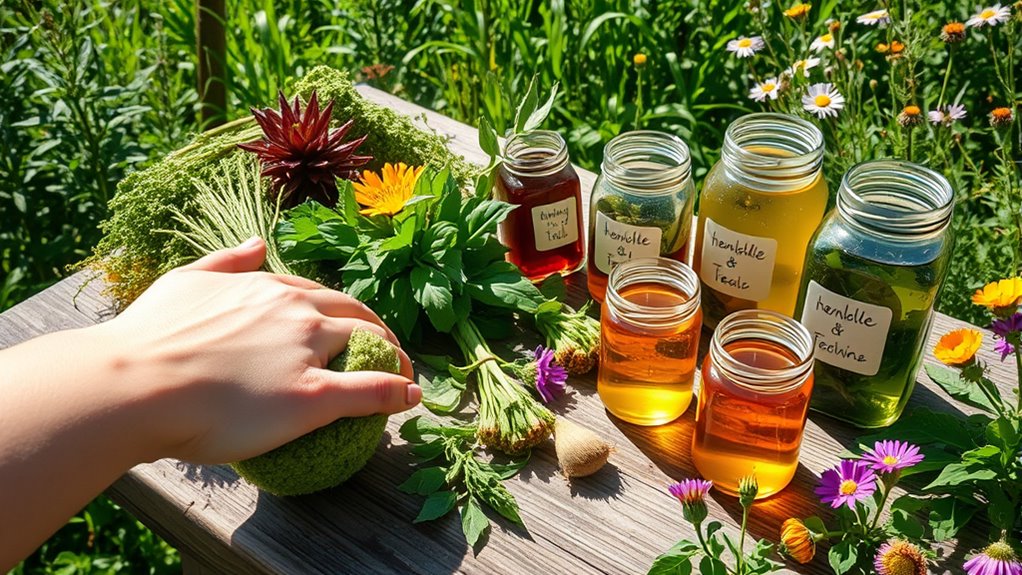
In the field, you can create effective first-aid remedies from wild plants by making poultices, teas, and tinctures. Use fresh or dried plants like plantain for soothing poultices on cuts and bites, steep herbs such as chamomile or yarrow into teas to ease discomfort, and prepare tinctures from echinacea or calendula for long-lasting treatment. Knowing how to identify and prepare these remedies allows you to respond quickly and naturally. Keep going to learn more about powerful plant-based solutions.
Key Takeaways
- Proper plant identification is essential for safe, effective herbal poultices, teas, and tinctures in wilderness first aid.
- Plantain leaves can be crushed into poultices to soothe bites, cuts, and inflammation.
- Herbal teas made from chamomile or yarrow help manage internal and external discomfort.
- Tinctures of plants like echinacea and calendula provide concentrated remedies for immune support and healing.
- Responsible harvesting and preparation maximize safety, sustainability, and healing benefits in field first-aid situations.

When you’re outdoors and encounter unexpected injuries or irritations, plants can often provide quick, effective first aid. Nature’s pharmacy is right at your fingertips, ready to deliver herbal remedies that can soothe, heal, and empower you to take control of your well-being. The key is plant identification—knowing which plants to trust and how to prepare them safely. With a little knowledge, you can turn common wild plants into potent poultices, teas, and tinctures that support healing in the moment.
Start by learning to identify plants known for their medicinal properties. For example, plantain leaves are easy to recognize and versatile. They’re flat, broad, and grow close to the ground. When you crush them, they release a slightly mucilaginous juice that’s excellent for reducing inflammation and soothing bites or cuts. By correctly identifying plantain, you can harvest it responsibly and prepare an herbal remedy on the spot. Simply crush fresh leaves and apply them directly to the injury as a poultice. This can lessen swelling, draw out toxins, and promote faster healing.
Herbal remedies don’t stop at poultices. You can also make teas from plants like chamomile or yarrow to soothe internal discomfort or boost your immune response. To prepare a tea, gather fresh or dried plant material, steep it in boiling water, then strain. Sipping this herbal infusion can help manage inflammation, reduce pain, or calm nerves after a tense encounter with a prickly plant or insect bite. The beauty of herbal teas is their simplicity and effectiveness—they’re a natural way to support your body’s defenses and recovery.
Tinctures, on the other hand, are concentrated herbal extracts made by soaking plant material in alcohol or glycerin. They’re particularly useful because they store well and can be used in small doses as needed. For example, a tincture of echinacea can boost your immune system if you’re feeling run down, while a tincture of calendula can be applied externally to cuts or burns to promote healing. Making tinctures requires more preparation and proper plant identification to ensure safety, but once made, they’re a powerful addition to your first-aid toolkit.
In the wild, mastering plant identification and understanding herbal remedies transforms you from a helpless victim of nature’s surprises into a confident, liberated forager. You’re not just reacting to injuries—you’re harnessing the healing power of plants, turning the wilderness into your personal pharmacy. This knowledge grants independence and resilience, allowing you to respond swiftly and effectively when nature throws its surprises your way. Proper identification of medicinal plants is essential to ensure safety and efficacy in herbal first aid.
Frequently Asked Questions
How Do I Identify Edible Versus Toxic Plants in the Wild?
To identify edible versus toxic plants in the wild, focus on plant identification skills and observe key features like leaf shape, color, and flowers. Always verify with trusted guides or local experts, as many plants look similar but differ vastly in safety. Don’t assume; if unsure, avoid consuming. Your knowledge can set you free—trust your observations and always err on the side of caution when distinguishing between toxic and edible plants.
What Precautions Should I Take When Harvesting Medicinal Plants?
When harvesting medicinal plants, always prioritize safety gear like gloves, scissors, and a field guide. You should also double-check plant identification, harvest sustainably, and avoid contaminated areas. Be mindful of local regulations and never take more than you need. By respecting nature and following these precautions, you empower yourself to safely gather healing plants while preserving the environment for future foragers.
Are There Any Allergies Associated With Plant-Based Remedies?
Yes, plant-based remedies can cause allergy symptoms if you have plant sensitivities. Imagine your body fighting a tiny, unwelcome invader — that’s what allergy symptoms feel like. Some plants may trigger reactions like skin irritation, swelling, or respiratory issues. To stay safe and free, always test a small amount first, and know your allergies. Your body’s liberation depends on respecting these sensitivities and staying vigilant.
How Long Do Homemade Poultices and Tinctures Last?
Homemade poultices typically last about 24 hours if refrigerated and kept in an airtight container, but it’s best to prepare fresh ones daily for maximum effectiveness. Tinctures can last up to 2-3 years if stored in dark glass bottles away from light and heat. Follow proper storage tips to extend their shelf life, ensuring your remedies stay potent and ready whenever you need them.
Can Plant-Based First Aid Replace Conventional Medical Treatment?
Plant safety and herbal efficacy can complement, but not fully replace, conventional medical treatment. You can harness plant-based first aid for minor injuries, soothing inflammation, or skin irritations, but serious conditions require professional care. Trust your intuition, respect plant potency, and recognize limits. Embrace the liberation of natural remedies, yet stay grounded in the understanding that some situations demand modern medicine for safe, effective healing.
Conclusion
When nature offers gentle remedies, it’s wise to keep a few trusted plant allies close. By understanding how to craft simple poultices, teas, and tinctures, you gently nurture your well-being without relying solely on modern comforts. Remember, these humble gifts from the earth can help you weather life’s little storms, guiding you toward balance and resilience. Embrace the quiet strength of plants—you might find that they hold just what you need, when you need it most.