To improvise fishing using plant fibers and thorn hooks, craft a strong line from braided bark, grass, or vines that can handle fish pulls. Create a hook by sharpening a thorn or plant spine, ensuring it’s barbed enough to snag but gentle for catch and release. Use natural bait like insects or small plants, and set your line or traps in water patiently. Continue exploring these methods to master sustainable, traditional fishing techniques rooted in resourcefulness.
Key Takeaways
- Use strong, braided plant fibers from bark, grass, or vines to craft biodegradable fishing lines.
- Create thorn hooks by sharpening branches or plant spines for effective snagging.
- Bait lines with natural foods like insects, small fish, or edible plants to attract fish.
- Set traps or baited lines in water, observing water movement and fish habits patiently.
- Prioritize sustainable materials and methods to minimize environmental impact and preserve ecosystems.
Throughout history, early communities relied on simple yet effective methods to catch fish, often using plant fibers and thorn hooks. These ancient fishing techniques weren’t just about survival—they embodied a sustainable crafting approach that respected nature’s balance. You have the power to reconnect with this primal ingenuity, to reclaim methods that foster freedom from modern reliance on technology and mass-produced gear. When you understand how these techniques work, you realize that fishing isn’t about expensive equipment; it’s about patience, skill, and harmony with your environment.
Reconnect with primal fishing skills—simple, sustainable, and free from modern gear—honoring nature’s balance and your independence.
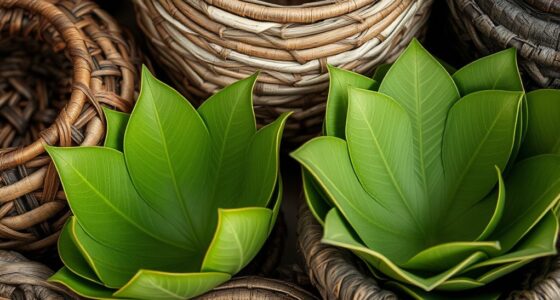
Imagine selecting a sturdy, flexible plant fiber—perhaps from bark, grass, or vines—that’s strong enough to withstand the pull of a fish. You braid or twist these fibers into a fishing line, knowing that this craft isn’t just functional but a conscious act of sustainability. Ancient fishing techniques emphasize using natural, biodegradable materials, minimizing environmental impact and ensuring the ecosystem remains healthy for future generations. This sustainable approach allows you to fish effectively without depleting resources or leaving behind harmful waste.
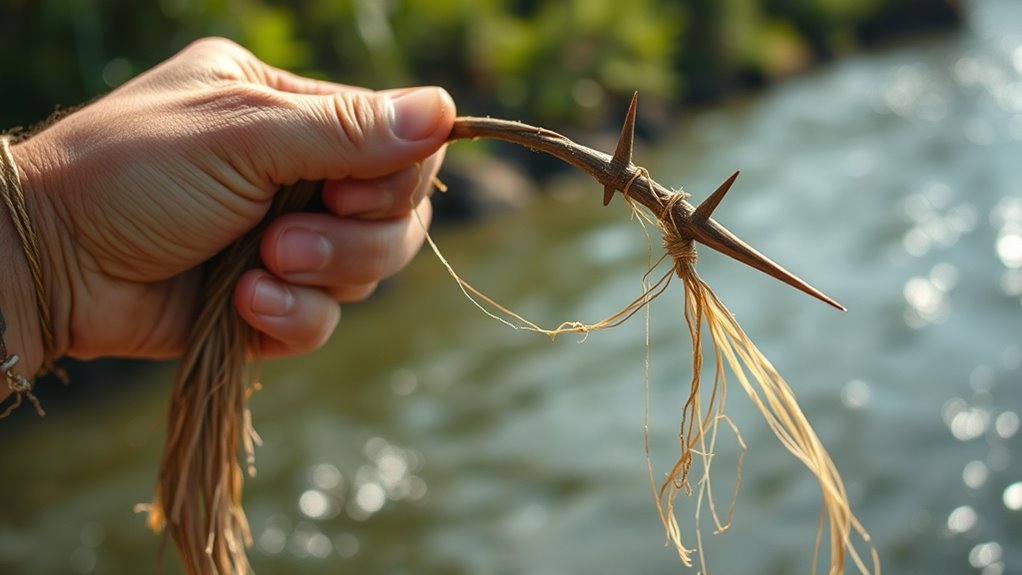
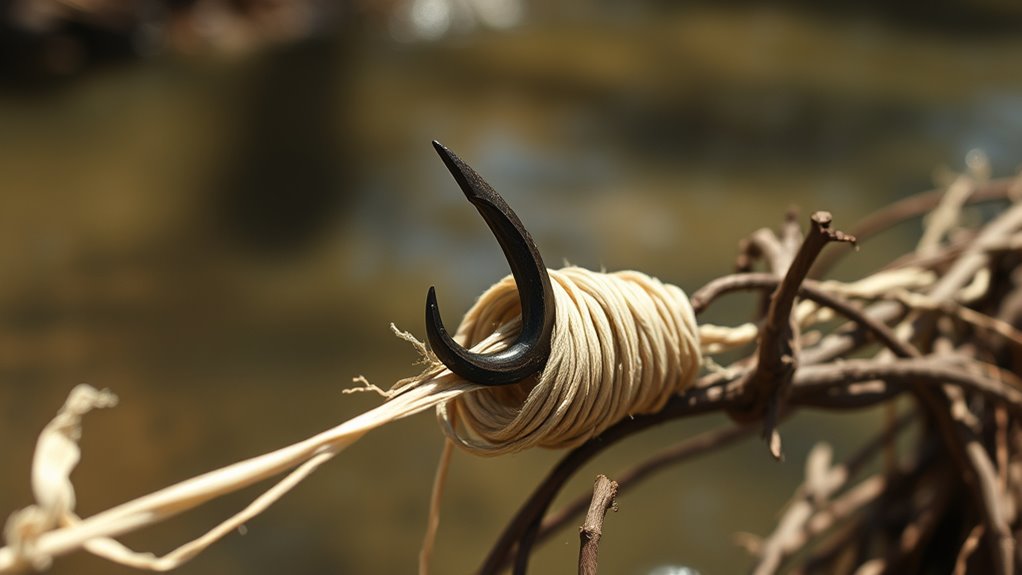
Next, consider the thorn hooks—sharp, simple tools fashioned from thorny branches or spines from local plants. You carefully sharpen these thorns to create barbed hooks that can easily snag a fish but are gentle enough to release catch and release when needed. These hooks symbolize resilience and ingenuity, crafted from what nature offers freely. By mastering the art of making thorn hooks, you tap into a tradition that’s both empowering and liberating, proving that you don’t need modern gadgets to succeed.
Using these tools, you set your trap or bait your line with natural foods—perhaps insects, small fish, or edible plants—mimicking the behavior of prey in the wild. Patience becomes your greatest ally, as you learn to read water movements and fish habits. Developing fishing skills enhances your ability to succeed with primitive tools and deepens your connection to nature. The act of fishing this way connects you deeply to the environment, fostering respect and a sense of freedom from the constraints of consumerism. It’s a practice rooted in simplicity, yet profoundly effective; it reminds you that true independence comes from trusting your skills and natural resources.
Frequently Asked Questions
How Durable Are Plant Fiber Lines Compared to Modern Fishing Lines?
Plant fiber lines aren’t as durable as modern fishing lines; their fiber elasticity allows some stretch, but natural degradation weakens them over time. You might feel a sense of liberation using these natural materials, yet they won’t withstand the constant tension or harsh conditions like synthetic lines do. Embrace the connection to nature, but remember, their longevity is limited, so rely on them with awareness of their fragile, biodegradable nature.
What Types of Fish Are Best Caught With Thorn Hooks?
You can catch large, aggressive fish like catfish and gars with thorn hooks, as they’re drawn to traditional bait and respond well to their natural behaviors. Did you know that these fish often target prey that mimics their usual diet? By understanding fish behavior, you can liberate yourself from the constraints of modern gear, using simple thorn hooks to connect deeply with the wild, instinctual side of fishing.
Can Plant Fibers Be Used for Freshwater and Saltwater Fishing?
Yes, plant fibers can be used for both freshwater and saltwater fishing. You can source plant fibers from natural sources like bark, leaves, and roots, which are integral to traditional fishing methods. Using plant fibers allows you to connect with ancient techniques, offering a liberating experience that transcends modern gear. Embrace these eco-friendly materials to craft lines and nets, reclaiming your independence in the art of fishing.
How Do Environmental Conditions Affect the Effectiveness of Thorn Hooks?
Environmental conditions greatly influence thorn hook effectiveness. For instance, in warm water temperatures, fish are more active and likely to strike, making thorn hooks more successful. However, dense aquatic vegetation can hide hooks or cause snagging, reducing efficiency. You can optimize your chances by choosing hooks suited for the water conditions and adjusting your technique to stay free from obstructions, helping you fish freely and confidently in diverse environments.
Are There Traditional Techniques for Improving Hook and Line Strength?
You can improve hook and line strength by mastering traditional knot techniques like the Palomar or double fisherman’s knot, which provide secure connections. Additionally, fiber twisting methods, such as twisting plant fibers tightly or combining multiple strands, enhance durability. These techniques empower you to craft resilient lines, freeing you from reliance on modern gear and connecting you more deeply with natural resources and time-honored fishing wisdom.
Conclusion
So there you have it—who needs fancy fishing gear when you’ve got plant fibers and thorn hooks? With just a little ingenuity, you can pretend you’re a primitive fisherman, mastering the art of survival while the modern world watches in awe—or maybe confusion. Next time you’re empty-handed at the river, remember: nature’s junk can be your secret weapon. Who knew that mere twigs and thorns could turn you into a fishing legend—or at least, a very resourceful one?