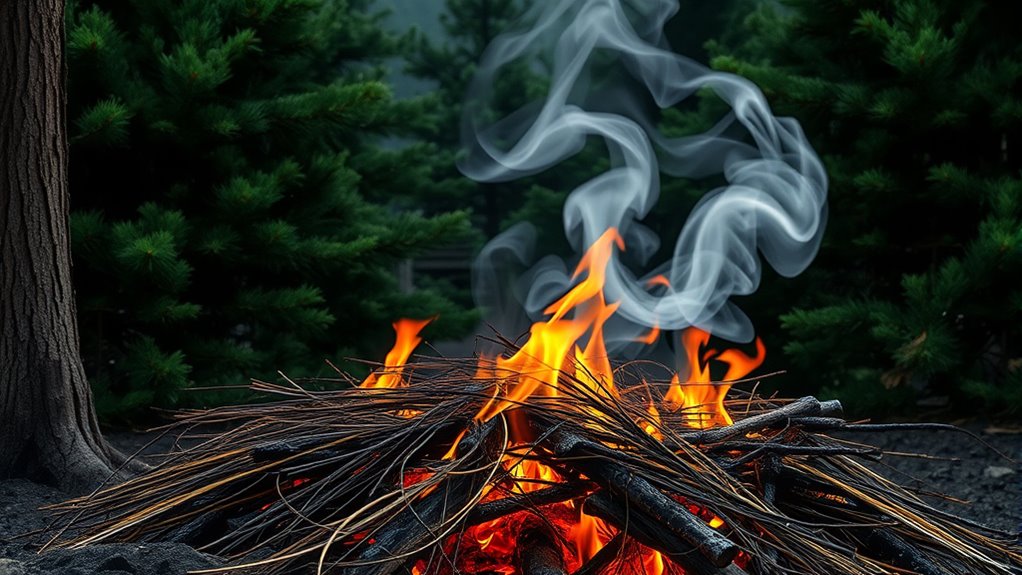

Low-smoke firelays in conifer forests help you control fire behavior and reduce smoke emissions during prescribed burns or wildfires. By shaping ignition patterns, timing burns carefully, and managing fuel moisture, you can promote cleaner, more complete combustion. This approach minimizes health hazards, improves air quality, and supports ecological restoration. Implementing these techniques allows you to burn more safely and effectively—if you want to understand the specific methods and benefits, there’s more to explore.
Key Takeaways
- Low-smoke firelays enable controlled burns in conifer forests, reducing harmful smoke emissions.
- They promote complete combustion, minimizing particulate matter and improving air quality during prescribed fires.
- Proper timing and ignition patterns optimize fire behavior, controlling speed and direction to limit smoke output.
- Utilizing low-smoke firelays supports ecological restoration and land management goals while protecting communities.
- These techniques help manage fire behavior effectively, preventing uncontrolled fires and excessive smoke in conifer environments.
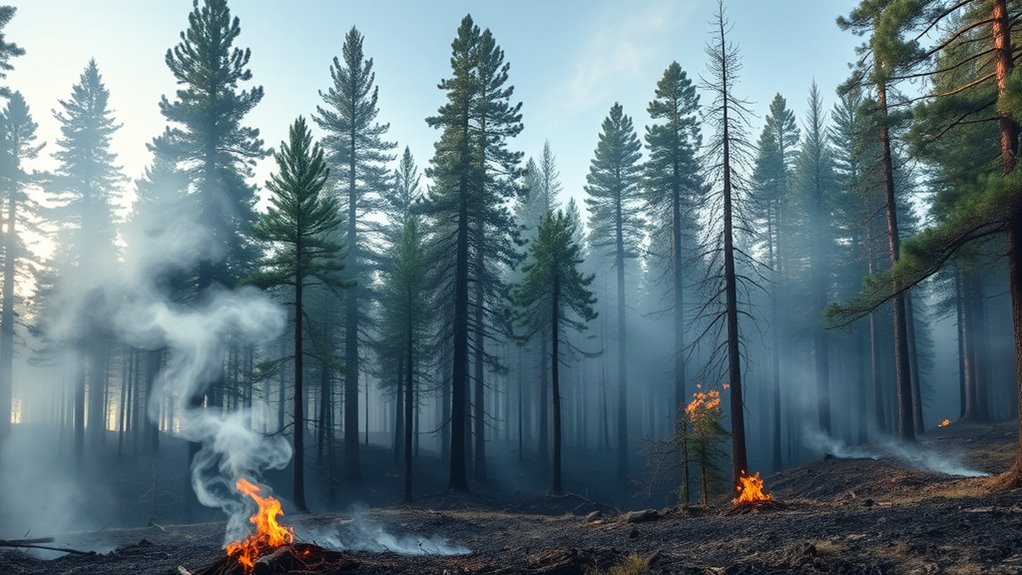
Managing fires in conifer forests is challenging because traditional burn methods often produce excessive smoke, which can harm nearby communities and ecosystems. But you don’t have to accept this limitation. You can harness innovative approaches—like low-smoke firelays—that give you control over fire behavior and smoke management, allowing you to protect both the land and the people around it. The key lies in understanding how fire behaves and how to shape that behavior through carefully designed burns. When you control fire behavior, you can reduce the intensity and spread of the flames, making it easier to manage smoke output. Low-smoke firelays are tailored to ignite fires in a way that minimizes smoke production, giving you a powerful tool to work with nature rather than against it.
Imagine setting a fire that moves deliberately, with a predictable pattern, and produces only a thin, manageable plume. That’s the goal of smoke management—keeping smoke levels low enough to prevent health hazards and visibility issues while still achieving ecological and land management objectives. You’ll want to focus on the timing, fuel moisture, and ignition techniques that influence how the fire behaves. For instance, using prescribed burns during ideal weather conditions can help keep fire intensity in check. By doing so, you limit the amount of unburned fuel and prevent the fire from roaring out of control, which often leads to excessive smoke.
Achieving this balance requires understanding the nuances of fire behavior in conifer forests. Conifers tend to carry fire quickly, producing a lot of smoke, but with strategic planning, you can manipulate the fire’s direction, rate of spread, and combustion efficiency. This is where low-smoke firelays shine—they’re designed to promote more complete combustion, which reduces smoke emissions. The technique involves creating ignition patterns that burn hotter and cleaner, resulting in less particulate matter being released into the air. As a result, you gain the ability to conduct burns that serve ecological goals without the collateral damage of overwhelming smoke.
In essence, controlling fire behavior through low-smoke firelays empowers you to shape the landscape’s future on your terms. You’re not just setting fire to clear land—you’re directing a tool that, when managed properly, heals ecosystems, reduces wildfire risks, and preserves air quality. Smoke management becomes an integral part of this process, giving you the freedom to work with nature’s dynamics rather than fighting against them. This approach offers a way to restore balance, protect communities, and foster healthier forests—your path to true land stewardship and ecological liberation.
prescribed burn ignition tools
As an affiliate, we earn on qualifying purchases.
As an affiliate, we earn on qualifying purchases.
Frequently Asked Questions
How Do Low-Smoke Firelays Impact Forest Biodiversity?
Low-smoke firelays promote biodiversity preservation by creating diverse habitats within forests. You help maintain habitat diversity, which supports a wide range of species, including those sensitive to smoke and fire. By carefully managing these firelays, you reduce ecological disruption and foster a resilient ecosystem. This approach empowers you to actively contribute to forest health, ensuring that biodiversity thrives and that nature’s balance remains undisturbed for future generations.
What Are the Cost Differences Between Traditional and Low-Smoke Firelays?
You’ll find that low-smoke firelays typically cost more upfront than traditional methods due to specialized equipment and planning. However, the cost comparison shifts when considering economic benefits—reduced smoke management issues, fewer health impacts, and quicker implementation. These advantages can lead to long-term savings, empowering you to choose a more sustainable, cleaner approach that promotes forest health and offers greater economic freedom from ongoing environmental and health costs.
How Do Weather Conditions Affect Low-Smoke Firelay Effectiveness?
Weather conditions are your wild card in low-smoke firelay effectiveness. High humidity can smother flames like a wet blanket, reducing burn efficiency and smoke reduction. Wind is an unpredictable force, like a mischievous spirit, spreading flames and smoke unpredictably. To maximize control and benefits, you need to monitor humidity effects and wind influence closely, giving you the freedom to adapt your approach and harness nature’s forces rather than be controlled by them.
Are Low-Smoke Firelays Suitable for All Conifer Species?
Low-smoke firelays aren’t suitable for all conifer species, as species compatibility influences fire behavior and effectiveness. You need to weigh the specific tree types and their response to fire; some conifers resist low-smoke treatments or react unpredictably. By understanding these factors, you can harness fire to liberate your forest, promoting healthier growth and reducing hazards. Don’t assume one size fits all—tailor your approach to each species for the best results.
What Safety Precautions Are Necessary During Low-Smoke Firelay Operations?
You might think safety’s optional during low-smoke firelay operations, but don’t fall for that illusion. Prioritize firefighter safety by donning proper equipment—fire-resistant clothing, gloves, helmets, and breathing apparatus. Keep a vigilant eye on wind conditions and have firefighting tools ready. Remember, liberation from danger comes from strict safety precautions. Stay alert, stay equipped, and embrace your power to control the flames safely, not recklessly.

Avana Acoustic Wood Wall Panels – 93.2×11.25 Inch Panels – Fits 94×12 Layout – Smoke Oak Acoustic Panels 2 PCs – Wall Panels for Interior Wall Decor for Homes, Offices – Durable Wood Panels for Wall
Superior Acoustic Performance — Welcome an unparalleled auditory experience with our sound proof panels for walls. Designed for…
As an affiliate, we earn on qualifying purchases.
As an affiliate, we earn on qualifying purchases.
Conclusion
You can confidently create clean, controlled conifer conditions with low-smoke firelays, fostering forest health and reducing risk. By balancing burn benefits with careful control, you craft a safer, sustainable scenery. These thoughtful firelays foster forest flourishing, fuel fewer fumes, and forge a future where fire and flora flourish freely. So, step forward with purpose, purposefully planting peace and promoting protection, ensuring your forests flourish freely for generations to come.

New Generation Forest Fire Protection Shelters | Protects from Flame & Heat | Quick, Easy Deploy | Traps Breathable Air | Includes Carrying Case | Folded 8.5 x 5.5 x 4 | Open 86 x 15.5 x 31
Meets U.S. Forest Service specifications
As an affiliate, we earn on qualifying purchases.
As an affiliate, we earn on qualifying purchases.

FIRE TV CUBE USER'S GUIDE: The Ultimate Manual To Set Up, Manage Your TV Cube
As an affiliate, we earn on qualifying purchases.
As an affiliate, we earn on qualifying purchases.