A transpiration bag captures water vapor directly from a plant’s leaves, relying on natural biological processes to produce clean water, making it simple, low-tech, and ideal for survival. In contrast, a solar still uses sunlight to evaporate contaminated water and condenses it into drinkable water, suitable for purifying sources. Each method has its advantages and limitations, but understanding how they work can help you choose the best option when sourcing water from plants. If you continue exploring, you’ll discover more about these fascinating techniques.
Key Takeaways
- Transpiration bags collect water directly from plant leaves, relying on natural biological processes, while solar still uses solar energy to purify contaminated water.
- Transpiration bags are simple, lightweight, and ideal for quick, on-the-spot water collection in survival situations.
- Solar stills can purify various contaminated water sources but require sunlight and are less portable.
- Transpiration offers a renewable water source as long as the plant remains healthy and has water access.
- Solar stills can produce cleaner water from polluted sources, whereas transpiration bags depend on healthy plants in water-rich environments.
Have you ever wondered how plants provide us with more than just greenery? Beneath their vibrant leaves lies a remarkable process—plant transpiration—that plays a crucial role in water collection. When you observe a plant on a hot day, you might see tiny droplets on its leaves or notice how the air feels cooler nearby. That’s not just nature’s decoration; it’s a sign of the plant’s internal system working tirelessly to move water from roots to leaves and release it into the atmosphere. This process, called plant transpiration, is a form of natural water recycling, and it’s fundamental for the plant’s survival. But it also offers a fascinating way to harness water in arid environments, especially when traditional sources fail.
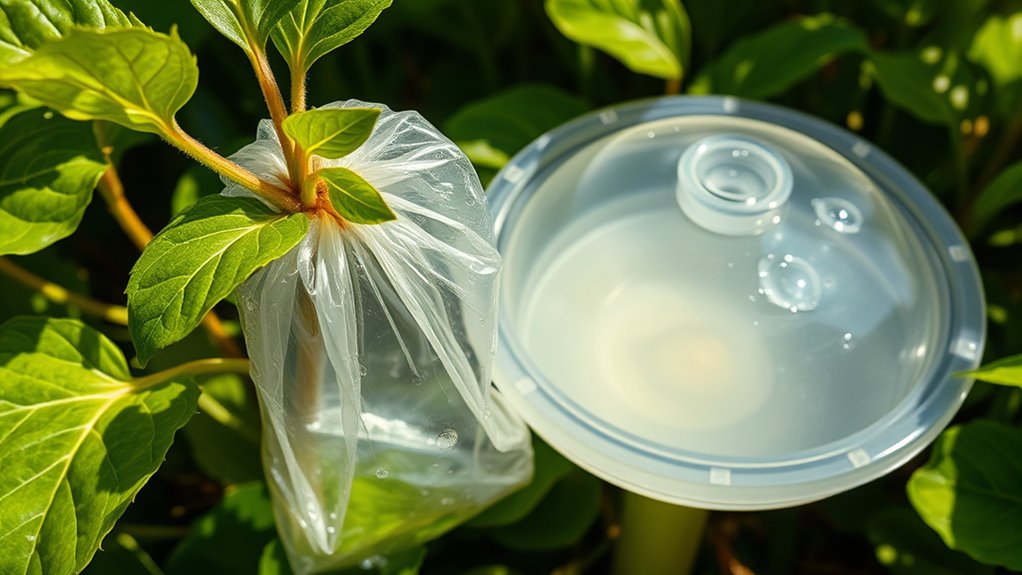
Using a transpiration bag involves enclosing a leafy branch in a plastic bag, creating a mini water collection system. As the plant transpires, water vapor accumulates inside the bag and condenses into droplets, providing a clean water source. This method taps into the plant’s natural water release, giving you a means to hydrate yourself when other options are scarce. It’s a simple yet effective technique that utilizes the plant’s own biological processes to produce drinkable water. You’re practically turning the plant’s transpiration into a water generator, giving you a sense of liberation from dependency on external water supplies.
Enclose a leafy branch in a plastic bag to collect clean water from transpiration.
In contrast, a solar still uses the sun’s energy to evaporate water—often from contaminated sources—then condenses it into clean, drinkable water. While both methods aim to extract water, the transpiration bag is more direct and relies on the plant’s natural process, making it a lightweight and accessible option for survival situations. The key advantage here is that plant transpiration offers continuous, renewable water collection as long as the plant remains healthy and has access to water itself. It’s a sustainable cycle—one that empowers you to utilize nature’s resources to meet your needs.
Understanding these methods brings you closer to independence. Instead of relying solely on external supplies, you tap into the natural processes around you. Whether through a simple transpiration bag or a solar still, you harness the power of nature to secure water, asserting your liberation from limitations. This knowledge transforms plants from mere greenery into essential allies in survival, proving that with awareness and ingenuity, you can turn nature’s gifts into your own survival tools.
Frequently Asked Questions
Can Solar Stills Produce Drinkable Water in All Climates?
Solar stills can’t produce drinkable water in all climates. Their climate adaptability depends on sunlight, temperature, and humidity. In humid or cloudy areas, efficiency drops, making it harder to get water purity. But in sunny, dry climates, they work best, giving you fresh water when you need it most. If you want to free yourself from water scarcity, understand your environment’s limits to maximize your solar still’s potential.
How Long Does It Take for a Transpiration Bag to Collect Water?
You’ll typically see a transpiration bag collect water within a few hours to a day, depending on the plant’s transpiration efficiency and environmental conditions. The water collection rate varies based on temperature, humidity, and plant type. To maximize your water yield, choose healthy, well-watered plants and place the bag in direct sunlight, encouraging transpiration. With patience and proper setup, you’ll soon have a useful water source at your fingertips.
Are There Specific Plants Better Suited for Transpiration Water Collection?
Think of plant selection as choosing the best keys to open water’s secret vault. Certain plants like cacti, succulents, and willows deliver higher water yield because their adaptations conserve moisture and transpire efficiently. You’ll find these plants better suited for transpiration water collection, empowering your quest for independence. By selecting resilient species, you harness nature’s generosity and step closer to liberation through sustainable water sources.
What Are the Environmental Impacts of Using Solar Stills?
Using solar stills supports renewable energy and promotes water conservation, but it can impact your environment if not managed properly. They require energy and materials to build, which may produce waste or emissions. However, they’re eco-friendly compared to traditional methods, helping you liberate yourself from reliance on complex infrastructure. By choosing solar stills wisely, you empower your water independence while minimizing environmental harm, aligning with your desire for sustainable freedom.
Can Transpiration Bags Be Used Indoors Effectively?
They say, “Where there’s a will, there’s a way,” and you can definitely use transpiration bags indoors effectively. By controlling indoor humidity and choosing the right plants, like pothos or ferns, you optimize water collection. Remember, your environment matters—ensure good ventilation and proper placement. This approach liberates you from dependency on external water sources, turning your space into a self-sustaining oasis where nature’s cycle empowers you.
Conclusion
Imagine harvesting water from a solar still’s cold, transparent surface, or catching droplets from a lush, leafy plant’s transpiration. Both methods draw moisture from nature, yet one offers a silent, mechanical process, while the other relies on vibrant life. As you choose between them, picture the still’s stillness versus the plant’s lively dance of evaporation—each a different way to quench your thirst, one calm and controlled, the other alive with nature’s energy.