
Shelter, fire, and food skills work together to guarantee your survival by creating a safe, warm, and nourished environment. Your shelter protects you from the elements and offers a secure base to work from, while fire keeps you warm, deters predators, and helps cook and sterilize food and water. Foraging and tracking help you find edible plants and resources, all essential for sustained survival. Mastering how these elements connect boosts your confidence and self-reliance—discover more about their synergy to become truly prepared.
Key Takeaways
- Shelter protects resources and provides safety for fire-making, foraging, and other survival activities.
- Fire enables cooking, sterilizing water, and keeping warm, supporting safe food consumption and health.
- Knowledge of edible plants and hunting enhances food acquisition and sustains energy needs.
- These elements form a cycle where shelter, fire, and food support each other’s effectiveness.
- Mastery of all three creates a self-sustaining system, increasing resilience and adaptability in the wild.
Have you ever wondered what essentials you need to survive in the wild? It’s a good question, because knowing how shelter, fire, and food work together can make the difference between survival and struggle. Each element supports the others, creating a system that keeps you safe, warm, and fed. When you understand how to build a shelter, start a fire, and find food, you’re essentially creating a self-sustaining environment. This interconnected knowledge gives you confidence and resilience in unpredictable situations.
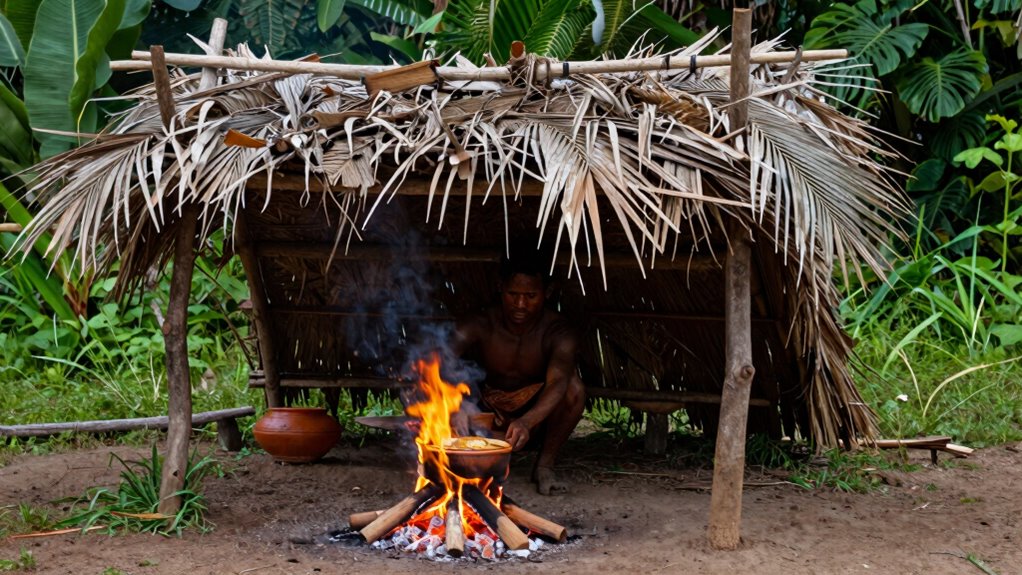
Shelter is your first priority. It protects you from the elements, keeps you warm, and provides a sense of security. You might use natural materials like branches, leaves, or rocks to create a rough but effective refuge. Learning wildlife tracking can help you identify where animals pass through, giving you clues about the environment and potential food sources. Recognizing animal signs also guides you toward natural remedies—plants that can help treat cuts, insect bites, or illnesses. These remedies are essential when modern medicine isn’t available, and they often grow close to your shelter. Developing skills in wildlife tracking can further enhance your ability to find food and medicinal plants, creating a more comprehensive understanding of your environment. Additionally, understanding local plant species can help you identify edible versus toxic plants, improving your foraging safety. Gaining knowledge about edible plants can enhance your foraging efficiency and safety. Building your knowledge about natural water sources can also ensure you stay properly hydrated, which is crucial for survival. Understanding water purification techniques can further improve your ability to stay safe from waterborne illnesses.
Shelter provides security, warmth, and clues through animal signs and natural remedies nearby.
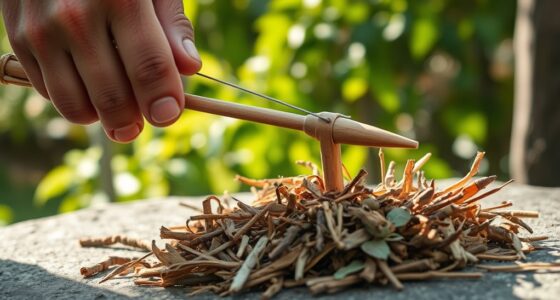
Fire plays a crucial role in survival. It keeps you warm during cold nights, deters predators, and allows you to cook food, making it safer and more digestible. Starting a fire requires knowledge of friction methods or using flint and steel, but it also depends on having dry, combustible materials nearby—materials you might gather from your environment or even from your shelter itself. Fire and shelter work hand-in-hand: a well-built shelter keeps your fire safe from wind and rain, while fire extends your ability to cook, sterilize water, and stay warm.
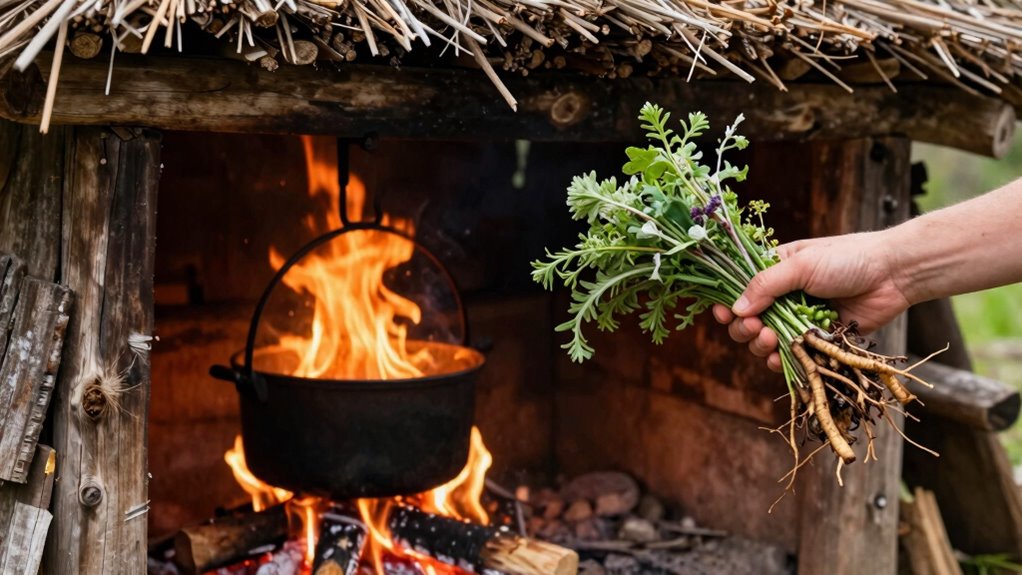
Food is the final piece of the puzzle. Finding nutritious, reliable sources involves understanding your surroundings and using your wildlife tracking skills. You might hunt small game or forage for edible plants and berries, but always with caution—misidentifying a plant or animal can be dangerous. Natural remedies can also assist here, especially if you sustain injuries while foraging or hunting. Knowing which plants are safe to eat and which are not can be lifesaving. When you combine shelter, fire, and food knowledge, you create a sustainable cycle: shelter protects your resources, fire allows you to prepare food, and tracking skills help you find both food and medicinal plants.
Ultimately, these elements are interconnected; mastering one helps improve the others. When you understand how shelter, fire, and food work together, you become more self-reliant in the wild. This holistic approach not only keeps you alive but also boosts your confidence in facing nature’s challenges.
As an affiliate, we earn on qualifying purchases.
Frequently Asked Questions
How Do Shelter Needs Change With Different Climates?
Your shelter needs change with different climates through climate adaptation. In cold environments, you require insulation and durable shelter materials to retain heat. In hot, dry areas, breathable fabrics and shading become essential. Rainy climates demand waterproof materials and elevated structures to prevent flooding. By understanding these climate variations, you can select appropriate shelter materials and design features, ensuring comfort and safety regardless of environmental conditions.
What Are the Safest Fire-Starting Methods for Beginners?
Think of fire-starting like walking a tightrope—you need balance and safety. For beginners, the safest fire-starting methods include using a lighter or waterproof matches, which are easy to control and reliable. Always prioritize fire safety by clearing the area, keeping water nearby, and never leaving the fire unattended. These simple, beginner methods help you start a fire safely while minimizing risks, ensuring you stay in control.
How Can You Identify Edible Plants in Unfamiliar Environments?
To identify edible plants in unfamiliar environments, start with edible plant identification guides or apps. Look for recognizable features like leaf shape, color, and growth patterns. Always practice foraging safety by avoiding plants with milky sap, foul smell, or unusual colors. Test new plants cautiously—consume small amounts first. Remember, accurate identification is essential to avoid poisonous varieties, so when in doubt, don’t eat.
What Tools Are Essential for Building Shelter in the Wild?
Building shelter in the wild is like weaving a safety net; you need the right tools and materials. Essential tools include a sturdy knife or axe for shelter material selection, cutting branches, and shaping wood. Keep your tools sharp and well-maintained to guarantee safety and efficiency. A saw, cordage, and a fire starter also come in handy. By maintaining your tools and choosing the right materials, you create a sturdy, reliable refuge.
How Do Fire and Shelter Work Together to Maintain Warmth?
You use fire and shelter together to stay warm by applying insulation techniques that retain heat. Building a fire inside or near your shelter provides warmth, but you must prioritize fire safety to prevent accidents. Proper insulation, like lining your shelter with natural materials, traps heat, while a controlled fire boosts warmth efficiently. Combining these methods guarantees you stay warm and safe in harsh conditions.
Conclusion
So, next time you’re lost in the wild, remember: knowing how to build a shelter, start a fire, and find food isn’t just survival—it’s your ticket to looking like a total pro. Who needs GPS or a fancy gadget when you’ve got these skills? Just imagine impressing your friends with your eco-friendly, all-natural, “I-just-went-caveman” vibe. Survival skills—because nothing says “I’ve got this” like confidently living off the land, one twig and berry at a time.