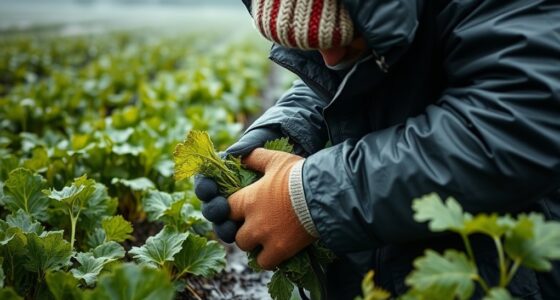

Using tannins from oak bark offers a natural, eco-friendly way to preserve crops in field settings. When applied, these tannins act as antioxidants and antimicrobials, helping to prevent spoilage and microbial damage without synthetic chemicals. You can harvest and process oak bark for a sustainable preservation method that strengthens your crops and extends their shelf life. If you keep exploring, you’ll discover more about how this ancient approach can benefit modern agriculture and natural preservation methods.
Key Takeaways
- Oak bark extracts rich in tannins can be applied directly to crops to inhibit microbial growth and spoilage.
- Tannins from oak act as natural preservatives, reducing reliance on chemical agents in field preservation.
- Soaking or spraying crops with tannin solutions forms a protective barrier against fungi and bacteria.
- Using oak-derived tannins in field settings enhances crop shelf life and reduces post-harvest losses.
- Harvested oak bark provides a sustainable, chemical-free source of tannins for natural preservation methods.

Tannins, naturally occurring compounds found in plants like grapes, tea, and oak, have long been valued for their antioxidant properties. But their true power lies in their ability to preserve and protect, making them a game-changer in your quest for independence from conventional preservatives. When you harness tannins through wine aging and bark extraction, you tap into a natural shield that can extend the life of your products without relying on synthetic chemicals. Imagine a world where preservation is rooted in nature’s own arsenal—where oak barrels and bark become your allies in creating resilient, long-lasting goods.
Wine aging exemplifies how tannins can elevate preservation. As wine matures in oak barrels, tannins leach into the liquid, imparting complexity and stability. This process isn’t just about flavor; it’s about harnessing tannins’ ability to bind with proteins, inhibit oxidation, and protect against spoilage. By mimicking this process in other field settings, you can develop natural preservation methods that stand the test of time. Bark extraction takes this concept further—by carefully harvesting and processing oak bark, you extract high concentrations of tannins that can be applied directly to crops, textiles, or even stored foods. This bark-derived tannin acts as a powerful barrier against microbial attack and degradation.
Harness tannins from oak barrels and bark to naturally preserve and protect your crops, textiles, and stored foods.
In addition, deploying modern fraud detection techniques, such as machine learning algorithms and real-time monitoring, can help ensure the integrity of your preservation methods and prevent contamination or spoilage issues. Using bark extraction in your field setting liberates you from dependence on chemical preservatives, giving you control over the integrity of your products. It’s a sustainable approach that aligns with eco-conscious practices and harnesses the innate strength of oak. You can apply tannin-rich extracts to protect fruit crops from spoilage, extend the shelf life of harvested grains, or safeguard textiles and fibers from decay. The beauty lies in the versatility—tannins from bark can be integrated into various preservation techniques, offering a natural, effective alternative that empowers your independence.
In essence, by understanding and utilizing tannins through wine aging and bark extraction, you become a steward of nature’s preservation powers. You’re not just safeguarding your products; you’re reclaiming sovereignty over your environment and resources. This approach strips away the reliance on synthetic additives, replacing it with a primal, effective solution rooted in the wisdom of nature. With tannins, you gain the freedom to preserve, protect, and prosper on your terms, turning oak’s silent strength into your ultimate tool for liberation.
Top picks for "tannin preservativ field"
Open Amazon search results for this keyword.
As an affiliate, we earn on qualifying purchases.
Frequently Asked Questions
Can Tannins Be Used on Food Crops Directly in the Field?
Yes, you can apply tannins directly to food crops in the field for crop protection. Tannin application acts as a natural barrier against pests and diseases, helping you maintain healthy plants without chemicals. By using tannins, you embrace a more liberated approach to farming—reducing reliance on synthetic protectants and promoting sustainable practices. Just guarantee proper dosage and timing to maximize their protective benefits and keep your crops thriving naturally.
How Do Tannins Compare to Synthetic Preservatives in Effectiveness?
Imagine a lush vineyard, where natural tannin efficacy fights off spoilage just as effectively as synthetic preservatives. You’ll find that tannins, derived from oak or plants, offer a more eco-friendly, sustainable option, often matching or surpassing synthetics in protecting crops. You’re free from harmful chemicals, gaining confidence in natural preservation methods. When comparing, expect tannins to deliver reliable results, empowering you to choose safer, greener solutions for your field.
Are There Environmental Concerns With Using Oak Tannins Outdoors?
Yes, using oak tannins outdoors can raise environmental concerns. You might worry about the environmental impact and potential ecosystem effects, such as disrupting native plant or animal life. While tannins are natural, excessive application could alter soil chemistry or water quality. Always consider sustainable practices to minimize these effects, ensuring your use of oak tannins preserves the health and balance of the environment you’re working in.
What Are the Cost Implications of Applying Tannins Versus Traditional Preservatives?
You’ll find that applying tannins can be more cost-effective than traditional preservatives when you do an economic analysis. While initial costs might seem higher, the long-term benefits—like improved durability and reduced environmental impact—offer a strong cost benefit comparison. This approach liberates you from reliance on harsher chemicals, giving you a natural, sustainable solution that saves money and supports eco-friendly practices in your outdoor projects.
How Long Do Tannin-Based Preservation Effects Last in Field Conditions?
You’ll find that tannin longevity in field conditions varies, typically lasting several months to a year, depending on environmental factors. Tannins resist field degradation well, maintaining their preservative effects longer than many traditional options. To maximize their benefits, you should consider exposure levels and application methods. With proper use, tannins can give you a reliable, natural preservative barrier that supports your pursuit of freedom from chemical dependencies.
Conclusion
Imagine walking through a forest where oak trees stand tall, their tannins quietly preserving the land. Just like those trees protect the ecosystem, using tannins as preservatives in the field offers natural strength and resilience. In your efforts, remember that a small amount of tannin can be like a shield, ensuring your crops or materials last longer. When you harness nature’s own defenses, you create a sustainable future—strong, steady, and rooted in tradition.