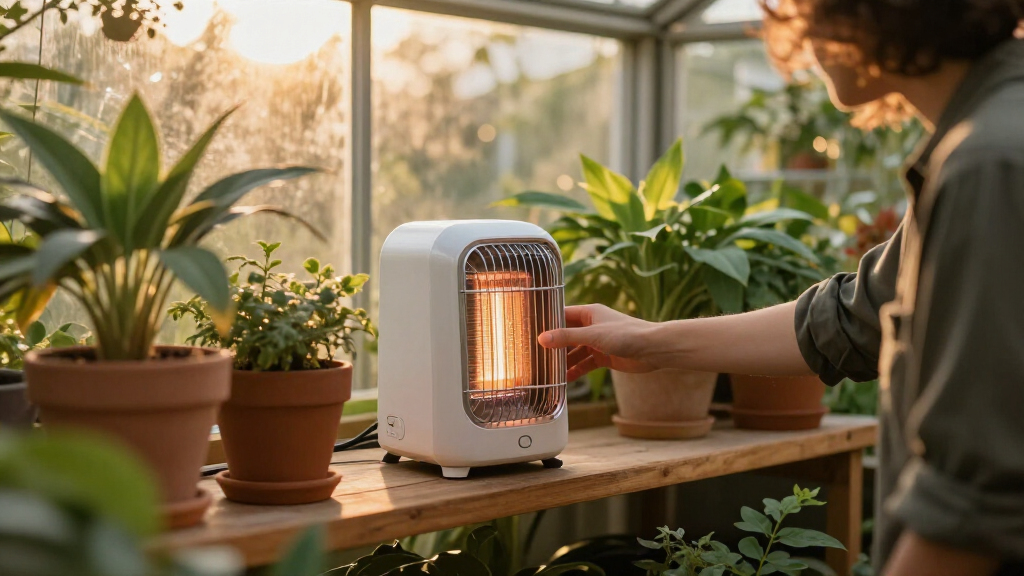

Greenhouse heating systems keep tender plants alive through frost by holding a stable temperature overnight, and the right one depends on your greenhouse size, your climate, and how much control you want. The BioGreen PALMA stands out as my best overall pick because its precise digital thermostat and built-in fan circulation maintain even heat across a small greenhouse rather than creating one hot corner. For budget-minded growers, the Kiroto 1500W with app control delivers remote monitoring at a lower cost, while the AC Infinity ThermoForge T3 is the pick for serious grow-tent setups that need VPD-linked precision. The main tradeoff in this category is accuracy versus price: cheap 1500W fan heaters blow hot air, but only the better thermostats actually hold a steady setpoint. Keep reading for the full breakdown of all 14 systems and which one fits your setup.

Get garden gear delivered free with Prime
- Fast, free delivery on millions of items
- Prime Video, Amazon Music and more included
- Member-only deals all year
Complete the kit


Key Takeaways
- Nearly every heater in this roundup is a 1500W PTC fan heater, so the real differentiators are thermostat accuracy, waterproofing, and circulation quality — not raw wattage.
- The BioGreen PALMA separated itself with the most reliable digital thermostat and the only true circulation fan design, which prevents the cold spots that cheaper fan heaters create.
- The four VEVOR models overlap heavily; the versions with adjustable angles and 3-speed fans justify their spot over the fixed-angle clones, but buyers should compare specs closely to avoid paying twice for near-identical units.
- The AC Infinity ThermoForge T3 is the only lower-wattage pick, and its VPD temperature control makes it uniquely suited to grow tents where humidity-temperature balance matters more than raw heating power.
- App remote control (Kiroto) is the most useful convenience feature in this category because greenhouse heaters usually run overnight and at a distance from the house.


| greenhouse heating system | Power |
|---|---|
| Kiroto 1500W Greenhouse Heater | 1500W |
| BioGreen Electric Greenhouse H | 1500 Watts |
| Greenhouse Heater with Thermos | 1500W |
| VEVOR Greenhouse Heater | 1500 watts |
| Greenhouse Heater with Thermos | 1500W |
| Greenhouse Heater with Digital | 1500W |
| Greenhouse Heater with Thermos | 1500W |
| VEVOR Greenhouse Heater | 1500W |
| Greenhouse Heater with Thermos | 1500W |
| VEVOR Greenhouse Heater with T | 1500W |
| Greenhouse Heater with Digital | 1500W |
| AC Infinity ThermoForge T3 Gro | 530 watts |
| VEVOR Greenhouse Heater | 1500W |
| VEVOR Greenhouse Heater | 1500 watts |
More Details on Our Top Picks
Kiroto 1500W Greenhouse Heater with APP Remote Control
Among the many 1500W heaters in this roundup, the Kiroto stands apart because of its WiFi app control, which lets you check and adjust greenhouse temperature from your phone instead of trudging through snow to a dial on the unit. The 41–113°F adjustable range is wider than what the BioGreen PALMA offers at the low end, giving tender seedlings more headroom. Its 70-degree oscillation spreads warmth more evenly than the fixed-angle VEVOR PTC model. The tradeoff is the 150 sq ft coverage ceiling, which is fine for a hobby greenhouse or grow tent but leaves larger structures cold. You also depend on a stable WiFi connection, so a greenhouse at the far edge of your property may lose its smart advantage entirely.
Pros:- WiFi app control allows remote temperature management
- Wide 41–113°F temperature range suits delicate plants
- 70-degree oscillation distributes heat evenly
- Dual heat and fan modes support year-round use
Cons:- Coverage capped at 150 sq ft
- Requires reliable WiFi and a nearby electrical outlet
Best for: Tech-comfortable hobby gardeners who want to monitor and adjust greenhouse temperature remotely from their phone
Not ideal for: Owners of large greenhouses over 150 sq ft or rural setups with unreliable WiFi, where the app control becomes useless
- Power:1500W
- Voltage:110-120V/60Hz
- Coverage:150 sq ft
- Temperature Range:41-113°F
- Control:WiFi app control
- Safety Features:Overheat protection, tip-over protection
- Rotation:70 degrees left and right
- Modes:Heat and fan
Our verdict“This pick makes the most sense for growers who want remote monitoring in a small, connected greenhouse setup.”
BioGreen Electric Greenhouse Heater & Fan with Digital Thermostat PALMA
The BioGreen PALMA earns the top spot because it is the only heater here purpose-built for greenhouse conditions. Its IPX4 splash-proof housing means the damp, condensation-heavy air that kills cheaper electronics won’t faze it, something no other pick in this lineup can claim. The dual heating elements let you run partial or full power, and the 5800 ft³/h air circulation prevents the cold pockets and fungal issues that stagnant air invites. Compared with the Kiroto, it lacks smart features, and its 120 ft² coverage is slightly smaller, but its build quality and weather resistance make it more durable for permanent installation. It is better suited to growers who want a set-and-forget workhorse than gadget lovers chasing app control.
Pros:- IPX4 splash-proof design tolerates humid greenhouse conditions
- Two adjustable heating elements for flexible power use
- Strong 5800 ft³/h air circulation prevents cold spots and fungus
- Digital thermostat holds temperatures precisely
Cons:- Limited to small and medium greenhouses
- No smart or remote control features
Best for: Serious gardeners with small to medium greenhouses who need a durable, damp-tolerant heater for permanent installation
Not ideal for: Buyers who want remote or app-based control, or anyone heating a structure larger than 120 ft²
- Power:1500 Watts
- Heating Output:5100 BTU/hr
- Air Circulation:5800 ft³/h
- Temperature Range:58 to 210.2°F
- Coverage Area:up to 120 ft²
- Water Resistance:IPX4 splash-proof
- Heating Elements:Two adjustable
Our verdict“For a permanently installed, humidity-proof heater that just works season after season, the PALMA is the strongest all-around choice.”
Greenhouse Heater with Thermostat, Digital Temperature Display, 1500W
This heater covers the fundamentals — digital thermostat, clear temperature display, overheat protection — without the premium features that push other models up in price. Heating within three seconds, it performs the same core job as the Kiroto for growers who don’t need WiFi control, and its energy-saving automatic power control cycles the element rather than running flat out, which trims winter electricity bills. Compared with the VEVOR PTC model, the digital display makes target temperatures far easier to read and set accurately. The tradeoff is the 120 sq ft coverage limit and a requirement for a dedicated 15A outlet, which rules out daisy-chaining it off a power strip. In very small spaces like propagation tents, full power can also overshoot, so venting adjustment matters.
Pros:- Digital thermostat with visible display for accurate setting
- Heats within 3 seconds
- Energy-saving automatic power control reduces running costs
- Overheat protection built in
Cons:- Coverage limited to 120 sq ft
- Requires a 15A electrical outlet
- Full 1500W may overpower very small grow tents
Best for: Budget-conscious growers who want precise digital temperature control without paying for smart features
Not ideal for: Anyone without a dedicated 15A outlet, or those heating spaces larger than 120 sq ft
- Power:1500W
- Coverage Area:120 sq ft
- Temperature Control:Digital thermostat with display
- Overheat Protection:Yes
- Ventilation:Adjustable
- Heat-Up Time:Within 3 seconds
Our verdict“A sensible no-frills choice for growers who value precise temperature readouts and low running costs over connectivity.”
VEVOR Greenhouse Heater, 1500W Electric PTC Space Heater with Fan
Weighing just 3.7 pounds with a built-in carry handle, this VEVOR is the easy pick for growers who move heat around — from grow tent to garage to home office as seasons shift. Its PTC heating element delivers quick, even warmth, and the steel housing feels more durable than the plastic shells common at this size. Compared with the fixed BioGreen PALMA, it sacrifices coverage and weather resistance for flexibility, and unlike the budget digital thermostat model, its 15-degree adjustable angle is a manual tilt rather than true oscillation, so heat direction is limited. It is better suited to indoor-only use, which means unheated, leaky outdoor greenhouses are out of scope. Two fan speeds and multiple modes give decent control, but there’s no thermostat precision here.
Pros:- Lightweight 3.7 lb design with carry handle for easy relocation
- Durable steel housing and PTC element for even heating
- Adjustable angle and two fan speeds
- Overheat protection included
Cons:- Indoor use only, no splash resistance
- 15-degree manual tilt instead of oscillation
- Small size limits it to grow tents and small spaces
Best for: Gardeners and homeowners who want one light, movable heater to share between a grow tent, greenhouse corner, and indoor spaces
Not ideal for: Outdoor or damp greenhouses needing weather resistance, and larger structures where a 3.7 lb compact unit can’t keep up
- Power:1500 watts
- Voltage:120 volts
- Amperage:8.33 A
- Heating Method:Forced air (PTC)
- Dimensions:8.27″D x 6.3″W x 8.66″H
- Weight:3.7 pounds
- Fan Speeds:2
- Adjustable Angle:15°
Our verdict“If portability across multiple indoor spaces matters more than raw coverage, this is the mover to pick.”
Greenhouse Heater with Thermostat, Digital Temperature Display, Suitable for Grow Tents and Greenhouses
For a first greenhouse, this heater gets the basics right without demanding any setup knowledge: an automatic thermostat regulates temperature on its own, so a new grower can plug it in and trust the plants won’t cook or freeze overnight. Heating in three seconds with a digital display, it mirrors the budget digital thermostat model closely, but its explicit indoor/outdoor versatility makes it a friendlier starting point for hobby greenhouses that aren’t fully sealed. Compared with the Kiroto, there’s no app to configure, which simplifies things but removes remote monitoring. The automatic energy-saving regulation is forgiving for beginners who haven’t yet learned to fine-tune venting. The drawbacks are familiar: 120 sq ft of coverage and reliance on an external power source mean larger or off-grid greenhouses need a different plan.
Pros:- Automatic thermostat requires no manual tuning
- Heats in 3 seconds for rapid response
- Overheat protection for unattended overnight use
- Works in both indoor and outdoor settings
Cons:- Coverage limited to 120 sq ft
- Requires an external power source
- May overpower very small enclosed tents
Best for: First-time greenhouse owners who want plug-in, automatic temperature control with zero setup fuss
Not ideal for: Experienced growers wanting smart features or data, and anyone heating beyond 120 sq ft
- Power:1500W
- Coverage Area:120 sq ft
- Temperature Control:Automatic digital thermostat with display
- Overheat Protection:Yes
- Ventilation:Adjustable
- Heat-Up Time:3 seconds
- Use Environment:Indoor and outdoor
Our verdict“Beginners who want reliable, hands-off warmth for a first greenhouse or grow tent will find this the least intimidating option here.”
Greenhouse Heater with Digital Thermostat, 1500W Electric Heater
Among the many 1500W ceramic heaters in this roundup, this model stands out for its IPX5 water resistance, the highest rating in this batch. That matters in a greenhouse, where condensation and misting systems leave lesser units vulnerable. Compared with the VEVOR 3-Speed Portable Fan Heater, which carries only an IP20 rating and is strictly indoor-rated, this option handles humid grow spaces without the constant worry of moisture damage.
The PTC ceramic core delivers fast warm-up, and the digital thermostat lets you hold a steady temperature for sensitive seedlings rather than guessing with a dial. The tradeoff is capacity: 120 sq ft is fine for a hobby greenhouse or grow tent, but anyone heating a larger structure will need multiple units or a different solution entirely.
Pros:- IPX5 water resistance — the best moisture protection in this batch
- Fast, efficient heating from the 1500W PTC ceramic core
- Digital thermostat holds precise temperatures for seedlings and propagation
- Overheat shut-off adds safety for unattended overnight operation
Cons:- Coverage caps at 120 sq ft
- No warranty terms are specified
- Needs a nearby power outlet — no battery or propane option
Best for: Hobby growers with small to mid-size greenhouses where humidity, misting, or condensation is a constant factor
Not ideal for: Owners of greenhouses larger than 120 sq ft, who would need several units to maintain even temperatures
- Power:1500W
- Coverage:120 sq ft
- Heating Method:Convection (PTC ceramic)
- Temperature Control:Digital thermostat
- Water Resistance:IPX5
- Color:Light Green
Our verdict“This pick makes the most sense for growers whose greenhouses stay damp and who want moisture-proof safety in a compact 1500W package.”
Greenhouse Heater with Thermostat, 1500W, Waterproof & Overheat Protection
This heater earns its value slot by covering the fundamentals without frills: adjustable three-level power (20W fan-only, 750W, 1500W), a digital thermostat, and waterproof housing. The 20W low mode is the quiet standout — it doubles as a summer circulation fan, which many rivals in this roundup, including the B0H69G57T1 digital thermostat model, cannot do at such a low draw. That makes it a year-round tool rather than a winter-only purchase.
Its flame-retardant housing and overheat protection match the safety package of pricier options like the VEVOR units. The compromises are familiar: 120 sq ft of coverage, and the absence of any published noise figures means light sleepers keeping a greenhouse near a bedroom window are buying on faith.
Pros:- 20W low mode doubles as an energy-sipping circulation fan for summer
- Three power levels give real control over energy use
- Flame-retardant housing and waterproof build
- Lightweight and portable between greenhouse, garage, and indoors
Cons:- No published noise level data
- Only heats up to 120 sq ft
- Requires outlet access — no cordless operation
Best for: Budget-conscious growers who want one device for winter heating and summer air circulation in a small greenhouse
Not ideal for: Buyers who need quiet overnight operation near living spaces, since noise output is undocumented
- Power:1500W
- Coverage Area:120 sq ft
- Temperature Control:Digital thermostat
- Power Levels:20W Low, 750W Medium, 1500W High
- Material:Flame-retardant housing
- Safety:Overheat protection, waterproof design
Our verdict“A sensible value choice for growers who want heating plus a fair-weather fan mode without paying for extras they will never use.”
VEVOR Greenhouse Heater, 1500W Electric Space Heater with Thermostat and Adjustable Angle
What separates this VEVOR from the near-identical VEVOR 3-Speed Portable Fan Heater is its 25-degree adjustable angle plus an IPX4 waterproof rating. That angled airflow is more useful than it sounds: pointing warm air at canopy level or across a propagation bench distributes heat far more evenly than a fixed-position heater blasting one spot. Growers with tiered shelving will notice the difference.
The dedicated fan-only mode also makes it usable for air circulation once the weather warms, though its higher draw low setting isn’t as economical as the 20W fan mode on the waterproof thermostat model (B0GWD8T39K). Build quality in the flame-retardant PP housing feels solid for the category, but like every 1500W unit here, it simply cannot carry a large greenhouse on its own.
Pros:- 25-degree adjustable angle targets airflow at plant canopy or bench level
- Fan-only mode for warm-season air circulation
- IPX4 waterproofing and overheat protection suit humid greenhouses
- Stable base and portable handle for safe repositioning
Cons:- Capped at 1500W — undersized for large spaces
- Fan-only mode draws more power than dedicated low-draw circulation options
Best for: Growers with propagation benches, tiered shelving, or grow tents who need to aim warm air where plants actually are
Not ideal for: Large or tall greenhouses where a single fixed-power heater can’t create even temperatures regardless of angle
- Power:1500W
- Temperature Adjustment:25° adjustable angle
- Protection:IPX4 waterproof, overheat protection
- Housing Material:Flame-retardant PP
- Modes:Heating and fan
- Additional Features:Thermostat, portable handle, stable base
Our verdict“The right choice when airflow direction matters as much as raw heat — bench growers and grow-tent users get the most from it.”
Greenhouse Heater with Thermostat, 1500W Electric Heater
This model’s claim to attention is speed: heat in roughly 3 seconds, faster than most convection rivals in this lineup. When a cold snap hits overnight and you’re racing to protect seedlings, that immediate output buys peace of mind that slower-warming options can’t. Its 3.5-pound frame also makes it the lightest of the batch — easy to shuttle between greenhouse, garage, and workshop as needs shift.
Compared with the Kiroto app-controlled heater, this unit gives up remote management entirely: adjustments mean walking to the unit and pressing buttons. The adjustable ventilation with automatic temperature control keeps running costs in check, but cranking the fan speed for maximum heat can get loud — a real consideration for attached greenhouses or shared walls.
Pros:- Heats in about 3 seconds — quick cold-snap protection for seedlings
- Lightest unit in this batch at 3.5 pounds
- Fireproof materials and overheat protection for unattended use
- Energy-efficient automatic temperature control
Cons:- No remote control or smart features
- Ventilation can be noisy at higher speeds
- Limited to 120 sq ft
Best for: Growers who need rapid response to sudden temperature drops and want a heater they can easily move between spaces
Not ideal for: Anyone wanting remote or app-based control from the house, since every adjustment requires hands-on access
- Power:1500W
- Heating Method:Convection
- Coverage:Up to 120 sq ft
- Temperature Control:Digital thermostat, adjustable temperature and speed
- Overheat Protection:Yes
- Dimensions:9.45″D x 7.48″W x 8.66″H
- Weight:3.5 lbs
Our verdict“A fast, featherweight heater for growers who prioritize immediate heat over remote convenience.”
VEVOR Greenhouse Heater with Thermostat, 1500W PTC Fast Heating, 3-Speed Portable Indoor Fan Heater
This is the most compact heater in this batch at 6.29 inches square, and that footprint is its whole argument. Inside a cramped grow tent, the bulkier units like the VEVOR adjustable-angle model can crowd plants and ducting; this one tucks into a corner without displacing anything. The three fan speeds pair with the thermostat for finer airflow tuning than two-mode competitors offer.
The honest tradeoff is its IP20 rating — it has no water resistance at all, making it strictly an indoor and grow-tent appliance rather than a greenhouse workhorse. In a tent with controlled humidity that’s acceptable; in a condensation-heavy glass greenhouse it’s a risk I wouldn’t take. The utilitarian design won’t win style points either, and there’s no remote or Wi-Fi control to speak of.
Pros:- Smallest footprint in this batch — fits crowded grow tents
- Three-speed fan allows precise airflow tuning
- Thermostat plus overheat protection for safe unattended running
- Durable construction with a portable 4.5-pound build
Cons:- IP20 rating means indoor-only use with no waterproofing
- No remote, app, or smart features
- Plain, utilitarian design
Best for: Indoor grow-tent growers who need serious heat in a very small footprint with adjustable fan speeds
Not ideal for: Greenhouse owners in damp or condensation-prone structures — the IP20 rating offers no moisture protection
- Power:1500W
- Heating Method:Forced air (PTC)
- Fan Speeds:3
- Dimensions:6.29″D x 6.29″W x 8.66″H
- Weight:4.5 lbs
- Protection:Overheat protection, IP20
- Voltage:AC
Our verdict“The pick for grow-tent growers short on space, as long as the environment stays dry and indoors.”
Greenhouse Heater with Digital Thermostat, 1500W Grow Tent Heater
Most budget greenhouse heaters treat water resistance as an afterthought, but this model carries an IPX4 splash-resistant rating, which makes it one of the few options here I would trust near misting lines or in a humid polytunnel. Compared with the VEVOR 1500W PTC model (B0D6VFD895), which is rated only IP20 and should really stay out of consistently damp spaces, this unit gives you the same 1500W output with far less worry about moisture damage.
The digital thermostat spanning 41°F to 108°F is generous for the price — you can hold seedling trays at 75°F or drop down near 50°F for overwintering dormant plants. The tradeoff is simplicity: there is no app control like the Kiroto offers, no VPD logic like the ThermoForge T3, and every temperature change means walking out to the greenhouse and pressing buttons. Coverage tops out around 160 sq. ft., so large structures will need two units.
Pros:- IPX4 splash resistance is rare at this price and suits damp greenhouses
- Wide digital thermostat range (41°F–108°F) covers seed starting through overwintering
- Overheat protection adds safety for unattended overnight use
- No permanent installation needed — just plug in and position
Cons:- Coverage caps around 160 sq. ft., so medium greenhouses need multiple units
- Manual-only controls mean no remote or smart scheduling
- No fan-only circulation mode for summer use
Best for: Hobby greenhouse growers in humid climates or anyone running misting systems who needs splash resistance on a budget
Not ideal for: Tech-minded growers who want remote monitoring or app control, and anyone heating more than 160 sq. ft. with a single unit
- Power:1500W
- Temperature Range:41°F–108°F
- Water Resistance:IPX4 splash-resistant
- Dimensions:7″D x 9.4″W x 12″H
- Weight:7.7 pounds
- Mounting Type:Floor
- Usage:Indoor, Outdoor
Our verdict“This is the pick if moisture is your main concern — it is the most splash-tolerant affordable heater in the lineup, provided your space is small.”
AC Infinity ThermoForge T3 Grow Tent Heater 530W with VPD Temperature Control
The ThermoForge T3 plays a completely different game from every other heater in this roundup. Where models like the 1500W digital thermostat heater simply switch on and off at a set point, the T3 uses PWM control across 10 heat levels to hold temperature gently instead of blasting plants with full power and then going cold. That matters most for propagation, where temperature swings stress seedlings.
Its standout feature is smart VPD control — it reads both temperature and humidity from an onboard sensor and heats to a vapor pressure deficit target, the metric serious growers actually optimize for. The 4-foot extension hose lets you duct heat exactly where canopy needs it, something no floor-blower design here can do. The compromises are real: 530W will not heat a large greenhouse, the feature set demands a learning curve, and at tower form factor it eats floor space in a cramped 2×4 tent.
Pros:- Smart VPD control manages temperature and humidity together, not just heat
- 10 PWM heat levels prevent harsh on/off temperature swings
- Flexible 4 ft. extension hose directs heat to specific zones
- Onboard timers and digital display enable custom heating cycles
Cons:- Feature-rich interface is intimidating for first-time growers
- 530W output limits it to tents and small enclosed grow areas
- Tower footprint takes up more floor space than compact box heaters
Best for: Indoor grow tent hobbyists and serious propagators who want climate control tied to humidity, not just temperature
Not ideal for: Casual greenhouse owners and anyone heating a full-size structure — 530W is grow-tent power, not greenhouse power
- Power:530 watts
- Voltage:120 volts
- Amperage:5 A
- Heating Method:PTC with PWM control
- Temperature Setting Range:Up to 140°F
- Heat Levels:10
- Extension Hose:4 ft.
- Form Factor:Tower, floor standing
Our verdict“If you run a grow tent and think in VPD rather than just degrees, this is the most intelligent heater in the entire lineup — everyone else should buy something simpler and stronger.”
VEVOR Greenhouse Heater, 1500W PTC Fast Heating with Overheat Protection, 3-Speed Small Grow Tent Fan
What separates this VEVOR from the near-identical VEVOR 1500W forced-air model (B0H4Q84NRH) is its three-speed fan with both hot and cold modes, meaning it keeps earning its floor space in summer as a circulation fan. That dual-role design makes it a better value than single-purpose heaters you box up for half the year, and the adjustable angle plus handle make repositioning between seasons genuinely easy.
The PTC heating element warms quickly and self-regulates, which pairs well with overheat protection for unattended use. But its IP20 rating is the catch: in a greenhouse with condensation dripping from the roof or a misting system running, this is the wrong choice — the IPX4-rated digital thermostat heater handles damp far better. VEVOR also does not publish a precise temperature range, so growers who need to hold an exact setpoint should look at the BioGreen PALMA instead.
Pros:- Hot and cold modes make it useful in every season, not just winter
- 3-speed fan gives flexibility for air circulation and gentle heat distribution
- Under 5 pounds with handle and adjustable angle for easy repositioning
- PTC element heats fast and self-regulates for safer operation
Cons:- IP20 rating makes it unsuitable for damp or misting environments
- No published temperature range limits precise climate control
- Lacks digital thermostat precision of similarly priced rivals
Best for: Budget-minded growers who want one device that heats in winter and circulates air in summer
Not ideal for: Humid greenhouses or anyone who needs a precise, published temperature setpoint
- Power:1500W
- Heating Technology:PTC
- Speed Settings:3-speed fan
- Modes:Heating and cooling (fan only)
- Protection:Overheat protection, IP20
- Weight:Under 5 pounds
- Adjustability:Adjustable angle with handle
Our verdict“The smart choice if you want winter heat and summer airflow from one inexpensive unit — just keep it away from wet conditions.”
VEVOR Greenhouse Heater, 1500W Electric PTC Space Heater with Fan, Adjustable Angle, Overheat Protection, Portable for Grow Tent and Small Greenhouse
At 2.8 pounds and roughly 7 x 6 x 8 inches, this is the most portable heater in the batch — light enough to carry between a grow tent, a cold frame, and a home office depending on the season. Compared with its sibling, the VEVOR 3-speed model, it trims nearly half the weight and offers dual heating and air-circulation modes, though it gives up the third fan speed in exchange.
The 40-degree adjustable angle helps direct warm air across seedling trays rather than straight up, and forced-air delivery spreads heat more evenly than radiant designs. The honest limitations: it is a small-space tool, full stop. A 12.5-amp draw at 1500W means you should not pair it with other high-draw equipment on one circuit, and the lack of a specified thermostat range means it runs closer to a basic space heater than a climate controller. For precise setpoints, the ThermoForge T3 or a BioGreen PALMA is the better tool.
Pros:- Ultra-light 2.8-pound build with handle for effortless portability
- 40° adjustable angle directs heat exactly where seedlings need it
- Dual modes cover both heating and air circulation
- Overheat protection and durable housing for routine unattended use
Cons:- Small output footprint — only suitable for tents and small greenhouses
- No detailed temperature control settings published
- 12.5A draw can overload circuits shared with grow lights
Best for: Growers with small grow tents, cold frames, or seed-starting corners who want a heater they can carry anywhere
Not ideal for: Anyone heating a full greenhouse or needing precise thermostat control — this is a compact booster, not a primary heating system
- Power:1500 watts
- Heating Method:Forced air
- Amperage:12.5 A
- Speeds:2
- Adjustable Angle:40°
- Dimensions:7.09″D x 6.3″W x 8.46″H
- Weight:2.8 pounds
- Overheat Protection:Yes
Our verdict“Buy it as a grab-and-go heat source for small spaces and overflow seedling areas; skip it if this is your only line of defense against a hard frost.”

How We Picked
I evaluated these greenhouse heating systems on four factors that actually decide whether plants survive a cold snap. Thermostat accuracy and range came first: a heater that cycles within a degree or two of its setpoint protects seedlings far better than one with a wide swing, so models with digital thermostats and external sensors ranked above basic dial controls. Safety features came second — overheat protection, tip-over shutoff, and waterproof housings matter more in a humid, sometimes wet greenhouse than in a living room. Third, I weighed heat distribution, because a fan heater that only warms the air directly in front of it leaves the far end of the greenhouse at risk.
Finally, I judged value and versatility: whether a heater earns its price over a cheaper rival, and whether it doubles as a circulation fan in summer. This logic explains the ranking — the BioGreen PALMA leads on precision and build, the Kiroto follows on smart features per dollar, and the cluster of generic 1500W fan heaters fills out the middle and lower tiers where they differ mainly in housing quality, adjustability, and warranty support. The AC Infinity earns a specialty slot rather than an overall rank because it targets grow tents, not greenhouses.
Factors to Consider When Choosing Greenhouse Heating Systems
Before picking a specific heater, it helps to understand how greenhouse heating actually works — because the most common mistakes happen at the buying stage, not the operating stage. These are the factors I would weigh in order of importance.Match Wattage to Greenhouse Size, Not the Label
The biggest mistake buyers make is assuming a 1500W heater suits any small greenhouse. As a rough guide, an insulated small greenhouse of 60–100 square feet in a mild-winter climate needs about 1500W, but a single-glazed or leaky structure of the same size can need double that in a hard frost. Since almost every heater in this category maxes out at 1500W (the standard limit for a US household outlet), a larger greenhouse may require two heaters placed at opposite ends rather than one bigger unit. Never plan to run two 1500W heaters on the same circuit — this trips breakers and kills your heat at 2 a.m. Map your outlets before you buy, and remember that a heater running flat-out every night is a sign you under-bought, and it will wear out faster.
Thermostat Quality Matters More Than Heating Power
A heater with a poor thermostat is just a fan with an on/off switch, and cheap thermostats can swing five degrees or more either side of the setpoint. That swing is enough to stall seedling growth or, at the other extreme, let temperatures dip below freezing before the heater kicks back on. Look for a digital thermostat with a display, and ideally one with a remote or external sensor probe that sits at plant height rather than on the heater body itself. Models like the BioGreen PALMA justify their premium partly on this point: their tighter cycling keeps the growing space inside a two-degree band. Also check the thermostat’s minimum setpoint — some budget models won’t hold a setting below 40°F, which defeats the purpose of frost protection.
Water Resistance and Safety Cutouts Are Non-Negotiable
A greenhouse is a wet environment by design — condensation drips, watering splashes, and humidity stay near 100 percent on cold nights. An indoor space heater with no moisture protection will corrode, trip its GFCI, or fail when you need it most. Look for housings rated for damp conditions and confirm the heater has overheat protection and tip-over shutoff. Another overlooked point: mount or place the heater where it cannot be hit by falling pots or drips from overhead watering, and keep it at least three feet from plant foliage, since the output air is hot enough to scorch leaves directly in the airflow path. A grounded outlet with GFCI protection is a must for any greenhouse circuit.
Circulation Versus Spot Heating
Fan-forced heaters all blow warm air, but how they move it around the space separates good systems from mediocre ones. A fixed-angle heater pointed at your bench creates a hot zone directly in front and cold pockets everywhere else, which is why adjustable-angle models like the VEVOR units rank above fixed ones. Some heaters, including the BioGreen PALMA, can run the fan without the heating element, which lets you use the same unit for air circulation in summer — preventing fungal disease and improving pollination. If your heater lacks this, budget for a separate circulation fan, because stagnant air causes as many plant problems as cold air. Positioning matters too: placing the heater low and aiming airflow along the floor pushes cold air up and evens out the whole structure.
Smart Features: Genuinely Useful or Gimmick?
App control sounds like a luxury, but for greenhouses it solves a real problem: most people cannot see their greenhouse from the house, and a heater failure on a freezing night can wipe out an entire season of plants in hours. A Wi-Fi heater with app alerts lets you confirm the heater is running and the temperature is holding without walking outside at midnight. That said, weigh the tradeoff — smart heaters depend on your Wi-Fi reaching the greenhouse, which is spotty in many backyard setups. Also check whether the app just toggles power or actually reports temperature, because the latter is what prevents losses. For detached greenhouses with weak signal, a cheap wireless thermometer paired with a dumb but reliable heater is often the more dependable combination.
Insulation First, Heating Second
The cheapest way to improve any heating system is to reduce the heat you need in the first place. Before buying a second heater, consider bubble-wrapping the glazing, sealing door gaps, and insulating the north wall — these steps can cut heat loss by 25–40 percent in older greenhouses. Thermal mass also helps: barrels of water inside the greenhouse absorb heat during the day and release it at night, smoothing out temperature swings and reducing how hard your heater works. If you plan to grow only frost-tolerant crops, you may only need to hold 35–40°F rather than 60°F, which dramatically shrinks the heater and running cost you need. Buyers who skip this step routinely overspend on heating capacity that leaks out through single-pane glass anyway.
Frequently Asked Questions
Can a 1500W greenhouse heater protect plants through a hard freeze?
It depends on the greenhouse, not the heater. A well-sealed, insulated greenhouse up to roughly 100 square feet can be held above freezing by one 1500W unit in most winter climates, but a leaky or single-glazed structure of the same size can lose heat faster than 1500W replaces once temperatures drop into the teens. Check your heater’s BTU output (1500W is about 5,100 BTU) against your climate’s lowest expected temperature, and add insulation before adding wattage. If you regularly see sustained freezes below about 20°F, plan for a second heater on a separate circuit or a backup propane heater, and put a battery temperature alarm in the greenhouse so you know if the primary unit fails overnight.
Why do so many of these heaters look identical, and does it matter which one I buy?
The 1500W PTC fan heater category is dominated by a handful of manufacturers producing similar designs under different labels, which is why this roundup contains multiple near-twins. The differences that matter are the thermostat controller, housing quality, and warranty support rather than the heating element itself. A brand-name unit like BioGreen or AC Infinity typically backs its thermostat calibration and offers real support if the unit fails, while generic clones can vary unit to unit in how accurately they hold a setpoint. If two heaters share identical specs, choose based on warranty length, return policy, and whether the thermostat range suits your target temperature — that is where the real-world gap shows up.
Is a digital thermostat worth paying extra for over a dial control?
For greenhouse use, almost always yes. A dial thermostat gives you vague markings and can drift with ambient temperature, meaning your actual overnight low might sit several degrees below where you set it — exactly the failure mode that kills seedlings. A digital thermostat holds a visible, repeatable setpoint, and models with a display let you confirm at a glance that the heater is cycling correctly rather than running continuously or not at all. The exception is a greenhouse used only for frost-tolerant plants, where a rough target of 35–40°F leaves room for dial imprecision. For anything delicate — seedlings, tropicals, orchids — digital control is one of the few upgrades in this price range that directly prevents losses.
Where should I position a fan heater inside the greenhouse?
Place the heater at plant height or lower, near the center or at one end with airflow angled down and along the length of the greenhouse, so the moving air sweeps the coldest floor-level air upward and mixes it. Keep it at least three feet from foliage, since the direct output stream is hot enough to desiccate leaves, and never aim it straight at a bench of seedlings. Avoid corners and spots under benches where airflow is blocked, and keep it away from overhead watering lines and drips. If your greenhouse has a chimney effect — warm air pooling at the ridge — an adjustable-angle heater tilted upward helps break that stratification. Finally, keep the intake clear of dust and debris, because PTC heaters lose efficiency and overheat when the intake clogs.
Do I need a heater with app control, or is that a gimmick for greenhouses?
App control earns its keep in one specific situation: when your greenhouse sits out of sight and a heater failure overnight would destroy your plants. With app-based temperature monitoring, you can confirm from your phone that the heater is holding its setpoint instead of walking out in the cold at midnight, and some apps push alerts when temperatures fall below a threshold. The catch is reliability — Wi-Fi signal is often weak at the far end of a garden, and a dropped connection can leave you falsely reassured or unable to adjust settings. If your greenhouse has poor signal, a plain heater paired with a standalone wireless greenhouse thermometer that reports to a base station indoors is the more dependable arrangement. Treat app control as a convenience layer, not a substitute for a backup alarm.
Conclusion
The right greenhouse heating system comes down to how much precision your plants demand and how much oversight you can live without. For the best overall choice, the BioGreen PALMA earns the top spot with the most dependable digital thermostat in the lineup and genuine air circulation — the combination that keeps temperatures even instead of oscillating between too hot and too cold.
For best value, the Kiroto 1500W with app control packs remote monitoring into a budget-friendly package, and it makes the most sense for growers whose greenhouse sits out of sight of the house. Beginners should start with a straightforward VEVOR 1500W model with an adjustable angle and overheat protection — it is forgiving, simple to set, and doubles as a summer fan. For a premium, precision-focused setup, the AC Infinity ThermoForge T3 is the clear pick for grow tents and humidity-sensitive crops thanks to its VPD-linked control, though greenhouse growers with more than 100 square feet should skip it and pair two 1500W heaters on separate circuits instead. Whatever you choose, pair it with a thermometer and a backup alarm — no heater on this list can protect plants it has silently stopped heating.
Columbus Day / Indigenous Peoples' Day Picks
long weekend sales
As an affiliate, we earn on qualifying purchases.