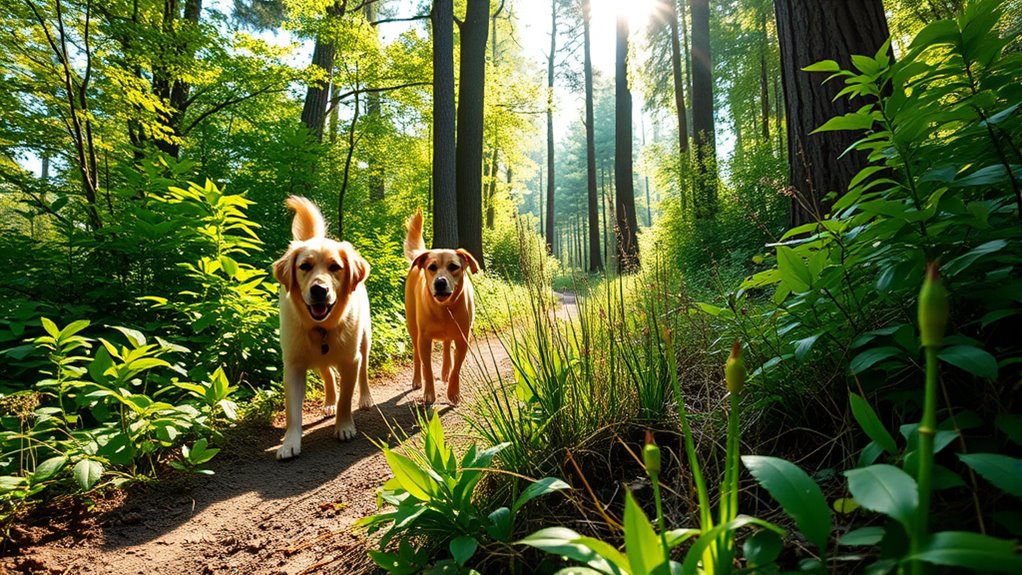

When walking your dog on trails, controlling their movements helps prevent damage to delicate plants and fragile ecosystems. Keep your dog on a leash, stick to designated paths, and avoid trampling vegetation. Bringing waste bags and cleaning up after your dog reduces contamination and preserves the natural beauty. Respecting wildlife and plant life maintains healthy ecosystems for everyone to enjoy. For more tips on minimizing your dog’s impact and protecting plant life, explore further.
Key Takeaways
- Keep dogs on a leash to prevent trampling sensitive plants and habitats.
- Avoid allowing dogs to dig or disturb plant roots along the trail.
- Carry waste bags and clean up to prevent environmental contamination and plant damage.
- Stick to designated pathways to minimize vegetation disturbance.
- Educate dog owners about the ecological impact of off-trail activity on native flora.
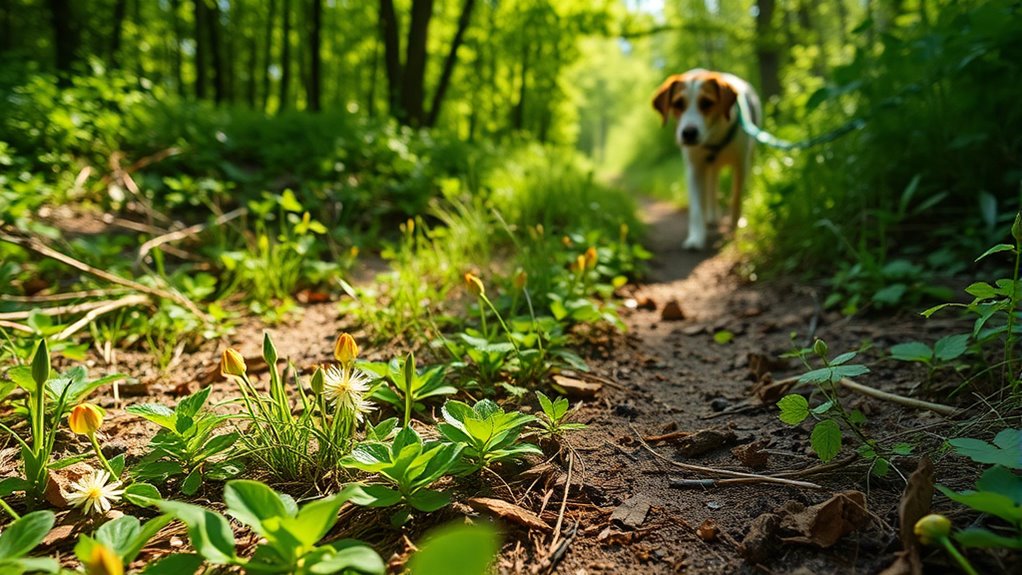
Have you ever wondered why so many hikers bring their dogs along on the trail? It’s because they crave that sense of freedom, companionship, and connection to nature. But this desire for liberation comes with responsibility. When you venture into the wild, your choices can considerably impact the environment around you, especially when it comes to wildlife disturbance and trail etiquette. Your dog is part of your experience, but it’s essential to respect the fragile ecosystems you’re exploring.
Wildlife disturbance is a real issue on popular trails. When dogs chase, bark at, or get too close to animals, it causes stress and displaces wildlife from their natural habitats. This disruption can have long-lasting effects, from altering feeding patterns to disturbing breeding behaviors. As a trail user, you’re responsible for minimizing your dog’s impact. Keeping your dog on a leash is not just about safety; it’s about respecting the animals that call that land home. It’s about recognizing that the trail isn’t just a playground for your pet — it’s a delicate environment that needs your mindful presence.
Keeping your dog on a leash helps protect wildlife and preserves the fragile ecosystem.
Trail etiquette is the backbone of a respectful and enjoyable outdoor experience for everyone. When you bring your dog, you become part of a community that values conservation and mutual respect. Clean up after your pet, always carry waste bags, and make sure your dog is under control at all times. These simple acts preserve the trail’s natural beauty and make certain everyone can experience the wilderness without feeling like they’ve intruded on someone else’s space. Remember, your dog’s behavior can influence how others perceive the trail experience. An overly energetic or unruly dog can disturb other hikers, campers, and wildlife alike. By practicing good trail etiquette, you help foster an environment where humans and animals can coexist peacefully.
Liberation on the trail doesn’t mean ignoring your responsibilities. It’s about understanding your role as a steward of the land. When you respect wildlife and follow trail etiquette, you’re helping protect the very landscapes that make your adventures possible. It’s about choosing harmony over chaos, ensuring that the beauty of nature remains intact for future explorers — both two-legged and four-legged. So, when you hit the trail with your dog, do so with purpose. Respect the environment, keep wildlife disturbance to a minimum, and act in accordance with trail etiquette. That’s the true spirit of liberation — exploring freely while honoring the wild world around you.
Additionally, understanding the importance of raw food in maintaining a healthy diet for your dog can contribute to their overall well-being and longevity.

iYoShop Hands Free Dog Leash with Zipper Pouch, Large, 25-120 lbs, Black
- Removable Zipper Pouch: Store smartphone, keys, treats, and more
- Double Shock Absorbers: Reduce tugging during walks and runs
- Heavy Duty Clip: Secure attachment with D-ring for accessories
As an affiliate, we earn on qualifying purchases.
As an affiliate, we earn on qualifying purchases.
Frequently Asked Questions
Are There Specific Dog Breeds Better Suited for Trail Hiking?
Some breeds are better suited for trail hiking due to their energy levels and endurance, like Labrador Retrievers or Australian Shepherds. You should consider breed suitability and your dog’s fitness before hitting the trail. Training tips include gradually increasing hikes, teaching recall, and managing off-leash time responsibly. Remember, a well-trained, adaptable dog makes your adventure more enjoyable, giving you the freedom to explore confidently together.
How Can I Prevent My Dog From Disturbing Wildlife?
Want to keep wildlife interaction peaceful? You can do this by keeping your dog leashed and close, respecting trail etiquette, and training them to ignore wildlife. Avoid letting them chase or bark at animals, which disturbs their natural behavior. Always stay aware of your surroundings, and create a safe space where your dog’s excitement doesn’t disrupt the environment. Isn’t it rewarding to enjoy nature responsibly while sharing adventures with your dog?
What Should I Do if My Dog Eats Native Plants?
If your dog eats native plants, act quickly. First, identify the plant using your knowledge of plant identification to see if it’s toxic, like certain local species. If it’s toxic, contact your veterinarian immediately and monitor your dog for symptoms like vomiting or lethargy. Keep a list of toxic plants handy for future reference, and always supervise your dog on trails to prevent accidental ingestion.
Are There Trail Restrictions Regarding Dogs in Certain Parks?
You should check park-specific rules before hitting the trail, as some parks have leash regulations that require your dog to stay leashed at all times. Certain parks also demand permit requirements for dogs, especially in protected or sensitive areas. Ignoring these restrictions can lead to fines or being asked to leave. Embrace the freedom of exploring, but always respect local regulations to keep your adventure smooth and enjoyable.
How Can I Keep My Dog Hydrated During Long Hikes?
Forget suffering in silence—your dog deserves refreshment! To keep your pup hydrated on long hikes, carry portable bowls and take advantage of water stations along the trail. Refilling their bowl keeps them energized and happy, freeing you from guilt and ensuring they thrive in the wild. Hydrated dogs are happy dogs, so don’t let them thirst for adventure—give them the freedom to drink and explore!
Conclusion
By keeping your pup on a tight leash and sticking to the trail, you’re like a guardian of the wild, protecting delicate plants from becoming paw prints of chaos. Think of yourself as a steward guiding your furry friend through a living tapestry, where every step preserves nature’s beauty. Together, you and your dog can explore the wilderness without leaving scars, ensuring this vibrant world remains a safe haven for all creatures.