Late winter is the prime time to tap birch and maple trees for sap, as seasonal conditions maximize flow and flavor. During this period, trees remain in dormancy, making tapping less stressful and more productive. You’ll insert spouts into prepared holes to collect sap as it flows naturally. This process lets you create pure syrup, symbolizing independence and self-reliance. Want to discover more about this traditional practice and how to get started? Keep exploring for details.
Key Takeaways
- Late winter is ideal for sap flow in birch and maple trees due to seasonal temperature fluctuations.
- Tapping involves drilling small holes and inserting spouts to collect natural sap.
- Maple sap is typically boiled down into syrup, while birch sap can be consumed fresh or processed.
- The practice connects to traditional, symbolic acts of self-reliance and land stewardship.
- Proper timing during late winter maximizes yield, quality, and aligns with natural sap flow cycles.

Have you ever wondered why late-winter is the ideal time to harvest sap and produce syrup? It’s the season when nature’s true bounty awakens, offering you the chance to tap into the raw power of trees and create something pure, unfiltered, and deeply satisfying. This is the moment when you can take control—when tree tapping becomes not just a method, but a symbol of your connection to the land and your ability to harness its gifts. Late-winter’s unique conditions make it perfect for syrup production because the sap flow is at its peak, yet the trees are still in their dormant phase, ensuring minimal stress and maximum yield.
Late winter awakens nature’s bounty, inviting you to harvest sap and create syrup—an act of freedom and self-reliance.
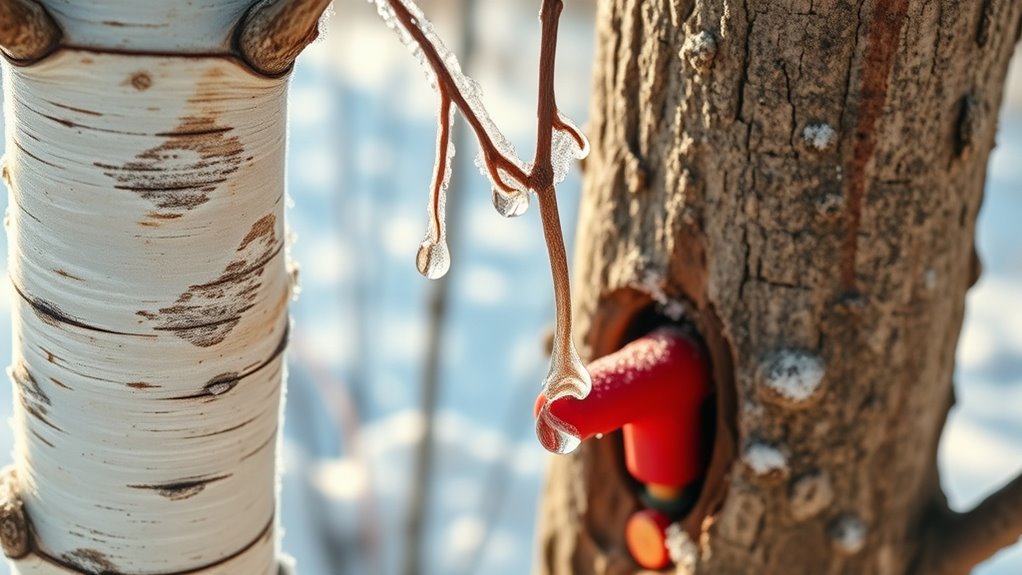
When you tap into trees like maples and birches, you’re engaging in an ancient practice that’s rooted in freedom—freeing yourself from dependence on store-bought sweeteners and reconnecting with traditional ways of living. Tree tapping involves drilling small holes into the trunks and inserting spouts to collect the sap as it flows. The process is straightforward, but its significance is profound. You’re not just collecting liquid; you’re harvesting a gift from nature, a clear reminder of the cycles that sustain us. As you gather the sap, you become part of a movement that values self-reliance, sustainability, and the pure joy of creation. Understanding the natural sap flow patterns helps optimize your harvest and ensures a successful season.
Once collected, the sap is transformed through boiling into rich syrup. This is where syrup production becomes an act of liberation—taking a simple, watery substance and turning it into a sweet, aromatic treasure. The process demands attention and care, but it’s also empowering. You control the environment, the timing, and the final product, shaping it with your own hands. The patience required to simmer the sap down is a metaphor for the broader journey of self-sufficiency—learning, adapting, and ultimately mastering the art of turning raw materials into something extraordinary.
Late winter’s the perfect time to embrace this craft because it aligns with your desire to break free from commercial constraints. It’s about reclaiming your food sources, understanding the land’s rhythms, and producing something that’s not just delicious but also a testament to your independence. Tree tapping and syrup production during this season aren’t just activities—they’re a declaration of sovereignty over what you consume. By harnessing the natural flow of sap, you step into your power, transforming a fleeting season into a lasting symbol of freedom and resilience.
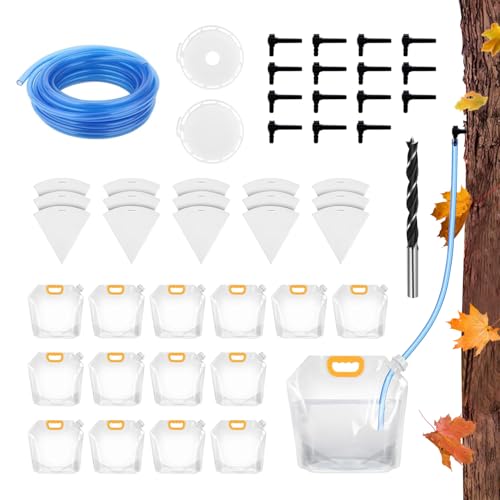
15 Sets Maple Syrup Tree Tapping Kit – (15) 5/16" Taps for Maple Trees, 44.3Ft Tubing, (15) 1 Quart Filters, (1) Drill Bit, (15) 5L Bags, (15) perforated and (15) non-perforated lids for Experts or Beginners (15 Package)
COMPLETE TAP SET: Our Maple Syrup Tree Tapping Kit includes 15 sets of premium taps, ensuring you have…
As an affiliate, we earn on qualifying purchases.
As an affiliate, we earn on qualifying purchases.
Frequently Asked Questions
How Long Does the Sap Harvesting Season Typically Last?
The sap harvesting window usually lasts between four to six weeks, depending on your location and the weather. During this period, you can tap into the trees’ natural flow, feeling the thrill of liberation from the constraints of winter. The sap season duration varies with temperature swings, so keep an eye on the weather to maximize your harvest. Embrace the short, sweet window to connect with nature’s pulse.
What Are the Main Differences Between Birch and Maple Sap?
You’ll notice that birch sap is clear and runs earlier, while maple sap is slightly sweeter and flows later. Tree identification helps you distinguish them easily, with birch having thin, papery bark and maple’s thicker, grooved bark. When harvesting, use gentle techniques to avoid damage. Embrace the liberation of foraging, tapping into nature’s flow, and savor the unique flavors of each tree’s sap.
Can Sap Be Collected From Other Tree Species?
Yes, you can collect sap from alternative tree species like birch, walnut, and sycamore. Each requires different sap collection methods, but all offer a way to tap into nature’s bounty beyond maple and birch. Embrace the freedom to explore these options, experiment with different techniques, and enjoy the unique flavors they provide. Breaking free from traditional sources allows you to connect deeper with the forest and its diverse offerings.
How Do Weather Conditions Affect Sap Flow?
You might think weather doesn’t matter, but it totally controls sap flow. Temperature fluctuations, especially warm days followed by cold nights, create pressure changes that push sap up the tree. Precipitation impacts this process too—wet conditions can hinder flow by saturating the soil, while dry spells boost it. So, if you’re after a bounty, pay close attention to weather patterns—they hold the key to opening that sweet flow.
Is It Safe to Consume Sap Directly From the Tree?
You shouldn’t drink sap directly from the tree because it could be contaminated with bacteria or other pollutants, risking your health. Plus, removing sap improperly can harm the tree’s health and future sap production. To enjoy it safely, always collect sap with clean tools, boil it thoroughly to eliminate bacteria, and respect the tree’s wellbeing. This way, you stay safe and keep the trees healthy for many seasons.

35 Sets Maple Syrup Tapping Kit with 10 Maple Sap Taps 3Ft Tubing 10 5L Bags 5 Syrup Filters Maple Syrup Kit for Supplies
【Complete Contents】Includes 10 x maple syrup taps, 10 x 3ft food grade tubing, 10 x 5L collection bags,…
As an affiliate, we earn on qualifying purchases.
As an affiliate, we earn on qualifying purchases.
Conclusion
As you gather the last drips of sap, imagine the sweet, clear liquid flowing like liquid gold into your jar. With each sip, you taste the quiet promise of spring awakening, the trees whispering stories of winter’s end. The aroma of boiling syrup fills the air, warming your hands and spirit. Embrace this seasonal ritual, and let the magic of late-winter sap remind you of nature’s timeless cycle of renewal and sweet rewards.
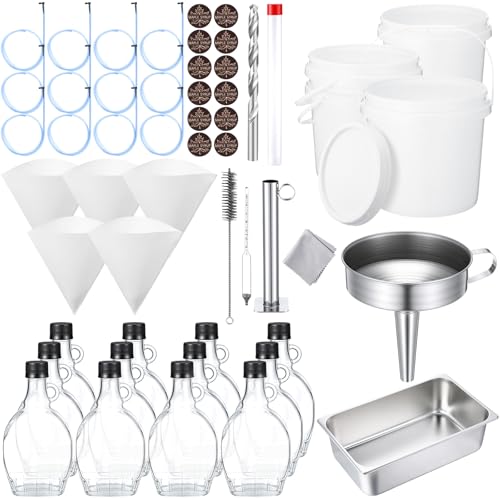
Teecyhooo 62 PCS Maple Syrup Processing Kit with Pan, 12 Glass Bottles, 5 Buckets with Lids, 12 Plastic Spiles, Hydrometer Test Cup, 12 Filters, Stickers & Funnel for Maple Syrup and Sugar Starter Kit
The Set Includes: you'll receive a complete maple syrup collection process, including 12 glass maple syrup bottles, a…
As an affiliate, we earn on qualifying purchases.
As an affiliate, we earn on qualifying purchases.

Liberty Supply Professional Maple Tree Tapping Drill Bit for 5/16" Tap Hole
5/16" Tapping Bit. Works with all 5/16 taps. Specially engineered 90 degree point.
As an affiliate, we earn on qualifying purchases.
As an affiliate, we earn on qualifying purchases.