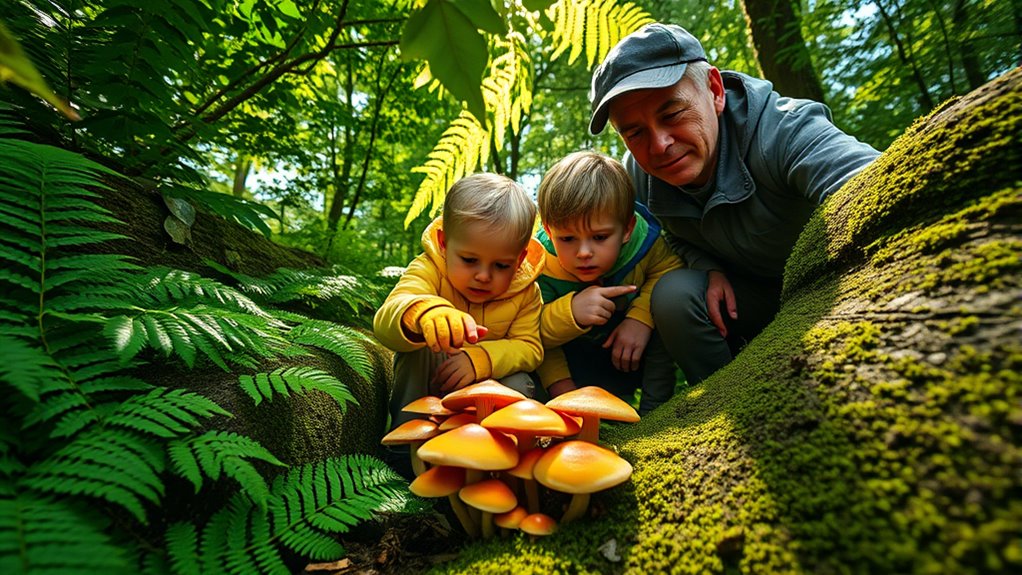

To safely forage with children, teach them to recognize edible mushrooms by observing key features like cap shape, gill attachment, and color, and encourage cautious behavior. Keep children on established trails, supervise closely, and always use gloves and containers. Cultivate patience and respect their curiosity while emphasizing that they should never touch or pick unknown mushrooms. If you keep exploring, you’ll discover more tips to make foraging both fun and safe for everyone involved.
Key Takeaways
- Teach children to observe mushroom features carefully, emphasizing the importance of proper identification before touching or picking.
- Use visual aids and apps to help kids recognize safe versus toxic mushrooms, promoting independent learning.
- Establish clear boundaries and stay on designated trails to prevent children from exploring unsafe areas.
- Encourage cautious behavior, like wearing gloves and not touching unknown mushrooms, to minimize risks.
- Foster a sense of responsibility by modeling safety practices and verifying mushroom identities with trusted resources.
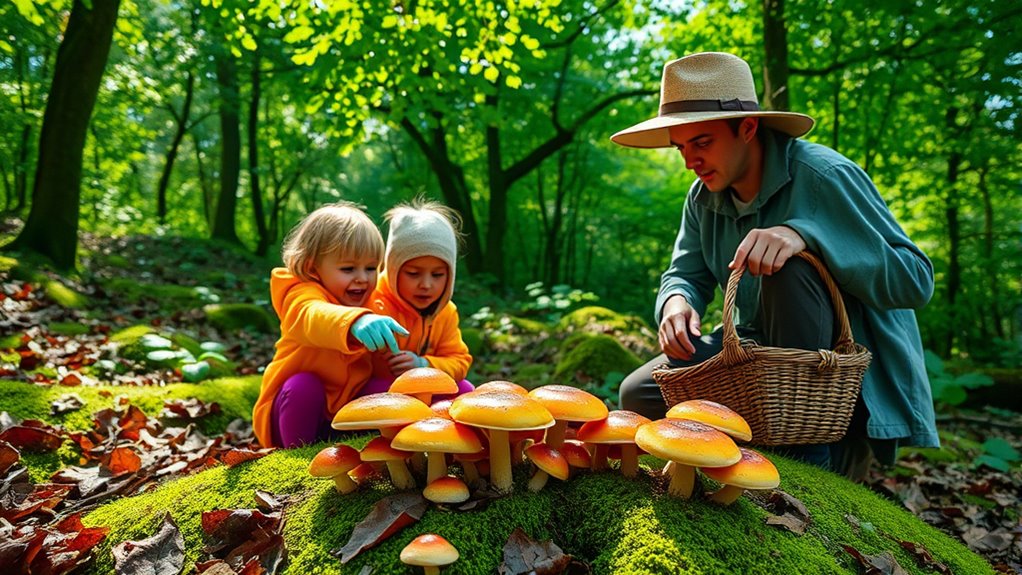
Foraging for mushrooms can be a fun and educational activity to enjoy with children, but safety must always come first. As you venture into the outdoors, it’s crucial to focus on developing strong identification skills. These skills act as your first line of defense, helping you distinguish between edible varieties and their toxic counterparts. When you teach children to observe the details—such as cap shape, gill attachment, stem features, and color variations—you empower them to recognize safe mushrooms and avoid dangerous ones. Clear, simple guidelines make the process engaging rather than overwhelming, and children thrive when they see the importance of careful observation. Remember, outdoor safety isn’t just about avoiding poisonous fungi; it’s about creating a respectful relationship with nature and understanding its power. Always remind your young explorers that if they’re unsure about a mushroom, it’s better to leave it untouched. Incorporate visual aids like field guides or mushroom identification apps to reinforce learning, making the activity both interactive and educational.
As you and your children navigate the woods, keep safety at the forefront. Stay on established trails, avoid wandering into dense or unfamiliar areas, and keep a close eye on little ones at all times. Establish clear boundaries so that children understand which areas are safe for foraging and which are off-limits. Equip yourselves with gloves and containers, and teach children not to touch or pick mushrooms unless you’ve identified them together. This practice cultivates a sense of responsibility and caution, fostering outdoor safety awareness from the start. Additionally, teach children to look but not touch—emphasizing respect for the environment and the potential dangers lurking in the undergrowth. By modeling cautious behavior and emphasizing the importance of patience, you help cultivate a sense of liberation that comes from safely exploring nature’s mysteries.
Furthermore, understanding the Relationships – Cheating Husband Secrets can help you better interpret behaviors and signs in your environment, including the subtle cues from nature that indicate safe or unsafe mushrooms. Finally, instill in children the importance of seeking expert advice when in doubt. Encourage them to ask questions and verify mushroom identities with trusted resources or local mycological groups. This approach promotes confidence and independence, empowering them to take charge of their safety while embracing the joy of discovery. When the focus remains on developing solid identification skills and practicing outdoor safety, foraging transforms from a risky adventure into a liberating experience—one that deepens your connection to nature, teaches responsibility, and sparks curiosity. Remember, the goal isn’t just to find mushrooms but to do so in a way that keeps everyone safe and inspired to explore responsibly.
Frequently Asked Questions
What Are Common Poisonous Mushrooms to Watch Out For?
You should watch out for poisonous lookalikes like death cap and destroying angel mushrooms, which can be deadly. These toxic mushrooms often have features like a smooth, white gill structure or a distinctive ring on the stem. Always teach children to avoid mushrooms with bright colors, unusual shapes, or unknown features. By recognizing these toxic mushroom features, you can guarantee a safe and enjoyable foraging adventure without risking poisoning.
How Can I Identify Edible Mushrooms Accurately?
To identify edible mushrooms accurately, focus on mushroom identification by examining features like cap shape, gill structure, and stem details. Always cross-reference your findings with reputable field guides or trusted apps. Remember edible mushroom tips: never consume a mushroom unless you’re 100% sure of its identification, and when in doubt, consult an expert. Enjoy foraging freely, but prioritize safety to truly liberate your outdoor experience.
Are There Age Restrictions for Children When Foraging?
You can start foraging with children of nearly any age, but it’s vital to provide age-appropriate guidance and keep a watchful eye. Parental supervision isn’t just recommended; it’s your shield against mushroom mishaps. Younger kids might find it hard to resist touching or tasting, so make the experience educational and fun while maintaining strict oversight. With the right precautions, you can access nature’s treasure trove safely and liberate your family’s outdoor spirit.
What First Aid Steps Should Be Taken if Ingestion Occurs?
If ingestion occurs, act fast by calling poison control immediately for guidance. Keep the mushroom container handy, and follow their instructions carefully. Don’t induce vomiting unless specifically advised. You should also initiate emergency response by monitoring the child for symptoms like nausea, dizziness, or difficulty breathing. Stay calm, provide reassurance, and wait for professional help. Prompt action can make a difference, so stay focused and act swiftly.
How Can I Teach Children to Respect Nature During Foraging?
You can teach children to respect nature by showing them how to respect boundaries and encouraging curiosity responsibly. Imagine exploring a forest, where you gently teach them not to disturb plants or wildlife, fostering a deep connection. Encourage questions and exploration, but emphasize that nature’s treasures are fragile and must be preserved. By modeling respectful behavior and celebrating discovery, you free their spirit while nurturing a lifelong bond with the environment.
Conclusion
By teaching children to identify safe mushrooms and emphasizing caution, you create memorable adventures that feel like stepping into a storybook forest. Always supervise their curiosity, and remember, even a brave explorer like Robin Hood wouldn’t venture without knowing his path. With patience and guidance, you turn mushroom foraging into a safe, enchanting experience—where every discovery is as magical as finding hidden treasure in a secret garden. Keep safety first, and let the forest’s wonders unfold!