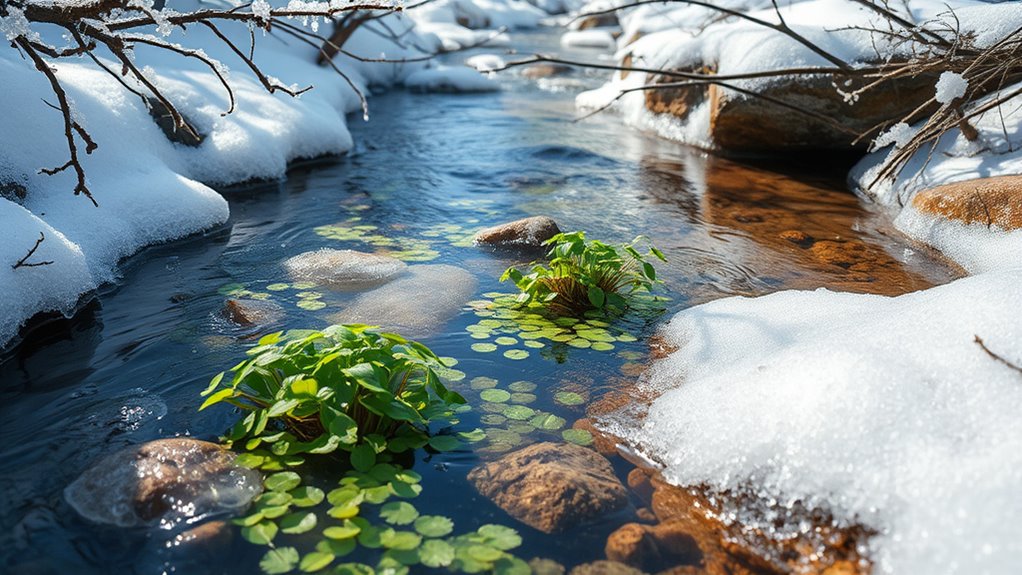

In winter, ensuring watercress safety starts with sourcing it from clean, protected water sources like streams, springs, or well-maintained garden beds. Always inspect your watercress for signs of contamination, and wash it thoroughly with cold, running water before use. Handling greens with clean hands and proper storage further protect their freshness. If you keep these practices in mind, you’ll enjoy safe, vibrant watercress all winter — and there’s more to discover on how to keep it pristine.
Key Takeaways
- Harvest watercress from clean, running freshwater sources like streams or spring-fed ponds to minimize contamination risks.
- Avoid collecting watercress near agricultural runoff, sewage outlets, or stagnant water to ensure safety.
- Rinse watercress thoroughly with cold, filtered water before consumption or storage to remove dirt and potential pathogens.
- Prefer harvesting watercress early in the morning when moisture levels are high and greens are freshest.
- Use proper storage methods, such as wrapping in damp paper towels and refrigeration, to maintain cleanliness and freshness.
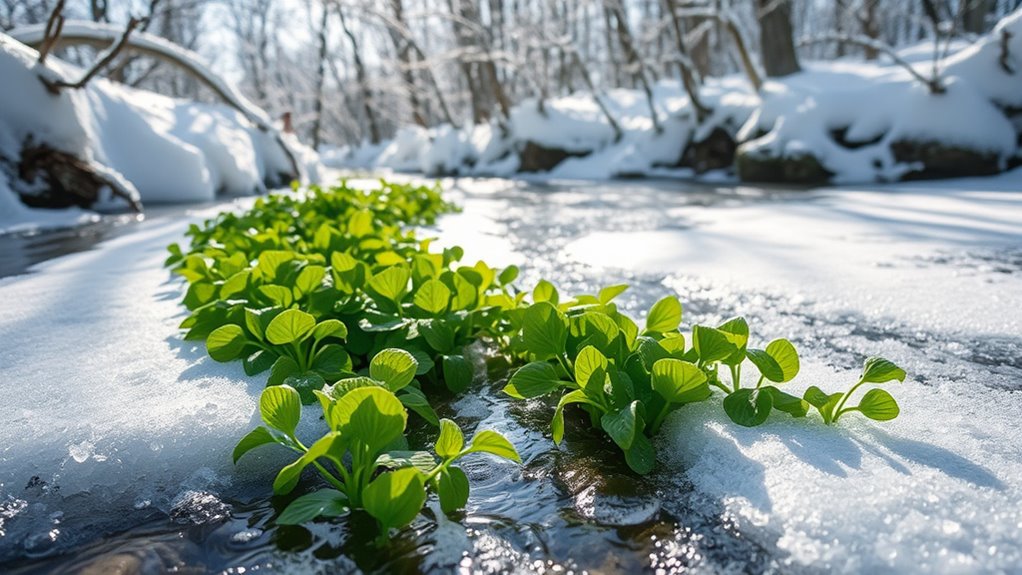
Watercress remains a hardy and versatile greens option even during winter months. When you embrace this resilient plant, you unlock the freedom to enjoy fresh, vibrant greens no matter how cold it gets outside. Winter harvesting is your secret weapon—by choosing the right time and method, you ensure your watercress stays crisp and flavorful. As temperatures drop, you can still gather healthy greens, but it’s crucial to do so carefully. Look for watercress thriving in protected spots, like near streams or in sheltered gardens, where the cold isn’t as harsh. Harvest early in the day, when plants are still hydrated, and handle them gently to prevent bruising. This way, you retain maximum freshness, giving you the liberty to incorporate watercress into your winter meals. Regular harvesting and proper storage help maintain its freshness and flavor, allowing you to enjoy the greens long after picking.
Once you’ve harvested your watercress, cold weather storage becomes your ally. Instead of letting the cold diminish its vitality, you can store it in ways that preserve its crunch and peppery flavor. Use perforated bags or wrap it loosely in damp paper towels, then place it in the crisper drawer of your refrigerator. This method keeps the greens moist and cool, extending their life. Remember, watercress is delicate, so avoid stacking it with heavier produce that could crush its tender leaves. Your goal is to maintain its freshness without sacrificing the freedom to enjoy it at your convenience. Proper storage empowers you to take control of your greens, ensuring they’re ready whenever you need them.
The beauty of winter harvesting and cold weather storage is that they give you autonomy over your greens. No longer are you bound by seasonal limitations or market shortages. Instead, you take charge, sourcing watercress directly from your garden or trusted local sources, and keep it fresh through simple, effective techniques. This approach liberates you from dependency on supermarket supplies that might lack freshness or quality. By understanding how to harvest wisely and store correctly, you maintain access to these nutrient-packed greens all winter long. It’s about reclaiming your ability to nourish yourself with fresh, homegrown greens, even when the world outside feels dormant. Watercress in winter isn’t just a survival tactic; it’s a declaration of independence, a way to stay connected to nature’s bounty year-round.
Top picks for "watercres winter safety"
Open Amazon search results for this keyword.
As an affiliate, we earn on qualifying purchases.
Frequently Asked Questions
How Does Winter Weather Affect Watercress Growth?
Winter weather slows watercress growth as plant dormancy kicks in, making your plants less active. Cold water temperatures, often below ideal levels, hinder their development. You might notice it becomes harder to harvest lush leaves, but don’t worry—this pause is natural. To keep your watercress thriving, make certain the water stays relatively warm and protected from harsh freezes, giving your plants a chance to bounce back when conditions improve.
Can Watercress Be Cultivated Indoors During Winter?
Yes, you can cultivate watercress indoors during winter through indoor gardening and winter propagation. Set up a shallow container with clean, nutrient-rich water, and place it in a bright spot with indirect sunlight. Keep the water fresh and change it regularly to prevent stagnation. This way, you enjoy fresh watercress year-round, freeing yourself from seasonal limits and embracing the liberating joy of home-grown greens anytime you desire.
What Are the Best Winter Water Sources for Watercress?
Imagine your watercress as a brave swimmer in winter’s icy pool. To keep it thriving, use a gentle stream of clean, frost-protected water, like a warm current guiding it safely. Opt for sources with consistent flow, shielding your plant from frost with floating covers or insulation during winter watering. This approach liberates your watercress from winter’s grip, helping it flourish despite the cold.
How to Prevent Freezing Damage to Watercress Plants?
To prevent freezing damage to your watercress, you should use effective frost protection methods like covering plants with frost blankets or old blankets during cold nights. Mulching techniques, such as applying straw or compost around the base, insulate roots and retain warmth. make certain you water the plants well before cold snaps, as moist soil holds heat better. Taking these steps helps keep your watercress thriving despite winter’s chill.
Are There Specific Winter Pests to Watch for With Watercress?
During winter, watch out for winter pests like aphids, caterpillars, and beetles that can still attack your watercress. To keep these pests at bay, practice pest prevention by removing debris, using row covers, or applying organic insecticides. Staying vigilant and proactive guarantees your watercress stays healthy and pest-free. Don’t let pests dominate your harvest—take control now and enjoy fresh, vibrant watercress all winter long.
Conclusion
As you enjoy your winter watercress, remember that safe, clean water is key—just like how finding that perfect, crisp apple unexpectedly makes your day better. When you source your water carefully, you’re not only protecting your health but also ensuring your greens stay fresh and vibrant. It’s funny how a simple choice, like checking your water quality, can turn an ordinary meal into something truly nourishing. Stay vigilant, and your winter greens will always reward you.