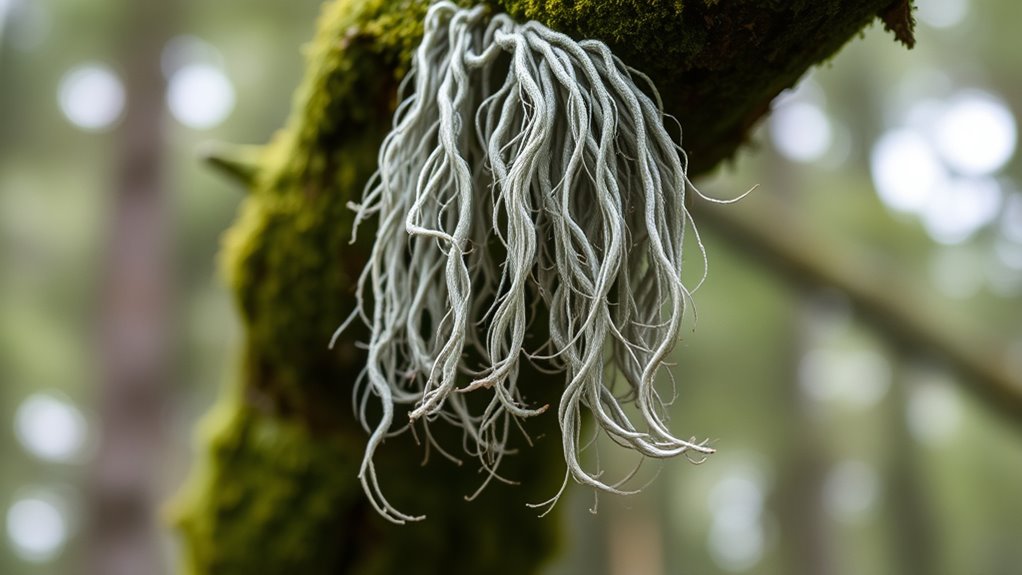

To identify usnea, look for its distinctive, beard-like, wispy strands hanging from coniferous trees in moist forests. It feels brittle yet dense, with a pale gray or greenish-gray color. To make a tincture, harvest fresh or dried pieces, soak them in alcohol like vodka for 4-6 weeks while shaking regularly, then strain and store. This process extracts powerful antimicrobial compounds. Keep exploring to discover more about harvesting and using this remarkable natural remedy.

Get garden gear delivered free with Prime
- Fast, free delivery on millions of items
- Prime Video, Amazon Music and more included
- Member-only deals all year
Key Takeaways
- Identify usnea by its wispy, hanging fronds with a beard-like appearance on coniferous trees in moist forests.
- Collect fresh or dried usnea, then soak in high-quality alcohol for 4-6 weeks to create a tincture.
- Use small pieces of usnea to effectively extract active compounds like usnic acid during infusion.
- The tincture supports immune health, respiratory comfort, and overall wellness through its antimicrobial properties.
- Proper identification and preparation ensure safe, potent herbal medicine rooted in sustainable, natural practices.

Have you ever noticed the wispy, beard-like strands hanging from trees in forested areas? That’s usnea, also known as Old Man’s Beard, and it’s a powerful ally waiting for you to discover its true potential. The first step in harnessing this wild treasure is mastering lichen identification. Look for its distinctive, draping appearance—long, pale gray or greenish-gray fronds that resemble a scruffy beard. It’s usually found hanging from coniferous trees, especially in moist, healthy forests. When identifying usnea, pay attention to its texture; it’s somewhat brittle but resilient, and it often feels like a dense, tangled mass of hair. Recognizing these key features allows you to confidently differentiate usnea from other lichens, which is essential for safe and effective use. Understanding its role in ecosystems can deepen your appreciation for this remarkable organism.
Once you’ve identified usnea, your next step is understanding tincture preparation. Making a tincture is a way to extract and preserve its medicinal properties, empowering you to use it whenever needed. To start, gather fresh or dried usnea, cutting it into small pieces to maximize surface area. You want to use high-quality alcohol—vodka or grain alcohol works well—to extract the beneficial compounds. Place the chopped usnea in a clean glass jar, covering it completely with alcohol. Seal the jar tightly, then give it a gentle shake to mix everything thoroughly. Store the jar in a cool, dark place for at least four to six weeks, shaking it regularly to guarantee even extraction.
During this tincture preparation process, patience is your ally. Over time, the alcohol pulls out the usnea’s active constituents, including usnic acid, which has antimicrobial and immune-boosting effects. Once the infusion period is complete, strain out the plant material using cheesecloth or a fine strainer, and transfer the tincture into dark glass bottles for storage. Properly prepared, this tincture becomes a potent herbal medicine you can use to support your immune system, soothe respiratory issues, or promote overall wellness. Remember, your connection to nature’s medicine is about empowerment—taking control of your health with the gifts of the wild. By learning to identify usnea accurately and mastering tincture preparation, you’re opening a powerful, natural tool that puts health back in your hands, free from dependence on synthetic remedies. Embrace the knowledge, trust your instincts, and let the wild medicine of usnea enhance your journey toward vitality and independence.
Frequently Asked Questions
Can Usnea Be Safely Used During Pregnancy?
You should avoid using Usnea during pregnancy because of potential safety concerns. While it has herbal benefits, its safety during pregnancy isn’t well established, so you risk unintended effects. Always prioritize pregnancy safety and consult a healthcare professional before adding herbal tinctures like Usnea to your routine. Remember, herbal considerations vary, and protecting your health and your baby’s is the top priority.
How Does Climate Affect Usnea’s Medicinal Properties?
Climate variation directly influences usnea’s medicinal potency. Warmer, moist environments boost its growth and chemical complexity, enhancing its healing properties. Conversely, extreme heat or dryness can weaken its strength and reduce effectiveness. You can harness this knowledge to select the best harvest time, ensuring maximum medicinal benefits. Embrace the wild spirit of usnea, trusting that climate shapes its power—your connection with nature amplifies its healing potential.
Are There Any Known Drug Interactions With Usnea Tincture?
You won’t believe it, but usnea tincture has minimal known drug interactions, making it a rebel in herbal safety! Still, you should always stay vigilant—certain medications might clash with its potent compounds. Don’t just assume it’s safe; check with your healthcare provider to avoid dangerous interactions. Embrace your herbal freedom, but do so wisely—knowledge is your ultimate liberation in the world of natural healing!
What Are Common Substitutes for Usnea in Herbal Medicine?
If you’re seeking herbal substitutes for usnea, try alternative lichens like Iceland moss or rock tripe—they offer similar antimicrobial benefits. These herbal alternatives empower you to explore natural healing beyond traditional options. By embracing these substitutes, you liberate yourself from reliance on a single remedy, opening up a world of diverse herbal medicine. Feel free to experiment with these options to find what resonates best with your healing journey.
How Long Does Usnea Tincture Typically Last?
Your usnea tincture typically lasts about 2 to 3 years when stored with proper preservation methods like in a dark, airtight container. To maximize its shelf life, keep it away from light and heat. Regularly check for signs of spoilage, such as changes in color or smell. By storing it correctly, you guarantee your tincture remains potent and ready to support your health journey whenever you need it.
Conclusion
By learning to identify usnea in the field, you’ll notice how its distinctive appearance often appears just when you need it most — like a trusted old friend. That coincidence of finding it right when you’re searching reminds you how nature provides exactly what you seek, if you pay attention. With your newfound knowledge of tinctures, you’ll feel more confident using this remarkable plant, trusting that the universe often leads you to the right remedies exactly when you need them.
Fall Picks
fall essentials
As an affiliate, we earn on qualifying purchases.