
To prevent plant disease spread, regularly clean and disinfect your gardening tools between uses. Organic disinfectants like vinegar or hydrogen peroxide are safe options that kill fungi, bacteria, and viruses effectively. Proper cleaning includes removing dirt and debris, then disinfecting and thoroughly drying tools to avoid rust or mold. Storing tools in a dry, organized space also helps maintain cleanliness. Continuing will give you detailed steps for keeping your tools safe and your garden healthy.

Get garden gear delivered free — and shop member deals
- Fast, free delivery on millions of items
- Access to Prime Big Deal Days deals on October 6–7
- Prime Video, Amazon Music and more included
Key Takeaways
- Regularly clean and disinfect gardening tools to remove soil, sap, and pathogens before use on different plants.
- Use organic disinfectants like vinegar or hydrogen peroxide to effectively eliminate harmful microorganisms.
- Dry tools thoroughly after cleaning to prevent rust and inhibit fungal or bacterial growth.
- Store tools properly in organized, dry spaces to reduce contamination and ease routine sanitation.
- Incorporate routine tool sanitation into your gardening practices to minimize disease spread and promote healthy plants.
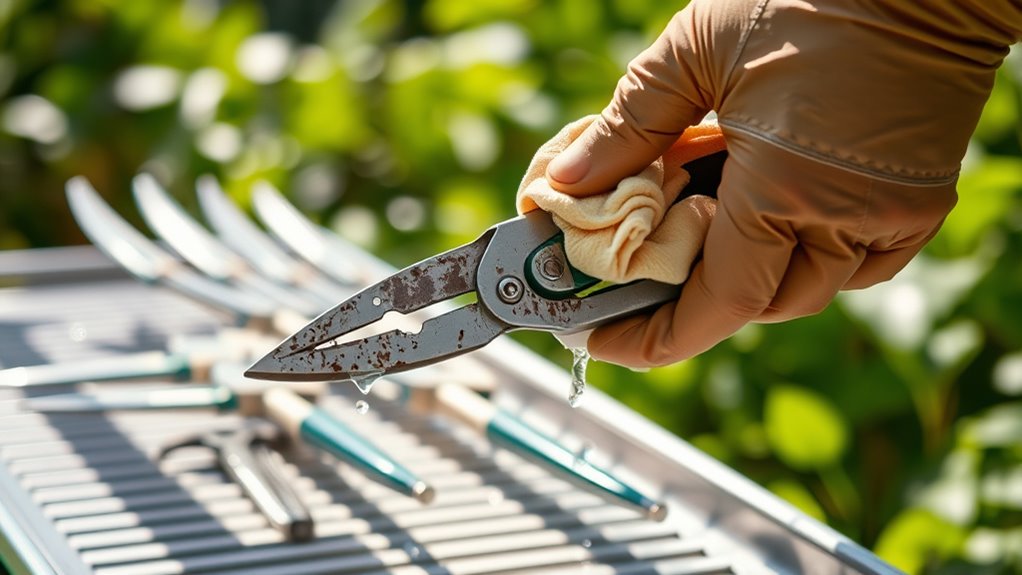
Proper tool sanitation is essential for maintaining a safe and efficient work environment. When you’re tending to your garden, the last thing you want is to inadvertently spread plant diseases or pests from one plant to another. That’s where understanding how to keep your garden equipment clean and using the right disinfectants becomes a game-changer. Sanitation isn’t just about cleanliness; it’s about protecting your plants’ health and ensuring your hard work pays off.
Proper tool sanitation protects your plants and ensures a thriving, healthy garden.
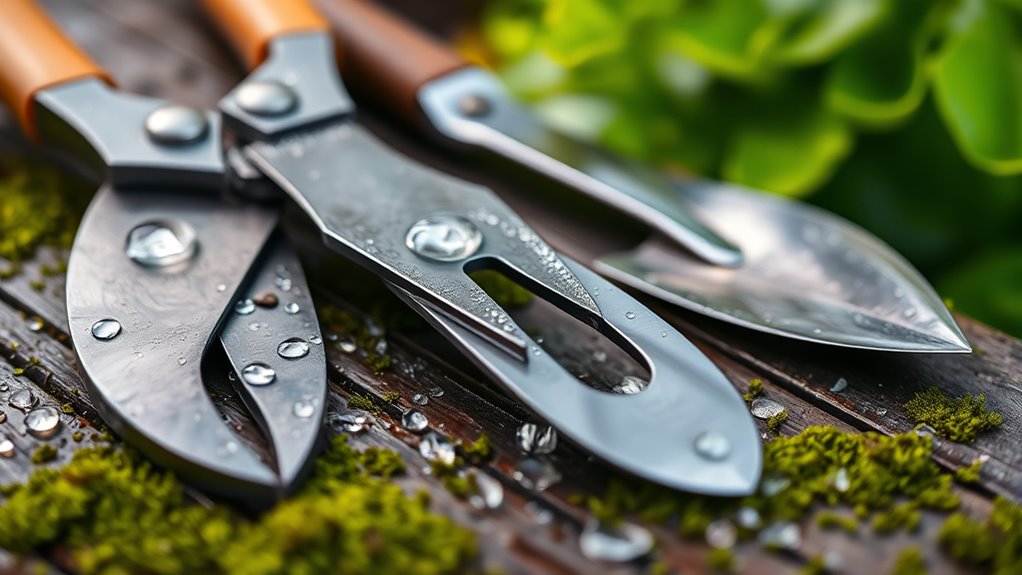
You need to recognize that garden equipment—pruners, shovels, trowels, and pruning shears—can easily carry pathogens if not properly cleaned. Every cut or dig might be a gateway for fungal spores, bacteria, or viruses. That’s why regular cleaning between uses is *crucial*. Instead of relying solely on chemical disinfectants, many gardeners are turning to organic disinfectants. These natural solutions effectively kill harmful microorganisms without introducing harmful chemicals into your garden ecosystem. Plus, they’re better for the environment and safer for you, especially if you prefer a more organic approach to gardening.
When you’re sanitizing your tools, start by removing soil, sap, and plant debris. A simple scrub with water and a brush often does the trick, but it’s important to go further. Using organic disinfectants like a vinegar solution or a hydrogen peroxide mix can *considerably* reduce the risk of disease transmission. These solutions are easy to prepare—diluted vinegar or a mixture of hydrogen peroxide and water—and they’re gentle yet effective. After soaking your tools, give them a thorough rinse and dry them properly. Dry tools not only prevent rust but also ensure that no moisture remains that could harbor fungi or bacteria.
In addition, incorporating wall organization systems can help keep your tools orderly and easily accessible, encouraging regular sanitation routines. Consistently cleaning your garden equipment isn’t just about preventing disease—it’s about reclaiming your garden’s vitality. When you’re proactive, you’re controlling the health of your plants rather than reacting to disease outbreaks. It’s empowering to know that simple, eco-friendly steps can safeguard your garden. Think of sanitation as a form of liberation—freeing your plants from the threat of infection and reducing your reliance on chemical pesticides or fungicides. With organic disinfectants and proper cleaning routines, you’re creating a more resilient, thriving garden environment.
Frequently Asked Questions
How Often Should Tools Be Sanitized During Peak Planting Season?
During peak planting season, you should sanitize your tools daily to guarantee ideal tool maintenance and prevent disease spread. After each use on different plants, disinfect your tools with a suitable solution to keep pathogens at bay. This frequent sanitation keeps your plants healthy and reduces the risk of disease transmission. Stay vigilant, maintain your tools regularly, and enjoy the freedom of thriving, disease-free crops.
Are There Eco-Friendly Disinfectants Suitable for Garden Tools?
Yes, there are eco-friendly disinfectants perfect for your garden tools. Look for biodegradable disinfectants that offer plant-safe cleaning, so you can sanitize without harming your garden or the environment. These natural options help you stay responsible while keeping your tools germ-free. By choosing plant-safe cleaning solutions, you gain peace of mind, knowing you’re protecting your plants and the planet at the same time.
Can Sanitized Tools Be Stored Together Without Contamination?
Yes, sanitized tools can be stored together if you take precautions to reduce contamination risk. Make certain all tools are thoroughly dry and completely disinfected before storing. Use designated storage areas that are clean and well-ventilated, and consider separating tools based on their use or plant type. Proper tool storage not only prevents contamination but also prolongs tool life, giving you the freedom to garden confidently and sustainably.
What Are the Signs of Ineffective Tool Sanitation?
A stitch in time saves nine, and spotting ineffective sanitation early prevents bigger issues. If your tools still have visible dirt, plant sap, or residue, it’s a sign of poor sanitation. You might notice disease transmission or contamination risks from tools that aren’t fully cleaned. Don’t let contaminated tools hold you back—regularly inspect, scrub thoroughly, and guarantee no signs of pathogens linger to keep your plants healthy.
Does Tool Sanitation Require Special Training or Certifications?
No, tool sanitation doesn’t require special training or certifications, but understanding proper sanitation procedures and maintaining your tools correctly is essential. You should know how to clean and disinfect tools effectively to prevent disease spread. Regular tool maintenance keeps equipment in top shape, making sanitation easier and more effective. By learning these simple practices, you’re empowered to protect your plants and ensure healthy growth without unnecessary restrictions.
Conclusion
So, next time you’re about to skip cleaning your tools, remember: your careless moment could be the very reason your plants fall ill. Ironically, the simple act of sanitation might be the most effective weapon against disease — yet it’s often the first thing ignored. Don’t let your neglect turn a healthy garden into a disease-ridden disaster. Clean your tools, protect your plants, and prove that a small effort can make a big difference.
Halloween Picks
halloween
As an affiliate, we earn on qualifying purchases.