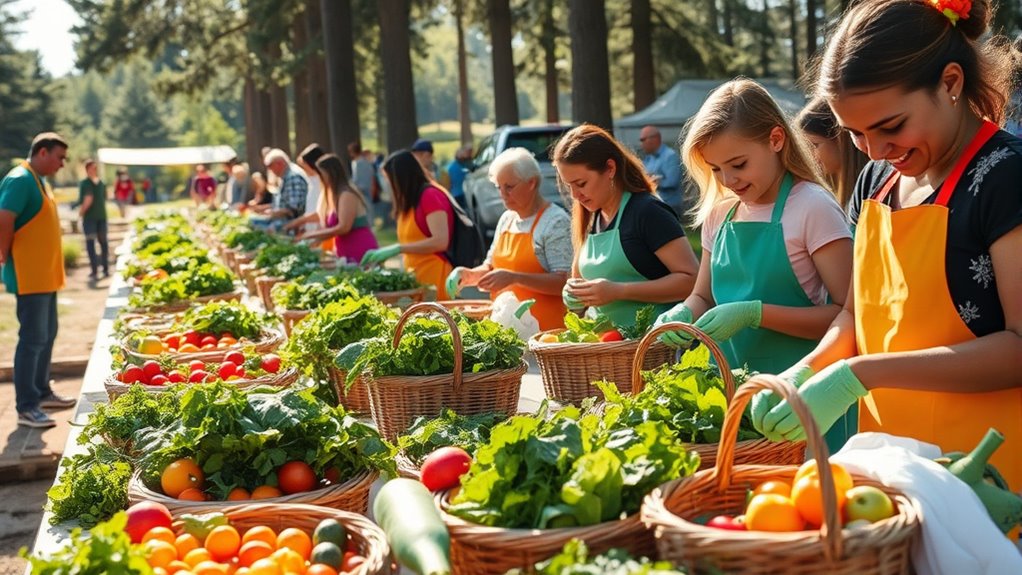

To organize ethical gleaning at community harvest events, focus on fostering fairness, respect, and local empowerment. Coordinate volunteers to guarantee everyone’s contributions are valued and establish transparent donation practices that honor farmers and donors. Create inclusive spaces that challenge traditional power structures and promote shared responsibility. By emphasizing community ownership and responsible resource sharing, your event can become a powerful tool for food sovereignty and social change—if you continue exploring, you’ll discover ways to deepen this impact further.

Get garden gear delivered free with Prime
- Fast, free delivery on millions of items
- Prime Video, Amazon Music and more included
- Member-only deals all year
Key Takeaways
- Establish transparent donation and harvest protocols that respect farmers’ efforts and prioritize ethical, community-centered distribution.
- Coordinate volunteers with clear communication, emphasizing inclusivity, shared responsibility, and dismantling hierarchical roles.
- Engage local farmers and community members early to foster trust, ownership, and alignment with food sovereignty principles.
- Implement efficient harvest, storage, and distribution practices to minimize waste and maximize equitable access.
- Promote educational and visual materials to motivate participation and highlight the movement’s ethical and community-led values.
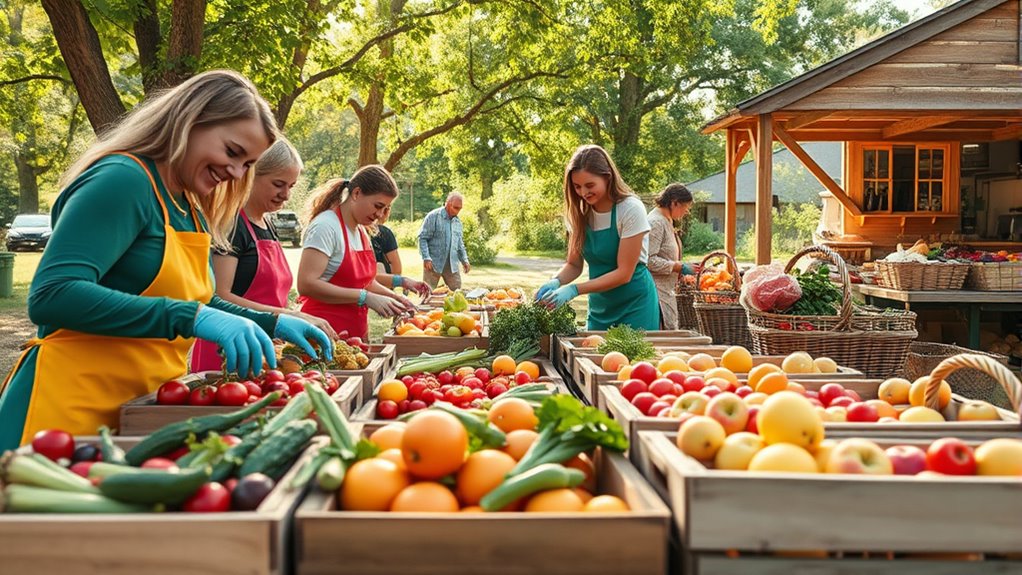
Have you ever wondered how communities come together to share fresh, local produce? It’s a powerful act of liberation, a way to reclaim control over what we eat and who benefits from it. Organizing community harvest events isn’t just about gathering food; it’s about fostering connection, empowerment, and fairness. Behind the scenes, two critical elements make it all possible: volunteer coordination and donation logistics. These aren’t just operational tasks; they’re the backbone of an ethical, community-led movement.
Community harvests empower and connect us through volunteer effort and responsible donation management.
When you step into the role of volunteer coordinator, you’re helping to create a space where everyone’s contribution matters. You rally people who believe in the cause—farmers, neighbors, activists—and guarantee they understand their essential role. Good volunteer coordination means you’re not just assigning tasks; you’re inspiring a shared sense of purpose. You keep communication clear and open, making sure everyone knows where to be and what to do. This creates an atmosphere of trust and solidarity, indispensable for a successful harvest event. By empowering volunteers, you help dismantle the barriers of hierarchy and passivity, encouraging everyone to actively participate in nourishing their community.
Donation logistics is equally pivotal, and it’s about more than just collecting food. It’s about managing donations ethically—making sure that produce is harvested, stored, and distributed responsibly. You need to establish transparent systems for accepting donations, verifying the quality of produce, and ensuring it reaches those who need it most. This process respects the effort of farmers and donors, honoring their intention to share bounty without exploitation. It’s also about minimizing waste and making every contribution count. When donation logistics are handled with integrity, it transforms raw generosity into tangible empowerment, giving communities the tools to take control of their food sovereignty. Additionally, understanding the importance of projector contrast ratio can help organizers create visual displays that motivate and inform participants about the impact of their contributions.
Both volunteer coordination and donation logistics serve a common purpose: to create an inclusive, equitable event that champions community ownership. You’re not just organizing a harvest; you’re fostering a movement that challenges traditional power structures and promotes liberation. This approach ensures that the benefits of local food are shared fairly, and that everyone’s voice is heard. As you oversee these processes, remember that your work helps break down the barriers that keep communities dependent on external systems. Instead, it ignites a collective effort rooted in self-sufficiency, respect, and shared abundance. In doing so, you help turn a simple event into a powerful act of community liberation—where everyone has a stake in the bounty.
volunteer coordination tools for community events
As an affiliate, we earn on qualifying purchases.
As an affiliate, we earn on qualifying purchases.
Frequently Asked Questions
How Do I Start a Community Harvest Event Ethically?
To start a community harvest event ethically, focus on volunteer engagement and community outreach. You should involve local residents in planning, ensuring their voices lead decision-making. Respect landowners’ rights and prioritize sustainability. Be transparent about goals and processes, fostering trust. Encourage inclusive participation, empowering community members to take ownership. By doing so, you create a liberating space that promotes shared growth, dignity, and collective well-being, aligning your event with ethical, community-centered principles.
What Permits Are Needed for a Public Gleaning Event?
You need to check local permit requirements and legal considerations before holding a public gleaning event. Contact your city or county offices to secure necessary permits, like special event or food safety licenses. Make certain you understand landowner permissions and any restrictions on gathering. By following these legal considerations, you empower your community and promote ethical, inclusive harvests that respect regulations and foster collective liberation.
How Can We Ensure Fair Distribution of Gleaned Produce?
A chain is only as strong as its weakest link; so, you must prioritize fair distribution and equitable sharing. To do this, establish transparent criteria for who receives produce, involve community members in decision-making, and set up systems that prevent favoritism. By empowering participants and fostering open communication, you guarantee that everyone benefits justly, helping dismantle barriers and promote liberation through shared abundance.
What Safety Protocols Should Be Followed During Harvesting?
You should always wear personal protective equipment like gloves, hats, and sturdy footwear to safeguard yourself. Follow safe handling procedures by washing your hands regularly, using tools properly, and avoiding risky areas. Stay alert for hazards such as uneven ground or sharp objects. Prioritize your safety to guarantee a smooth, empowering harvest experience, allowing you to liberate fresh produce without risking harm. Your safety is essential for a successful, ethical gleaning event.
How Do We Collaborate With Local Farmers Ethically?
Building bold farmer partnerships promotes responsible, respectful relationships. You should prioritize transparent communication, ensuring farmers feel valued and voluntary. Practice sustainable practices by respecting land, crop, and community needs, avoiding overreach or exploitation. By collaborating conscientiously, you foster fairness and freedom, empowering farmers to make choices that benefit everyone. This ethical engagement nurtures trust, nurtures nature, and nurtures a community where all can thrive freely and fairly.
Conclusion
By organizing community harvest events, you play a crucial role in reducing food waste and supporting those in need. Some might think these events are complicated or time-consuming, but with simple planning, they’re easy to set up and incredibly rewarding. Your effort not only feeds hungry neighbors but also fosters a stronger, more connected community. So, don’t hesitate—your small action can make a big difference in creating a more sustainable and caring world.
Fall yard work Picks
leaf blowers
As an affiliate, we earn on qualifying purchases.