Wild foods make better emergency choices when you can safely identify them, ensuring you avoid poisoning. Focus on nutrient-rich options that give you essential vitamins and minerals to stay healthy. Pick foods that are easy to gather and prepare quickly, saving you time and energy. Also, choose wild foods available year-round or with reliable substitutes to keep your supply steady. Mastering these criteria helps you survive longer—if you keep exploring, you’ll discover how to maximize these essential foraging skills.
Key Takeaways
- They are easily identifiable and safe to distinguish from toxic look-alikes.
- They offer high nutrient density to support health during emergencies.
- They are quick and simple to harvest and prepare with minimal effort.
- They are available year-round or have reliable seasonal substitutes.
- They combine safety, nutrition, and accessibility for sustainable survival.
When resources run scarce during an emergency, wild foods can become essential survival options. But not all wild edibles are equally safe or beneficial, so understanding what makes some better choices than others is vital. Foraging safety is your top priority; you need to confidently identify edible plants and avoid toxic look-alikes. Misidentifying a plant can have serious consequences, so always learn from reliable sources or experienced foragers before venturing into the wild. Stick to well-known, easily recognizable species, and steer clear of plants with ambiguous features or those that resemble toxic varieties. Proper foraging safety helps prevent poisoning and guarantees your efforts are productive and sustainable.
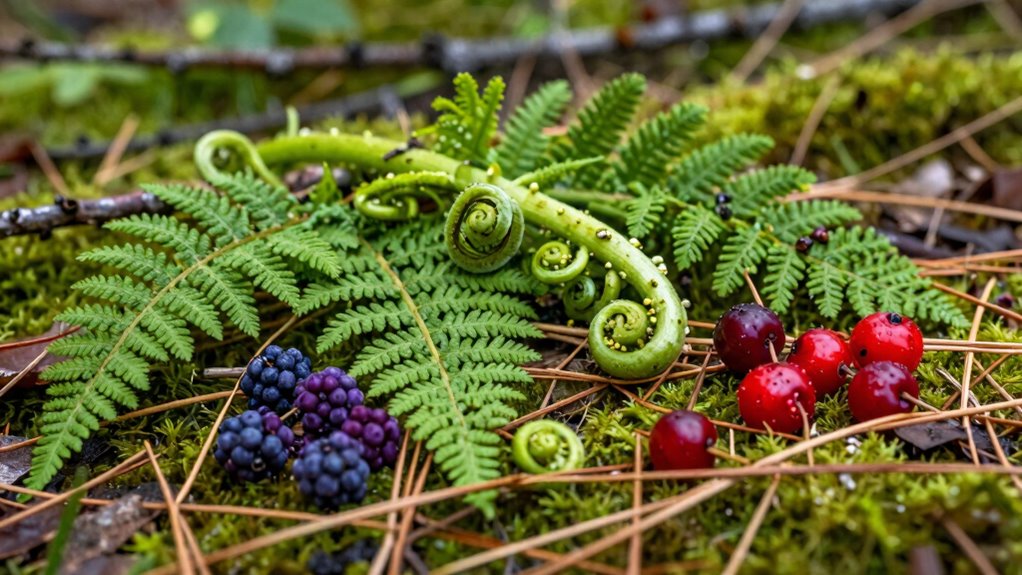
Beyond safety, nutrient density greatly influences which wild foods become your best emergency options. Nutrient-dense foods provide more vitamins, minerals, and calories relative to their weight, helping you maintain energy and health when supplies are limited. For example, greens like wild spinach or dandelion leaves are packed with vitamins A, C, and K, making them superior choices for supporting your immune system and overall well-being. Berries such as raspberries or blackberries are rich in antioxidants and essential nutrients, offering quick energy boosts and aiding recovery. In contrast, some wild foods may be plentiful but lack substantial nutritional value, making them less reliable as primary survival foods. Additionally, understanding the role of hive health in pollination can help identify abundant wild plant sources, as healthy ecosystems support diverse edible plant populations.
Nutrient-dense wild foods like greens and berries boost energy, support immunity, and ensure reliable nutrition during emergencies.
Another factor that makes some wild foods better emergency choices is their ease of collection and preparation. Foods that are abundant, accessible, and simple to prepare save time and energy during stressful situations. Roots, nuts, and berries often fall into this category, providing quick, high-calorie options that don’t require complex processing. Choosing foods that are straightforward to harvest and prepare allows you to focus your efforts on securing more vital resources and maintaining safety. Being familiar with wild food preservation techniques can also enhance your ability to store surplus foods for future emergencies, ensuring a steady food supply over time.
Additionally, understanding the role of technology in identifying and processing wild foods can improve your foraging efficiency and safety. The best emergency wild foods are those that can be gathered year-round or have readily available substitutes across seasons. This ensures a consistent food source, reducing the risk of shortages. Foraging for adaptable, nutrient-dense wild foods also means you’re better prepared to survive fluctuating conditions and changing environments. When selecting wild foods for emergency use, prioritize those that combine safety, high nutrient density, ease of collection, and seasonal resilience. Doing so maximizes your chances of sustaining yourself effectively until help or more stable resources become accessible.

The Complete Guide to Edible Wild Plants
- Comprehensive guide to edible plants: In-depth information on edible wild plants
- Poison identification: Recognizes toxic and safe plants
- Color photographs: Over 100 detailed images
As an affiliate, we earn on qualifying purchases.
As an affiliate, we earn on qualifying purchases.
Frequently Asked Questions
Are All Wild Foods Safe to Eat in Emergencies?
Not all wild foods are safe to eat in emergencies. You need to take into account proper wild food preparation and seasonal availability to avoid poisoning or illness. Some plants may look similar but are toxic, so accurate identification is essential. Always harvest from clean areas, and only eat wild foods you’re confident about. Knowing which foods are safe and how to prepare them properly makes wild foods reliable emergency options.
How Do I Identify Edible Wild Foods Correctly?
To identify edible wild foods correctly, follow focused foraging techniques and identification tips. Look for clear clues like shape, color, and smell, and compare plants to trusted guides. Always test small amounts first and avoid plants with milky or bitter sap. Practice cautious, consistent identification to prevent poisoning. Remember, proper preparation and precise perception are essential for confidently consuming wild foods in emergencies.
Can Wild Foods Provide Enough Nutrition Long-Term?
Wild foods can provide enough nutrition long-term if you choose those with good nutritional balance and high calorie density. You need to diversify your foraging to include various plants, nuts, and insects to meet your daily needs. Focus on calorie-dense options like nuts and roots, but also incorporate greens for vitamins. Proper planning guarantees you get essential nutrients without relying solely on a limited wild food supply.
What Equipment Is Needed to Collect Wild Foods Safely?
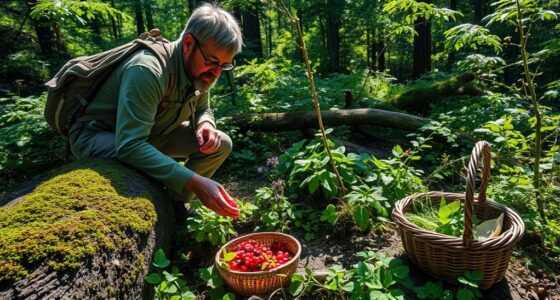
Gathering wild foods is like steering through a dense forest; you need the right tools to stay safe. For wild foraging, carry safety gear such as gloves, a sharp knife, a basket or container, and a field guide. A sturdy backpack helps keep everything organized. These essentials protect you from thorns, cuts, and poisonous plants, ensuring you explore confidently and gather food safely without risking injury or misidentification.
Are There Legal Restrictions on Gathering Wild Foods?
Yes, there are legal restrictions on gathering wild foods. You need to obtain legal permits where required, and be aware of harvesting restrictions that protect certain species and habitats. These laws vary by region, so always check local regulations before collecting wild foods. Ignoring these rules can lead to fines or environmental harm. Staying informed guarantees you gather responsibly and sustainably, helping preserve wild food sources for future emergencies.
Conclusion
Choosing the right wild foods in an emergency is like picking the brightest stars in the night sky—you want those that shine with safety, availability, and nutritional value. When you know which wild foods are dependable, you’re steering through the wilderness with a trusted compass, not just wandering aimlessly. So, arm yourself with knowledge, stay alert, and remember: the best emergency choices are the ones that light your way when the path is dark and uncertain.