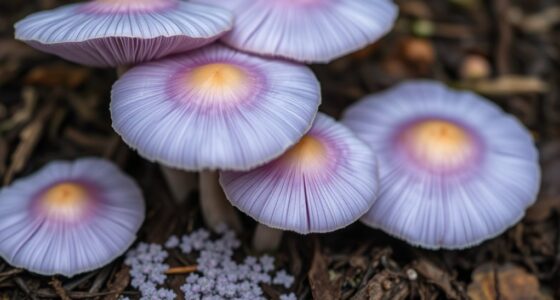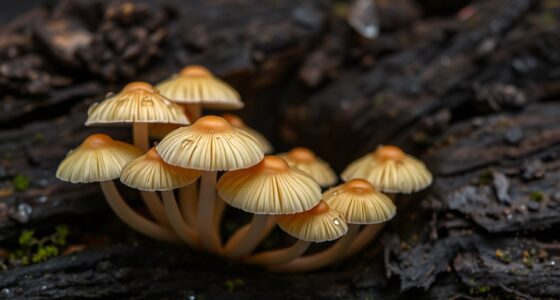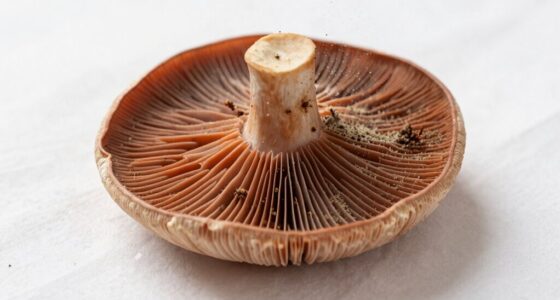

Woodland edges are excellent mushroom zones because they offer a perfect mix of moisture, organic debris, and sunlight that fungi thrive on. You’ll find the soil stays damp longer, which supports fungal growth and fruiting. The variety of plants and trees creates diverse microhabitats and beneficial partnerships like mycorrhizal connections, boosting mushroom diversity. If you keep exploring, you’ll discover even more about what makes these spots so rich in fungi.

Get garden gear delivered free — and shop member deals
- Fast, free delivery on millions of items
- Access to Prime Big Deal Days deals on October 6–7
- Prime Video, Amazon Music and more included
Key Takeaways
- They retain moisture longer, creating ideal conditions for mushroom growth.
- Organic debris and decomposing plant material provide essential nutrients and habitats.
- Microclimate variation at edges enhances habitat diversity for diverse fungi species.
- Symbiotic relationships between fungi and trees promote healthy fungal populations.
- Rich soil chemistry and microhabitats support higher fungal biodiversity.
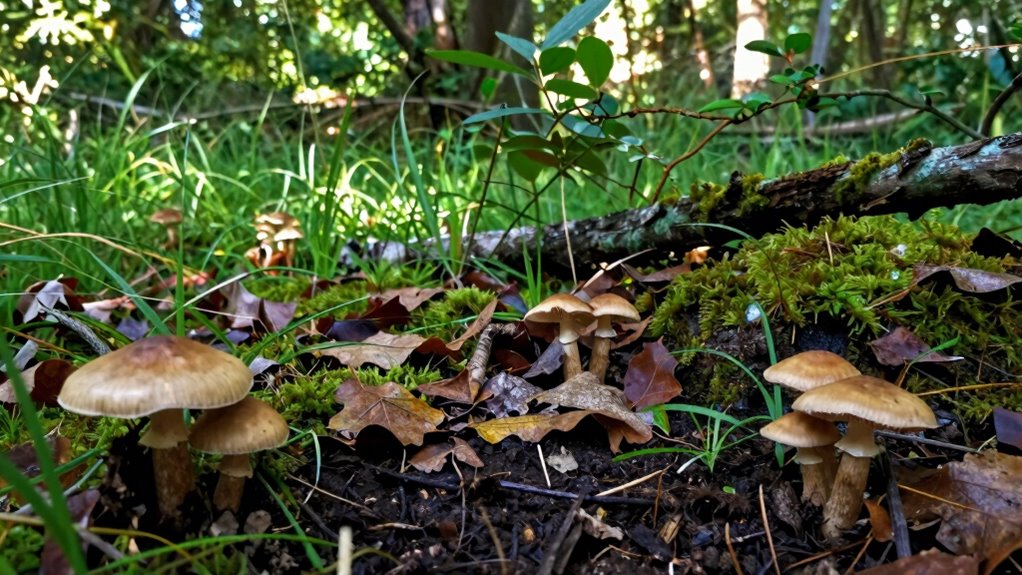
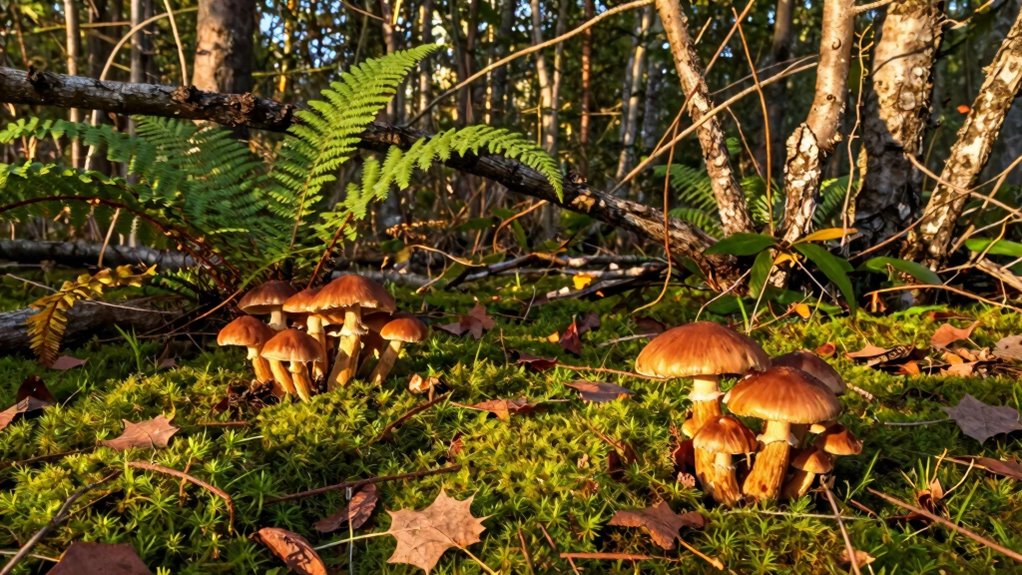
Have you ever wondered why mushroom foraging often leads you to woodland edges? These border zones between open land and dense forest are prime spots for a variety of fungi, and understanding why can considerably improve your foraging success. One key reason is the unique environment found at these transitional areas. They offer a perfect balance of sunlight, moisture, and organic matter, creating ideal conditions for many mushroom species to thrive. As you explore, you’ll notice that woodland edges tend to retain moisture better than open fields or deep forest interiors. This moisture retention is essential because fungi require damp conditions to grow and fruit effectively. The soil here stays moist longer, especially after rain, giving mushrooms a persistent habitat that supports their lifecycle. Additionally, the presence of diverse plant life and organic debris supports a healthy mycelial network, which is crucial for mushroom development. The variation in microhabitats at these edges also contributes to a higher biodiversity of fungi compared to other areas. This diversity is partly driven by the microclimate, which varies significantly from the interior forest and open spaces.
Woodland edges provide ideal conditions—moisture, organic material, and sunlight—for thriving mushroom growth and foraging success.
Furthermore, the edge environment often hosts a range of plant species that influence the soil chemistry, creating conditions favorable for specific mushroom types. Another important aspect that makes woodland edges favorable is the presence of mycorrhizal partnerships. Many edible and valuable wild mushrooms form symbiotic relationships with trees through these partnerships. In simple terms, the fungi connect to tree roots via mycorrhizae, exchanging nutrients that benefit both organisms. This relationship allows fungi to access a steady supply of sugars from the trees while supplying essential minerals from the soil. When you’re at a woodland edge, you’re often near a variety of trees—oaks, pines, or birches—that foster these mycorrhizal relationships. These partnerships are vital because they influence the distribution and abundance of certain mushroom species, such as boletes and chanterelles, which depend on healthy tree-fungi connections.
Moreover, the edge environment encourages a diverse mix of organic material, including fallen leaves, decomposing wood, and plant debris. This organic matter acts as a nutrient reservoir that supports the growth of mycelium, the underground network of fungi. The combination of organic material, moisture retention, and favorable soil conditions creates a thriving habitat for a wide array of mushroom species. You’ll notice that these zones often host a higher diversity of fungi than either the open field or deep forest alone. The dynamic ecological interactions occurring at woodland edges make them especially rich in fungi, providing ample opportunities for foragers to find various edible and interesting species.
In essence, woodland edges serve as natural crossroads where moisture, organic matter, and symbiotic relationships converge. By understanding these factors, you can better predict where mushrooms are likely to appear and improve your foraging efforts. Whether you’re hunting for edible varieties or simply exploring the wild, paying attention to these ecological cues will help you find mushrooms more efficiently and sustainably.
As an affiliate, we earn on qualifying purchases.
Frequently Asked Questions
How Do Seasonal Changes Affect Mushroom Growth at Woodland Edges?
Seasonal changes markedly impact mushroom growth at woodland edges by triggering seasonal fruiting. As temperatures fluctuate and moisture levels vary, mushrooms respond by fruiting during ideal conditions. Increased moisture from rain promotes growth, while dry spells can halt it. You’ll notice more mushrooms during wet, cool seasons, while drought periods may limit their presence. Monitoring moisture fluctuations and seasonal shifts helps you predict when mushrooms are likely to appear at woodland edges.
Are There Specific Tree Species That Favor Mushroom Proliferation?
Certain tree species, such as oaks, maples, and birches, create ideal conditions for mushroom proliferation. These trees influence mushroom preferences by providing rich, decaying wood and leaf litter, which fungi thrive on. You’ll notice that mushrooms favor these species because they offer the right moisture, nutrients, and microhabitats. By focusing on these trees, you enhance your chances of finding a diverse and abundant mushroom population at woodland edges.
How Can I Differentiate Edible From Toxic Mushrooms in These Zones?
To differentiate edible from toxic mushrooms, focus on proper mushroom identification by examining features like cap shape, gills, and stem. Avoid mushrooms with white gills, a ring around the stem, or a volva, as these often signal toxicity. Remember, toxic mushroom risks are serious; never consume a mushroom unless you’re 100% sure of its identity. When in doubt, consult a field guide or expert to prevent dangerous mistakes.
What Tools Are Best for Foraging Mushrooms at Woodland Edges?
You’ll want a good mushroom knife and a small, sturdy basket for foraging safety and mushroom identification. A field guide or a foraging app helps you distinguish edible from toxic mushrooms. A magnifying glass can be useful for examining gills and spores. Always carry a knife to cut mushrooms at the base, avoiding damage and contamination. These tools guarantee you gather safely and accurately, making your woodland edge foraging successful.
Do Human Activities Impact Mushroom Diversity in Woodland Edge Areas?
You notice how wildlife interactions and soil composition shape mushroom diversity at woodland edges. Human activities, like logging or foot traffic, often disrupt these delicate balances, reducing habitat quality. When you walk through these areas, you might see fewer mushrooms or different species appearing, because soil gets compacted or nutrients deplete. Your presence can unintentionally impact these zones, emphasizing the need for mindful exploration to preserve their natural richness.
Conclusion
Think of woodland edges as nature’s secret treasure chests, bursting with mushroom gems just waiting to be discovered. These vibrant zones offer the perfect blend of sunlight, moisture, and diverse plant life, making them a mushroom magnet. As you explore, remember that these edges are like the opening act of a grand performance—where fungi thrive and your mushroom-hunting adventure begins. Embrace these lively borders, and you’ll uncover the forest’s hidden edible treasures with every step.
Fall Picks
fall essentials
As an affiliate, we earn on qualifying purchases.