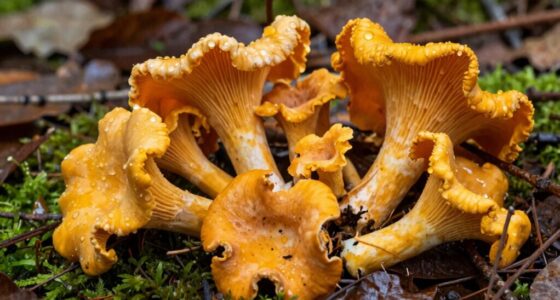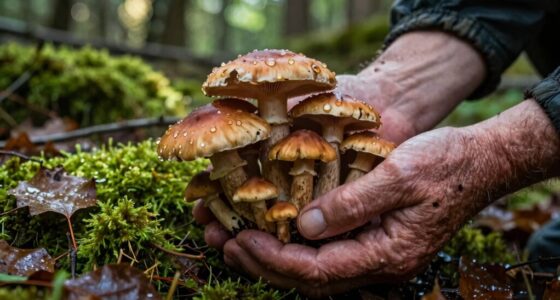
Your understanding of mushrooms isn’t just about their shapes; it’s also about their underground habitats. The mycelium networks beneath the soil are essential for nutrient exchange, plant health, and ecosystem stability. If their habitat is degraded or unhealthy, even the most beautiful mushroom won’t thrive. By caring for soil quality and preserving natural environments, you support the whole underground system. Keep going to discover how these hidden networks are as important as the fungi’s appearance.

Get garden gear delivered free — and shop member deals
- Fast, free delivery on millions of items
- Access to Prime Big Deal Days deals on October 6–7
- Prime Video, Amazon Music and more included
Key Takeaways
- The habitat provides essential conditions like soil quality and moisture, crucial for mushroom growth and survival.
- A healthy environment supports the development of mycelium networks, vital for ecosystem balance.
- Habitat preservation ensures fungi can fulfill their ecological roles, such as nutrient exchange with plants.
- The shape of mushrooms is influenced by environmental factors, making habitat conditions as important as physical form.
- Protecting mushroom habitats maintains biodiversity and supports the underground networks that sustain entire ecosystems.
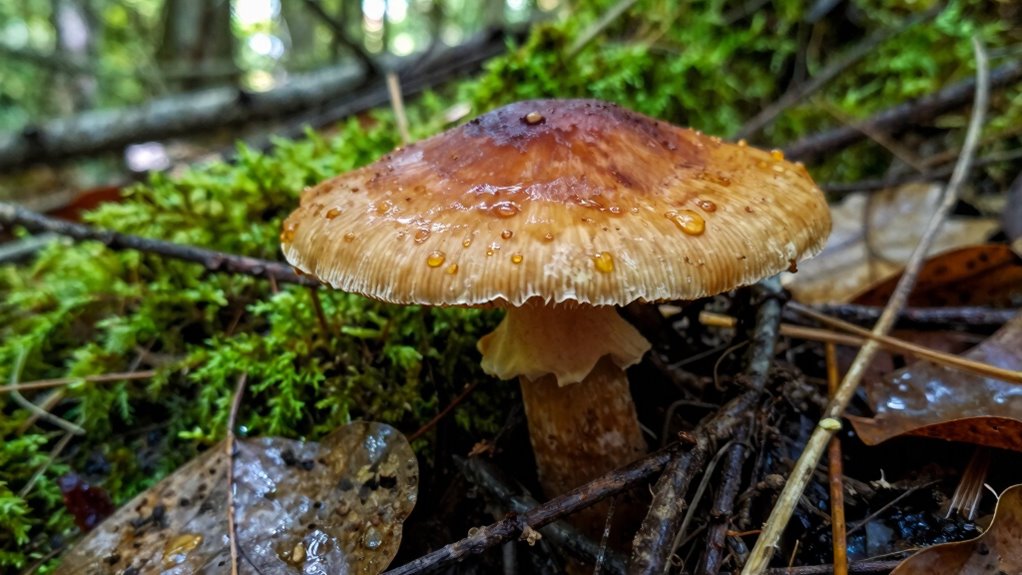
Mushroom habitats are essential for maintaining healthy ecosystems, yet they often go unnoticed. When you think about mushrooms, you might picture their distinctive caps and stems, but their true importance runs much deeper beneath the surface. The real backbone of mushroom life lies in the mycelium networks—intertwined filaments spreading through the soil, forming vast, underground webs. These networks are indispensable for nutrient exchange, connecting plants and trees in ways that benefit the entire ecosystem. You might not see them, but they’re constantly working behind the scenes to support plant growth, improve soil health, and foster biodiversity.
Underground mycelium networks support plant health, soil vitality, and biodiversity—hidden but vital for thriving ecosystems.
The health of these mycelium networks depends heavily on soil composition. The right balance of organic matter, minerals, moisture, and aeration creates an environment where fungi can thrive. When soil is rich and well-structured, it supports the development of extensive mycelium systems, which in turn promote nutrient cycling and soil fertility. Conversely, degraded or compacted soils hinder the growth of these networks, limiting mushroom production and disrupting the ecological balance. You can think of soil as the stage upon which these fungi perform—if the conditions aren’t right, the performance falters, and the entire ecosystem suffers. Soil quality plays a crucial role in fostering these underground networks.
Fungi are incredibly sensitive to changes in their environment. If soil becomes too acidic, too dry, or contaminated with pollutants, the mycelium networks weaken or die off. This impacts not just the mushrooms you see but also the countless other organisms relying on their presence. Healthy mushroom habitats, thus, require a delicate balance in soil composition that supports robust mycelium growth. By maintaining or restoring this balance, you help foster resilient ecosystems where fungi can flourish, and in turn, support the larger web of life around them. Healthy soil environment directly influences the development and vitality of these underground systems, making soil conservation a key aspect of ecological health. Additionally, understanding the importance of soil microbial diversity can help guide sustainable practices that promote mushroom habitat health.
Understanding the relationship between soil composition and mycelium networks makes it clear why protecting mushroom habitats is essential. These underground systems are the foundation of nutrient exchange and plant health, yet they’re easily disturbed by human activity. When you conserve natural habitats, practice sustainable land use, or even enrich soil quality, you’re helping preserve the conditions necessary for fungi to thrive. In doing so, you’re supporting a system that not only sustains mushroom populations but also sustains the entire environment that depends on these critical underground networks.
As an affiliate, we earn on qualifying purchases.
Frequently Asked Questions
How Do Different Habitats Affect Mushroom Growth?
Different habitats markedly impact your mushroom growth by influencing mycelium interactions and soil nutrient variations. In nutrient-rich environments, mycelium spreads more vigorously, producing healthier mushrooms. Conversely, in less ideal habitats, limited nutrients slow growth. You’ll notice that mushrooms thrive where soil has balanced nutrients and favorable conditions, allowing mycelium to interact efficiently with its surroundings. Understanding these habitat factors helps you cultivate healthier, more abundant mushroom crops.
Can Mushrooms Thrive Outside Their Natural Habitat?
You can grow mushrooms outside their natural habitat, but success depends on mimicking their needs. Think of mycelium adaptation like a traveler adjusting to new environments; it can adapt with proper care. Cultivating mushrooms elsewhere highlights the importance of habitat conservation, as disrupting natural spaces hampers their growth. By understanding their specific needs, you help guarantee these fungi thrive, whether in the wild or your backyard.
What Role Does Habitat Diversity Play in Mushroom Health?
Habitat diversity plays a essential role in mushroom health by promoting diverse mycelium interactions and maintaining ideal soil nutrient levels. When you expose mushrooms to varied environments, they benefit from a broader range of nutrients and symbiotic relationships, which boosts their growth and resilience. A diverse habitat prevents nutrient depletion and supports healthy mycelium development, ensuring robust mushroom production and overall vitality.
How Do Habitat Changes Impact Mushroom Populations?
Habitat changes can seriously impact mushroom populations by disrupting mycelium networks and altering soil composition. When habitats degrade or shift, you may notice weaker mycelium connections, which hampers nutrient exchange and growth. Changes in soil composition, like compaction or nutrient loss, make it harder for mushrooms to thrive. These disruptions decrease mushroom diversity and abundance, ultimately threatening their survival and the ecosystems that depend on them.
Are Some Habitats Better for Medicinal Mushroom Cultivation?
Yes, some habitats are better for cultivating medicinal mushrooms. Ironically, thriving wild habitats often provide superior mushroom nutrition, boosting medicinal qualities. However, habitat conservation is essential, as overharvesting or destruction jeopardizes these valuable environments. You’ll find that protected areas support more sustainable, high-quality mushroom cultivation, emphasizing how preserving natural habitats not only benefits ecosystems but also enhances the medicinal potency of your favorite fungi.
Conclusion
So, next time you spot a mushroom, remember its habitat is just as crucial as its shape. Without the right environment, even the most fascinating fungi can’t thrive—much like a knight without his castle. Your curiosity about these tiny explorers can help protect their habitats, ensuring they continue to surprise us. After all, in the grand tapestry of nature, every mushroom’s story hinges on where it calls home. Stay curious, and keep exploring!
Fall yard work Picks
leaf blowers
As an affiliate, we earn on qualifying purchases.