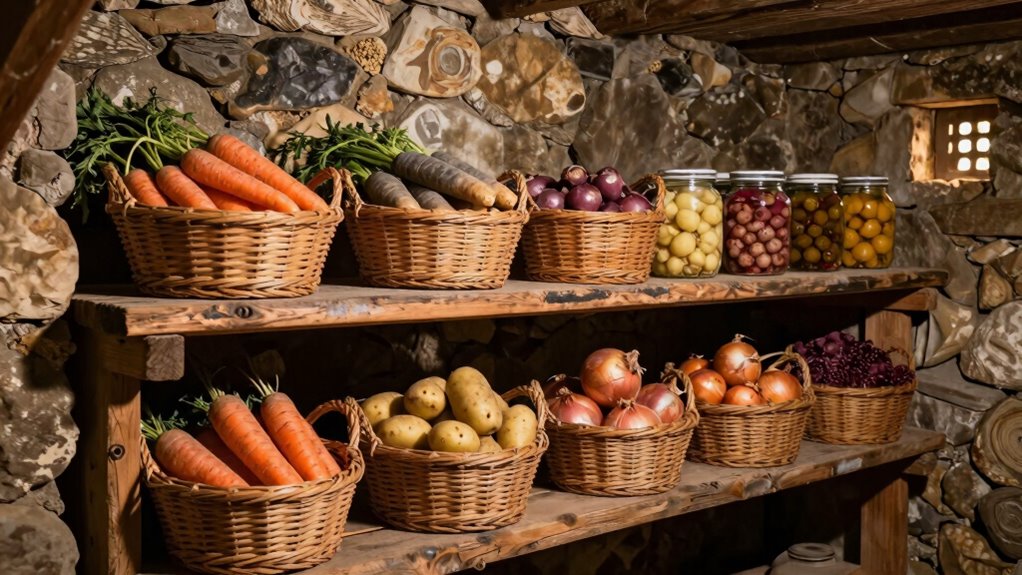
You can blend traditional root cellar practices with modern shelving ideas to create an efficient storage space. Using cool, dark environments like root cellars helps preserve your harvest naturally, while adding adjustable, moisture-resistant shelving improves organization and accessibility. Space-saving designs like vertical stacking and labeled sections maximize every inch. Combining these methods means you’ll keep your produce fresh longer and easily find what you need. If you keep exploring, you’ll discover how to optimize your storage even further.

Get garden gear delivered free — and shop member deals
- Fast, free delivery on millions of items
- Access to Prime Big Deal Days deals on October 6–7
- Prime Video, Amazon Music and more included
Key Takeaways
- Traditional root cellars rely on natural cooling, while modern shelving enhances organization and accessibility within these spaces.
- Modern shelving materials like stainless steel and treated wood resist moisture, aligning with traditional preservation goals.
- Space optimization techniques, such as adjustable and vertical shelving, improve storage capacity in traditional cellars.
- Combining traditional cooling with contemporary shelving maintains preservation benefits while boosting efficiency.
- Modern design principles transform traditional root cellars into more organized, hygienic, and user-friendly storage solutions.
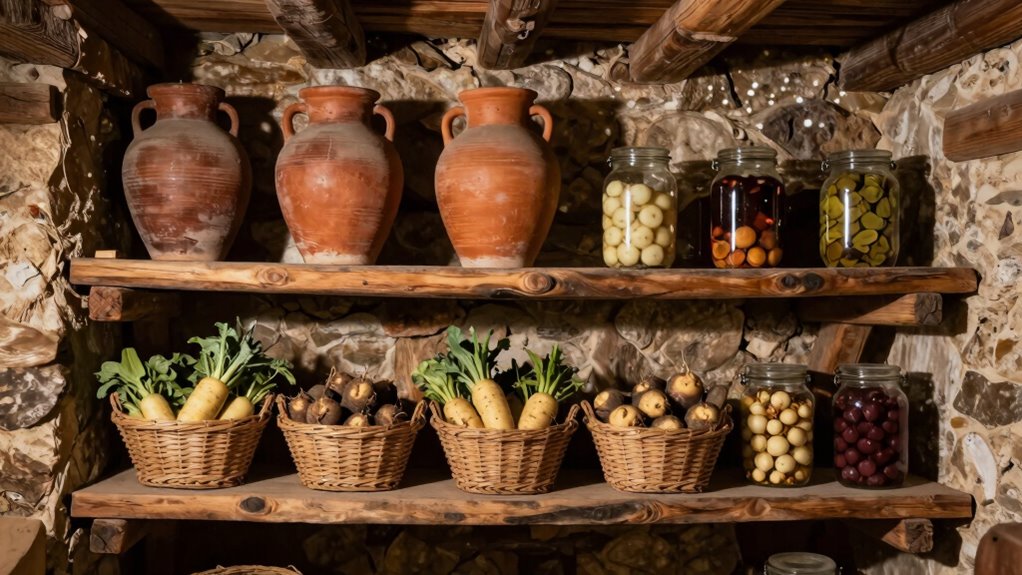
Root cellars have long been a cornerstone of traditional storage methods, offering a cool, dark, and stable environment for preserving harvests. Today, while modern refrigeration has taken a front seat, the appeal of a well-designed root cellar remains strong, especially when it comes to efficient shelving. You’ll find that integrating modern design principles into your cellar can dramatically improve space optimization, making storage more accessible and organized. Think of sleek, adjustable shelves that can handle varying sizes of produce, or modular units that can be reconfigured as your storage needs change.
Modern shelving transforms root cellars into organized, space-efficient storage for harvests and produce.
When you focus on space optimization, you’re not just packing more into your cellar — you’re creating a system that simplifies access and enhances preservation. Modern design often incorporates materials like stainless steel, treated wood, or durable plastics that resist moisture and pests, which are common challenges in root cellars. These materials also make cleaning and maintenance easier, helping to keep your storage environment hygienic. Shelving designs with open, slatted surfaces promote airflow, which is essential for keeping produce fresh and preventing spoilage. You’ll find that vertical storage options, like stacking shelves or tiered racks, help you use the full height of your cellar, freeing up floor space for larger storage bins or containers.
The beauty of modern design lies in its flexibility. You can choose from a variety of shelving styles that suit your specific needs, whether you’re storing root vegetables, canned goods, or dried herbs. Adjustable shelves give you the freedom to change configurations as your inventory fluctuates, while tight-fitting units prevent items from falling or getting lost. Space optimization isn’t just about fitting more; it’s about creating an organized, accessible system that makes your harvest last longer and reduces waste. Incorporating features like pull-out drawers or labeled sections can streamline your storage process, turning a traditional cellar into a highly functional, modern pantry. Additionally, selecting moisture-resistant materials can significantly extend the lifespan of your shelving and protect your stored items from spoilage. Proper ventilation can also help maintain ideal conditions and prevent mold growth in your storage area. To further enhance storage efficiency, integrating space-saving designs can maximize every inch of your cellar.
Furthermore, understanding the importance of proper ventilation can greatly enhance the effectiveness of your storage system by reducing excess humidity and maintaining consistent temperature levels. In essence, updating your root cellar with modern, space-efficient shelving doesn’t mean abandoning traditional thinking — it enhances it. You gain a more functional, aesthetically pleasing storage area that respects the principles of preservation while embracing contemporary design. This approach lets you enjoy the best of both worlds: the time-tested benefits of a root cellar combined with the convenience and efficiency of modern storage solutions.
adjustable stainless steel shelving for root cellar
As an affiliate, we earn on qualifying purchases.
As an affiliate, we earn on qualifying purchases.
Frequently Asked Questions
How Do I Choose the Best Materials for Root Cellar Shelving?
You should choose materials with high durability like cedar or stainless steel, which can withstand moisture and weight without warping. Consider environmental impact by selecting sustainable options such as recycled wood or bamboo. These materials resist rot and pests, ensuring your root cellar stays organized and safe long-term. By balancing durability and eco-friendliness, you’ll create shelving that lasts, supports your storage needs, and minimizes your environmental footprint.
What Are Common Pests Associated With Root Cellar Storage?
Common pests in root cellar storage include rodents, beetles, and mold mites. To prevent pests, you should focus on pest prevention by sealing cracks, using pest-proof containers, and keeping the space clean. Storage hygiene is essential—regularly removing spoiled produce and wiping down shelves helps eliminate attractants. Proper ventilation and maintaining a cool, dry environment also discourage pests, ensuring your stored vegetables stay fresh longer.
How Can I Improve Airflow in My Root Cellar?
Think of your root cellar like a lung, needing fresh air to breathe. To improve airflow, add ventilation enhancements like vents or small fans, and guarantee good moisture control to prevent mold. I once installed a simple vent near the ceiling, which dramatically improved air circulation and kept produce fresh longer. Proper airflow prevents stale air buildup, reduces pests, and keeps your stored items in ideal condition.
Are There Modern Alternatives to Traditional Root Cellar Shelving?
Yes, there are modern storage solutions that serve as innovative shelving for your root cellar. You can opt for adjustable, modular shelving systems made of materials like stainless steel or plastic, which promote better airflow and ease of cleaning. These modern options help optimize space, maintain consistent humidity, and keep your produce fresh longer. They’re a practical upgrade from traditional shelving, blending durability with contemporary design for efficient, organized storage.
How Often Should I Inspect Stored Produce in a Root Cellar?
You should inspect your stored produce at least once a week. During these checks, make sure temperature regulation remains steady and humidity control is appropriate to prevent spoilage. Look for any signs of mold, rot, or sprouting, and remove affected items promptly. Regular inspections help you maintain ideal storage conditions, extend freshness, and prevent the spread of decay, keeping your produce fresh and safe for longer periods.
Conclusion
By embracing root cellar shelving and traditional storage methods, you reconnect with time-tested practices that keep your food fresh naturally. These methods aren’t just about preservation—they’re about honoring tradition and sustainability. As you design your own storage space, ask yourself: aren’t we all seeking simplicity and reliability in a complex world? By choosing these classic approaches, you’re not just storing food—you’re preserving a legacy that can serve you for years to come.
Fall yard work Picks
leaf blowers
As an affiliate, we earn on qualifying purchases.