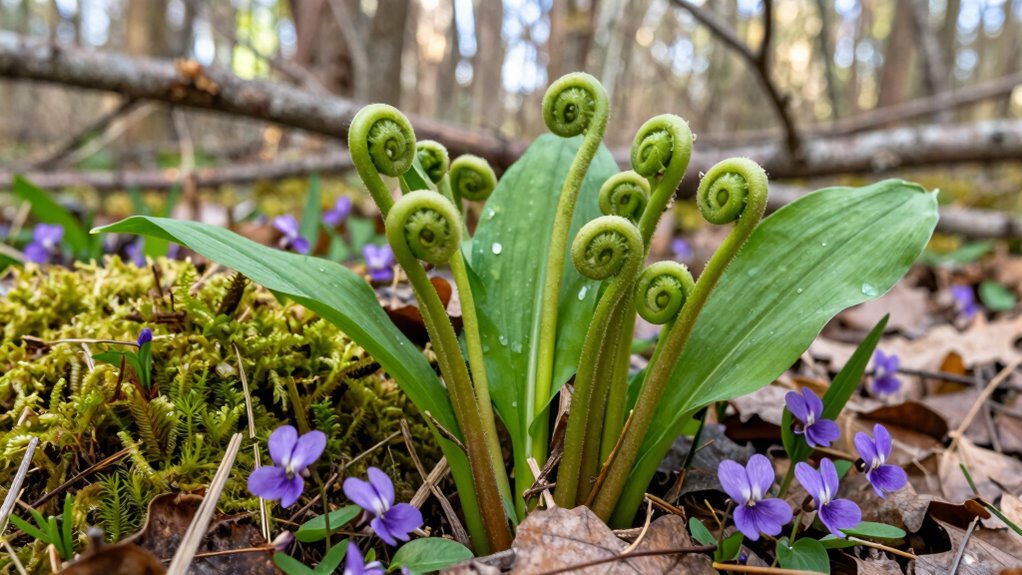

In early spring, you should watch for ramps and wild garlic in moist, wooded areas—they offer pungent, onion-flavored leaves perfect for foraging. Keep an eye out for young dandelion greens, which are rich in vitamins, and early strawberries ripening in some regions. Always identify plants carefully and avoid areas with pesticides or pollution. Following responsible foraging tips guarantees safety and sustainability. If you’re curious about more seasonal finds, you’ll discover even more exciting options soon after.
Get ready for Prime Big Deal Days — try Prime free
Exclusive member deals on October 6–7, plus fast free delivery. Cancel anytime.
As an affiliate, we earn on qualifying purchases.
Key Takeaways
- Watch for emerging ramps and wild garlic in moist, wooded areas to harvest early spring greens with a pungent onion flavor.
- Look for young, tender dandelion greens in lawns and disturbed soils, ensuring pesticide-free zones.
- Identify and gather ripe wild strawberries in open, sunny spots for fresh, seasonal berries.
- Hunt for morels after rain in moist, wooded environments, but only with expert confirmation.
- Prioritize safety by correctly identifying edible plants and avoiding toxic look-alikes or contaminated areas.
As winter thaws into early spring, nature begins offering a bounty of wild foods that are both delicious and nutritious. This season is perfect for foraging, but it’s vital to prioritize foraging safety and follow seasonal harvesting tips. Before heading out, make sure you’re confident in identifying edible plants, as many wild foods have look-alikes that can be toxic. Carry a reliable field guide or use a plant identification app, and never eat anything unless you’re 100% sure it’s safe. Respect local regulations and private property laws to avoid legal issues, and always gather responsibly, taking only what you need to allow plants to thrive and regenerate.
Prioritize safety, accurate identification, and responsible harvesting for a safe, sustainable foraging experience this spring.
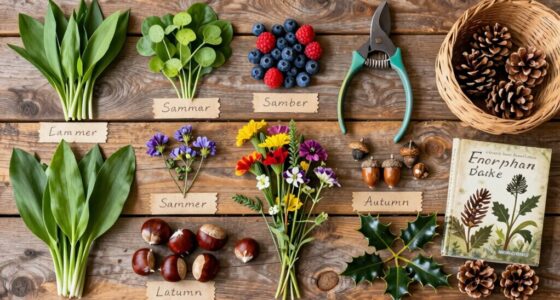
One of the earliest signs of spring is the emergence of edible greens like wild garlic and ramps (wild leek). These pungent, onion-flavored plants grow abundantly in moist, wooded areas. When harvesting ramps, use scissors rather than pulling the entire plant to prevent damage and guarantee future growth. Be cautious not to confuse ramps with lily of the valley or other toxic plants, which might look similar but are deadly if consumed. Always harvest a small portion from each patch, leaving enough behind for the plants to reproduce.
Another spring treasure is young dandelion greens. These hardy plants pop up in lawns, fields, and disturbed soils, offering tender leaves that are rich in vitamins. Foraging safety is essential here—make sure the area isn’t treated with pesticides or herbicides before collecting. Gently pick the young leaves, avoiding any plants near busy roads or contaminated sites. Dandelion flowers are also edible and can be used to make teas or infused into salads, adding a touch of bright color and flavor.
Spring also signals the start of wild berry season, with strawberries beginning to fruit in some regions. Look for small, bright red berries that are fully ripe—don’t pick unripe fruit, as it may not be fully developed or could be mistaken for toxic berries. As with all foraging, seasonal harvesting tips include double-checking plant ID and avoiding areas with chemical pollution.
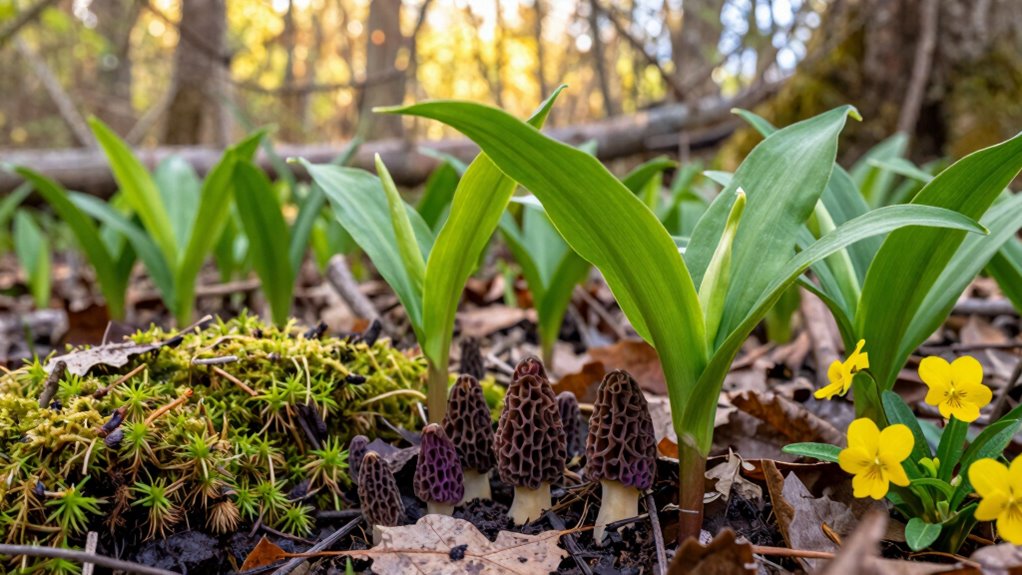
Finally, keep an eye out for morels, the coveted wild mushroom of spring. They usually appear in moist, wooded environments after rain. Foraging safety is especially important with mushrooms, so only harvest species you can positively identify, ideally with the help of an expert. Never consume wild mushrooms unless you’re 100% certain they are safe, as many edible varieties have toxic look-alikes. Following these guidelines and respecting nature ensures your early spring foraging is both enjoyable and safe.
wild plant identification field guide
As an affiliate, we earn on qualifying purchases.
As an affiliate, we earn on qualifying purchases.
Frequently Asked Questions
Are Early Spring Wild Foods Safe to Eat Raw?
Early spring wild foods can be safe to eat raw if you’re certain of their identification and freshness, but many are better enjoyed cooked to enhance flavor and safety. When exploring wild food recipes, always verify the plant’s identity to avoid toxic varieties. Eating raw wild foods may retain more nutritional benefits, but cooking can reduce toxins and improve digestibility, making it a safer choice for most.
How Can I Identify Edible vs. Toxic Plants?
You can identify edible versus toxic plants by closely examining plant morphology—look at leaf shape, stem structure, and flower details. Be cautious of toxic look-alikes that mimic edible plants; for example, some harmless-looking wild carrots resemble deadly hemlock. Always use reliable field guides or consult experienced foragers. When in doubt, avoid consuming plants that you can’t confidently identify, as misidentification can be dangerous.
What Tools Are Best for Foraging These Wild Foods?
Imagine holding nature’s treasures gently in your hands. For seasonal foraging tips, your essential foraging gear includes a sharp knife, a basket or mesh bag, and a field guide. A small pruning shears or scissors helps harvest delicate greens, while a magnifying glass can aid in identification. These tools keep you safe, respectful of nature, and enhance your connection to early spring’s wild bounty.
Are There Any Legal Restrictions on Wild Food Foraging?
Yes, there are legal restrictions on wild food foraging. You should check local regulations before you start, as some areas require foraging permits or have restrictions to protect ecosystems. Many parks and reserves prohibit removing plants without permission, so always research and obtain necessary permits. Respect the rules to avoid fines and help preserve wild populations, ensuring sustainable foraging practices that benefit both the environment and future foragers.
How Do I Sustainably Harvest Wild Foods?
To sustainably harvest wild foods, always follow foraging safety tips like taking only what you need and leaving enough for wildlife and plant regrowth. Practice wild food preservation by drying, freezing, or curing excess harvests to minimize waste. Avoid damaging plants or their habitats, and respect local regulations. By foraging responsibly, you help preserve ecosystems and guarantee wild food sources stay healthy and abundant for future foragers.
Conclusion
As you venture into early spring for wild foods, remember that patience and observation are key. For example, last year, I was enthusiastic about foraging for wild ramps and found a small patch near a creek, which made a delicious pesto. By paying attention to the signs of nature, you’ll uncover hidden treasures that can transform simple meals into memorable adventures. So go ahead—embrace the season’s bounty and enjoy the fresh flavors waiting just beneath the surface.
NFL season / tailgating Picks
team gear
As an affiliate, we earn on qualifying purchases.