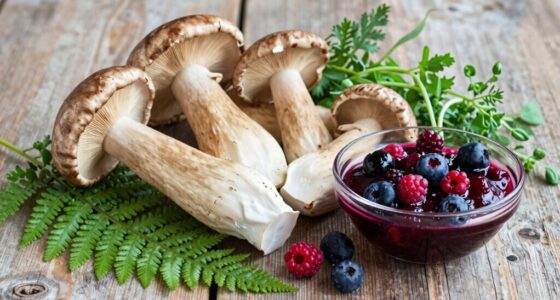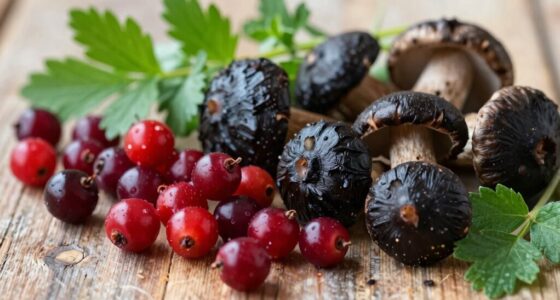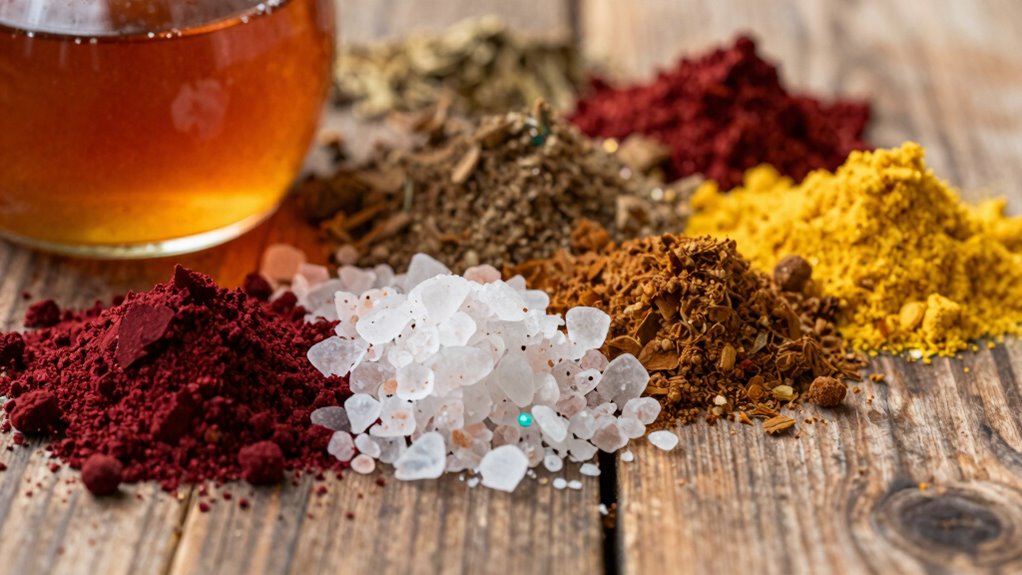
Syrups, salts, and powders help you maximize wild foods by preserving their flavors and extending their usability beyond the season. You can store wild berries as syrup to enjoy all year or use wild salts to enhance flavor and preserve foods naturally. Powders made from herbs or fungi make seasonal harvests versatile and easy to incorporate into daily meals or remedies. Keep exploring, and you’ll discover how these techniques connect ancient traditions with modern culinary creativity.

Get garden gear delivered free — and shop member deals
- Fast, free delivery on millions of items
- Access to Prime Big Deal Days deals on October 6–7
- Prime Video, Amazon Music and more included
Key Takeaways
- They prolong the shelf life of wild foods, making seasonal ingredients available year-round.
- They enhance flavor and nutritional value, allowing creative culinary uses of wild ingredients.
- They facilitate easy integration into various dishes, beverages, and medicinal preparations.
- They preserve the essence and medicinal qualities of wild plants for future use.
- They connect traditional preservation techniques with modern culinary and health practices.

Have you ever wondered how wild foods have shaped human diets and cultures? It’s fascinating to realize that, centuries ago, people relied heavily on foraging techniques to find edible plants, herbs, and fruits in the wild. These techniques weren’t just about gathering; they involved an intimate understanding of seasonal cycles, plant behaviors, and the environment. Over time, humans discovered ways to extend the usefulness of these foods beyond their fresh state, which is where preservation methods come into play. By drying herbs, fermenting fruits, or curing meats, early foragers could store their bounty for months or even years, ensuring a reliable food source during lean times.
Ancient foragers mastered seasonal harvests and preservation, ensuring food stability and cultural richness through drying, fermenting, and curing techniques.
Now, imagine how adding syrups, salts, and powders to your pantry can expand the use of wild foods. These simple yet powerful preservation methods transform fresh ingredients into versatile flavorings and health boosters. For example, turning wild berries into syrup not only prolongs their shelf life but also makes them easy to incorporate into a variety of dishes—drizzled over pancakes, stirred into teas, or used as natural sweeteners. Salts derived from wild herbs or mineral sources serve dual purposes: they preserve foods through curing and enhance flavors without artificial additives. When you use wild salts in your cooking, you’re reconnecting with ancestral practices that helped communities survive long before modern refrigeration.
Powers of wild powders also come into play here. Drying and grinding wild herbs or fungi into powders release their full potential, making them convenient to use in everyday cooking. These powders preserve the plant’s essence and medicinal qualities, allowing you to add a punch of flavor or health benefits with just a pinch. The beauty of these techniques is that they turn fleeting wild harvests into lasting staples, broadening what you can do with local, seasonal ingredients. Whether you’re making herbal teas, spice blends, or medicinal elixirs, syrups, salts, and powders give you a way to harness the flavors and benefits of wild foods year-round.
In essence, these preservation methods—especially when combined with clever uses like syrups, salts, and powders—expand your ability to incorporate wild foods into your diet. They preserve the essence of foraging techniques, bridging the gap between ancient practices and modern culinary creativity. By mastering these methods, you not only honor your culinary roots but also gain control over your food’s flavors, nutrients, and sustainability. Wild foods become more than just seasonal treats—they become integral ingredients that enrich your cooking and deepen your connection to nature’s bounty.
As an affiliate, we earn on qualifying purchases.
Frequently Asked Questions
How Do Syrups Enhance Wild Food Flavors?
Syrups enhance wild food flavors by adding sweetness that balances tartness or bitterness, boosting overall flavor profiles through flavor enhancement. They also improve texture modification, making dishes more appealing and palatable. By incorporating syrups, you can intensify natural tastes and create a richer, more complex experience with wild ingredients. This method allows you to elevate simple foraged foods into gourmet dishes, highlighting their natural essence while adding depth and smoothness.
Are Salts Safe for All Wild Food Preparations?
Salts are generally safe for wild food preparations when you choose high-quality, food-grade options and use them in moderation. However, consider wild ingredient safety and salt contamination concerns, especially if foraging from areas exposed to pollution or runoff. Always verify the source of your salts, avoid using non-food-grade salts, and rinse wild ingredients thoroughly to minimize any risks. Proper handling guarantees safe and flavorful wild food experiences.
Can Powders Be Made From Any Wild Ingredient?
Yes, you can make powders from many wild ingredients, but successful wild ingredient sourcing relies on proper identification and ensuring safety. You need to use effective powder processing techniques, like drying and grinding, to preserve flavor and nutrients. Always verify the wild ingredient’s edibility and toxicity beforehand. With careful sourcing and processing, you can create flavorful, versatile powders that expand your wild food repertoire.
What Are the Best Storage Methods for Wild Food Powders?
Think of storing wild food powders like sealing treasure chests—keep them airtight and cool. You should use vacuum-sealed containers or resealable mylar bags with oxygen absorbers to prevent spoilage. Store them in a dark, dry place away from sunlight. Incorporate fermentation techniques for preservation, and explore packaging innovations like nitrogen flushing to extend shelf life. Proper storage guarantees your wild powders stay potent and flavorful, like treasures waiting to be uncovered.
How Do Syrups and Salts Impact Nutritional Value?
Syrups and salts can enhance the nutritional value of wild foods by preserving and concentrating nutrients through fermentation techniques and herbal infusions. When you use these methods, you boost probiotics and bioactive compounds, making your wild food more beneficial for gut health and immune support. Incorporating syrups and salts allows you to extend shelf life while maintaining or even increasing the nutrients, enriching your diet with natural, health-promoting elements.
Conclusion
As you explore the world of wild foods, you’ll find that syrups, salts, and powders act like secret keys revealing nature’s hidden pantry. They transform simple foraging into a symphony of flavors and textures, turning humble ingredients into culinary treasures. Embrace these versatile companions, and watch your wild food adventures bloom like wildflowers in spring—rich, vibrant, and endlessly surprising. With each discovery, you weave a tapestry of taste that’s as wild and wondrous as the wilderness itself.
Fall yard work Picks
leaf blowers
As an affiliate, we earn on qualifying purchases.