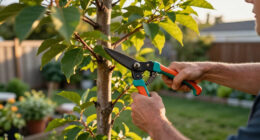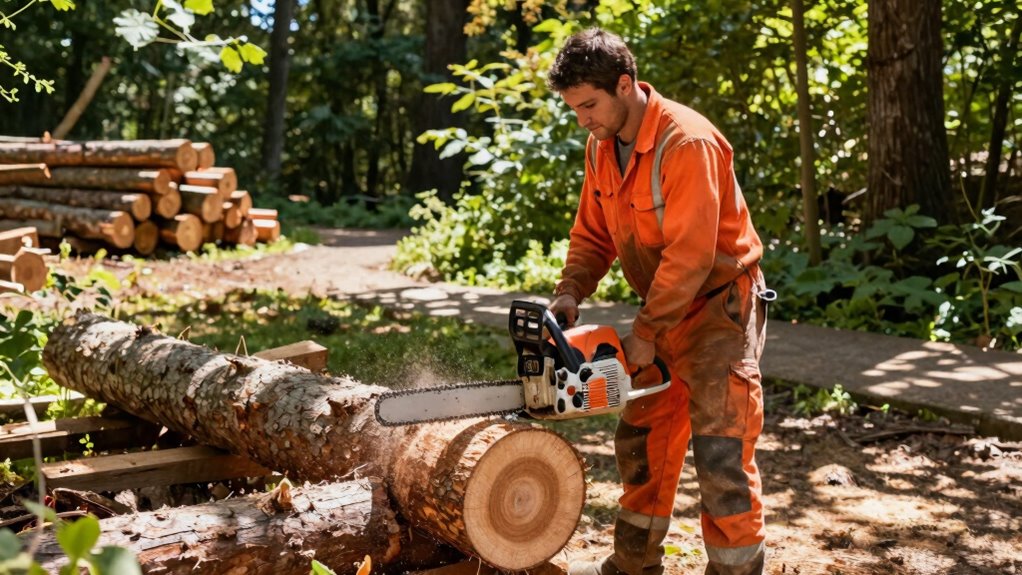

To maintain your land safely with a chainsaw, you should regularly inspect and sharpen the chain, clean the bar, and check tension and lubrication. Follow safety guidelines, like wearing protective gear and using proper techniques, to prevent accidents. Proper fuel and engine care help your equipment run smoothly and last longer. Keeping your tools in good condition and storage is also key. Keep learning to discover more tips for effective and safe property stewardship.
Key Takeaways
- Proper maintenance and sharp chains enhance safety and efficiency during land clearing and tree work.
- Following safety guidelines reduces risks of accidents and injuries when operating chainsaws.
- Routine inspections and correct fuel/oil ratios ensure reliable engine performance and tool longevity.
- Proper pruning and tree shaping prevent hazards and promote healthy growth.
- Storing equipment in a dry, clean environment preserves chainsaw integrity and readiness for use.
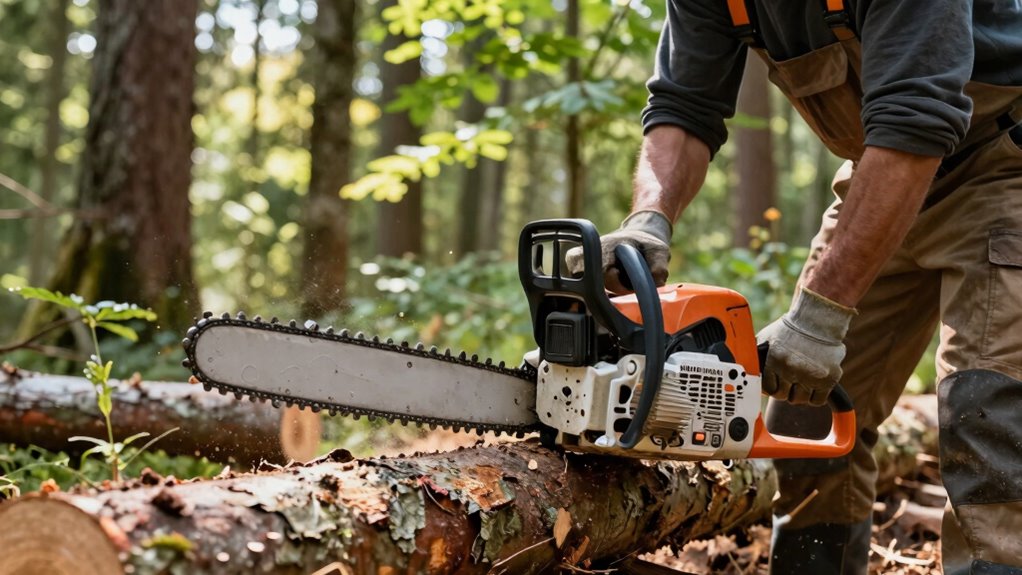
Maintaining your property often involves cutting and clearing trees or brush, and chainsaws are the go-to tool for these tasks. Whether you’re trimming a tree for safety or clearing overgrown brush, using a chainsaw efficiently and safely depends on good technique and proper equipment maintenance. One vital aspect is tree pruning, which helps keep trees healthy, prevents hazards, and improves the appearance of your landscape. When you prune, you remove dead or diseased branches, shape the tree, and reduce the risk of falling limbs. But to do this effectively, your chainsaw must be in top condition. Regularly inspecting your chainsaw ensures that the chain is sharp, the bar is clean, and the engine runs smoothly. Dull blades require more effort, increase the chance of kickback, and can damage the tree or your equipment. By keeping your chainsaw sharp and well-maintained, you make pruning safer, more precise, and less physically demanding. Additionally, understanding safety precautions helps prevent accidents and injuries during land work. Proper equipment maintenance not only improves safety but also enhances the efficiency of your work, reducing fatigue and the risk of equipment failure during critical tasks. Regular maintenance also includes checking the fuel mixture, which is essential for optimal engine performance. Equipment maintenance goes beyond just sharpening the chain. You should also check the fuel mixture—using the correct ratio of oil to gasoline extends the life of your engine and reduces wear. Regularly cleaning the air filter prevents dust and debris from clogging the engine, which can cause overheating or failure. Keep the chain tensioned properly; too tight, and it can strain the motor; too loose, and it may come off during operation. Lubricating the bar and chain ensures smooth cutting and prevents rust. Proper body jewelry measurements and materials are important for comfort and safety, especially when working with tools that generate vibration and movement. Always store your chainsaw in a dry place, away from moisture, and perform routine inspections before starting work. These steps not only prolong the lifespan of your tools but also keep you safe during operation.

Husqvarna 590091101 Classic Personal Protective Power Kit with Chainsaw Chaps, Forest Helmet and Safety Gloves, Chainsaw Safety Equipment, Gifts for Men
- Kit Includes: Chaps, helmet, gloves for safety
- Proper Protection: Ensures safety for chainsaw users
- Injury Reduction: Chaps and helmet minimize injury risk
As an affiliate, we earn on qualifying purchases.
As an affiliate, we earn on qualifying purchases.
Frequently Asked Questions
What Are the Most Common Chainsaw Injuries and Their Causes?
The most common chainsaw injuries involve cuts, lacerations, and kickbacks. You often cause these injuries by not wearing protective gear like gloves and chaps, or by mishandling the saw during cutting or trimming. To avoid accidents, stay alert, use proper techniques, and have an emergency response plan in place. Always prioritize safety, keep your gear on, and know how to respond quickly if an injury occurs.
How Can I Prevent Environmental Damage During Land Clearing?
Did you know improper land clearing can harm up to 60% of local wildlife habitats? To prevent environmental damage, carefully plan your project to minimize soil erosion and protect natural habitats. Use techniques like buffer zones and avoid heavy machinery near sensitive areas. Staying mindful of local ecosystems helps preserve wildlife and reduces negative impacts on soil stability, ensuring your land work benefits both you and the environment.
What Legal Permits Are Required for Large-Scale Land Work?
You need to check local permitting regulations and land use laws before starting large-scale land work. Typically, you’ll require permits for activities like excavation, grading, or tree removal, especially if it impacts protected areas or involves significant land alteration. Visit your city or county planning office to understand specific requirements. Securing the necessary permits guarantees your project complies with legal standards and helps avoid fines or delays.
How Do Weather Conditions Affect Chainsaw Safety and Operation?
Weather hazards and seasonal impacts profoundly affect your chainsaw safety and operation. Rain or wet conditions make the wood slippery, increasing the risk of slips and accidents. Cold weather can cause your hands to become numb, reducing control, while high winds may shift branches unexpectedly. Hot, dry seasons elevate fire risks. Always evaluate weather conditions before starting, wear appropriate gear, and adjust your technique to stay safe and productive.
What Are Eco-Friendly Alternatives to Traditional Land Clearing Methods?
You might find that eco-friendly land clearing methods, like selective logging and the use of biodegradable mulches, surprisingly restore natural beauty while reducing environmental impact. These techniques align with sustainable forestry and green land management, helping ecosystems thrive. By choosing such alternatives, you transform a routine task into a mindful act of conservation, turning your land clearing efforts into a positive force for nature’s renewal and ensuring a healthier planet for future generations.
Conclusion
Just like the legendary Paul Bunyan, you’re shaping your landscape with strength and care. Remember, safety isn’t just a rule—it’s your trusted companion on every cut and clearing. When you respect the tools and the land, you become a steward of your property’s future. Embrace this responsibility, and your efforts will echo through time, echoing the timeless harmony of nature and craftsmanship. With steady hands, you hold the power to protect and preserve.