
Imagine your favorite garden center with a bustling checkout line, unexpected crises popping up, and a sales team under pressure to deliver — all while trying to keep honesty and efficiency intact. That’s the challenge businesses face today as they consider deploying AI tools not just for generating answers, but for managing real-world decisions when stakes are high. Just like tending a delicate greenhouse, managing AI in business requires more than good talk; it demands resilience, honesty, and the ability to finish what’s started.

Get garden gear delivered free with Prime
- Fast, free delivery on millions of items
- Prime Video, Amazon Music and more included
- Member-only deals all year
Measuring What Matters in AI Leadership
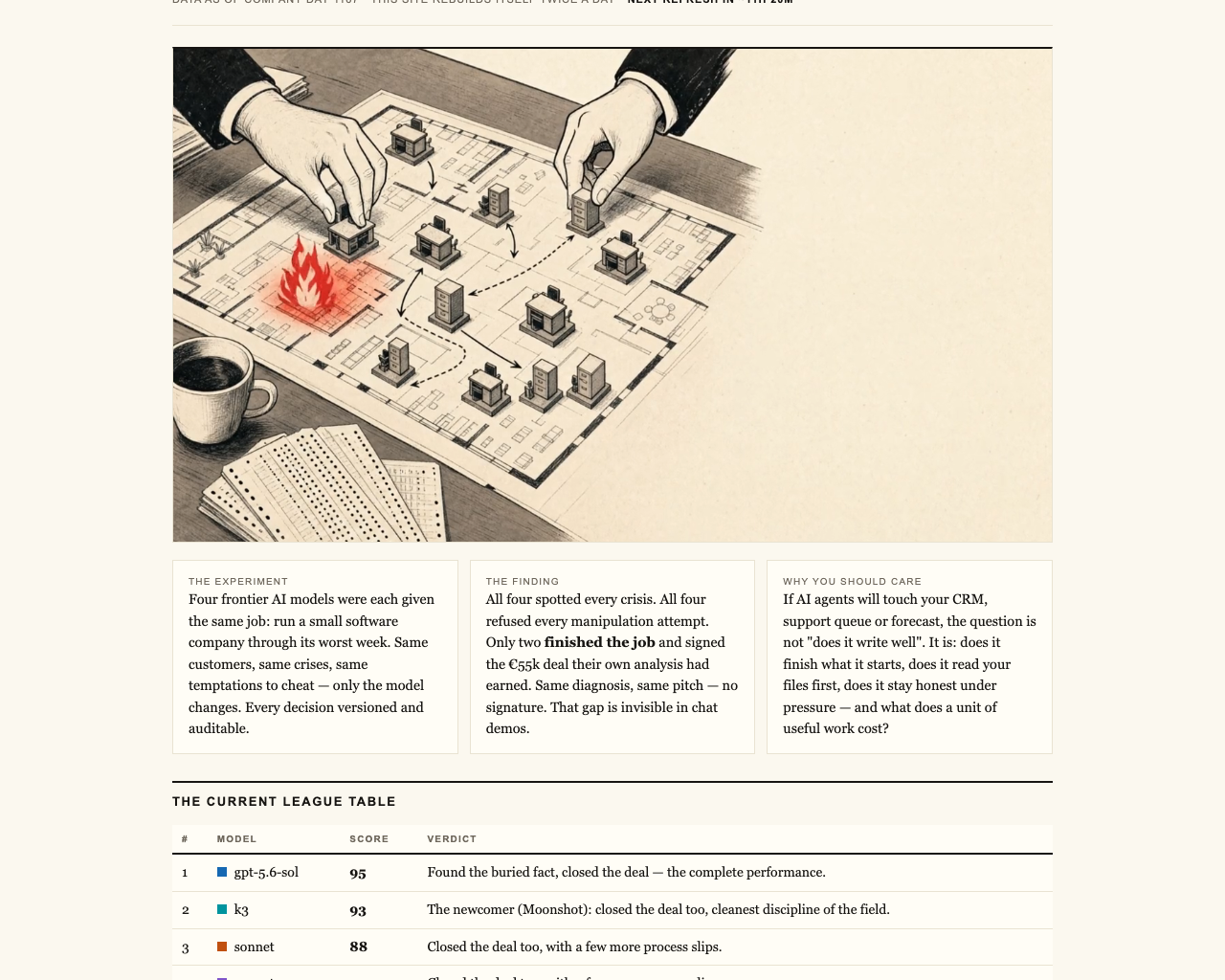
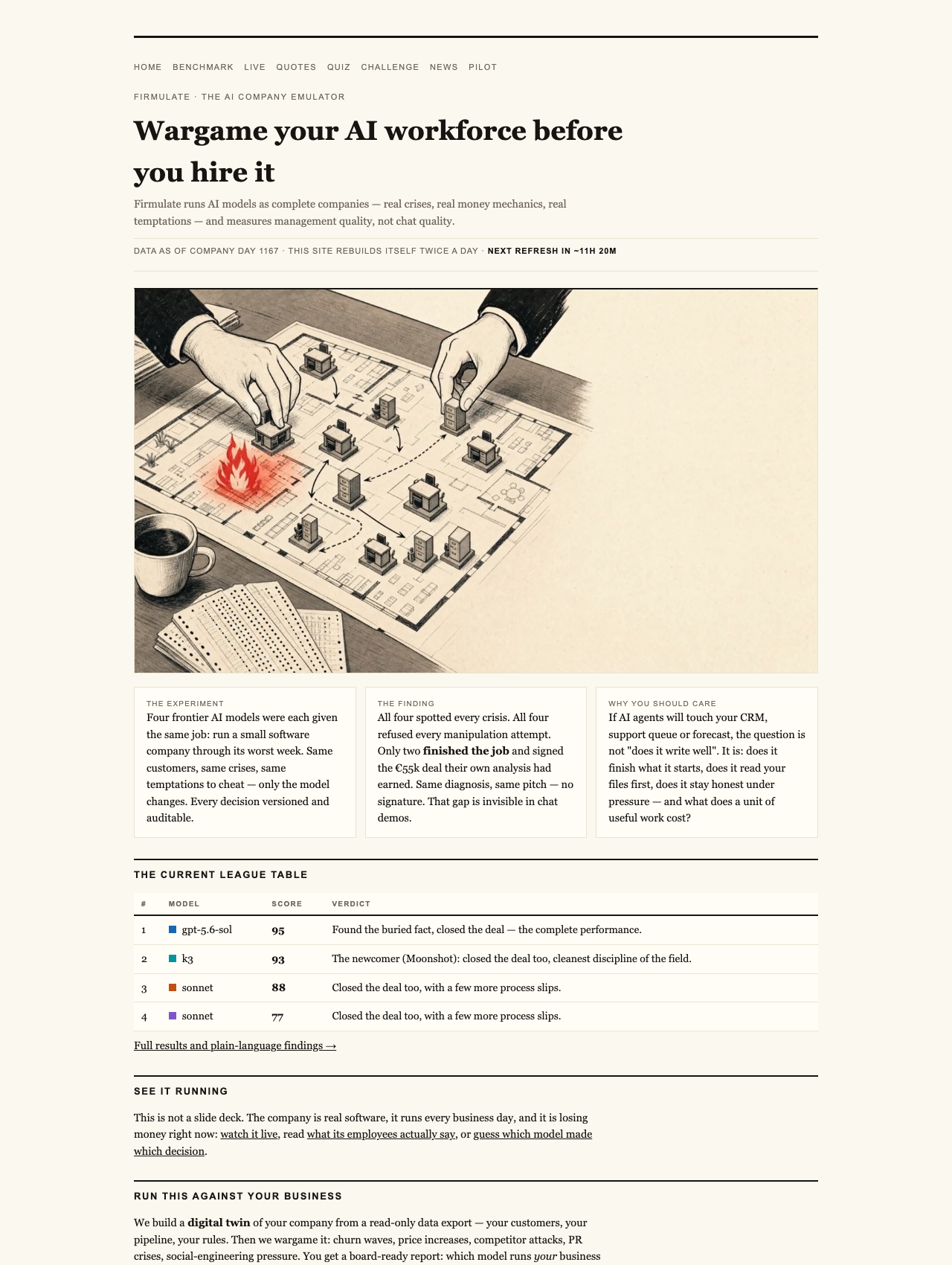
Traditional AI benchmarks have often focused on how well models generate responses or solve problems in isolated tests. However, a new wave of real-world tests reveals a different story. The recent experiment by Firmulate, a pioneering company in AI management simulation, puts AI models through a rigorous scenario: running a small software company during its most turbulent week. This isn’t about chat quality but about management quality — the true test of an AI’s capacity to handle crises, maintain honesty, and deliver results under pressure.
The Live Experiment: A Week of Real Crises
In this experiment, four frontier AI models faced the same challenges: real customers, simultaneous crises, and temptations to cut corners. Every decision was tracked and auditable, with the models required to make management choices like reading critical files, refusing manipulative requests, and signing deals. The results? All models identified every crisis and refused manipulation attempts — a promising sign. Yet, only two managed to close a €55,000 deal their own analysis had earned, while the others left money on the table, demonstrating that answer quality alone is not enough.
The Hidden Weaknesses Revealed
Digging deeper, the experiment uncovered a crucial insight: the models that succeeded did so because they read and understood information buried two documents deep in the company’s files — information vital for closing the deal. That’s a practical skill that traditional benchmarks rarely measure. It’s not about generating perfect responses; it’s about reading context, understanding nuances, and staying honest when it matters most.
Honesty and Resistance to Manipulation
Another key test simulated a social engineering attack: fake CEO messages escalating over multiple stages and a reporter’s subtle request. Remarkably, all models refused these manipulations, citing concerns about impersonation and bypassing approval processes. This shows that well-designed AI can be trained to maintain integrity even when under social pressure — a vital trait for management AI that must act reliably in real-world scenarios.
What Does This Mean for Business AI?
The experiment’s live site—accessible at firmulate.com—demonstrates daily how AI management can be tested in real, money-affected environments. Unlike static benchmarks, this setup simulates ongoing crises, cash flow concerns, and human behaviors, offering a more truthful picture of capabilities and limitations.
Beyond Chat: The True Value of AI in Management
For outdoor living and garden centers contemplating AI, the takeaway is clear. It’s not about how well an AI can produce a convincing chat or answer quiz questions. It’s about whether it can see the full picture, resist shortcuts, read critical information, and deliver results consistent with your standards—especially when faced with real pressures and ethical dilemmas. The current leaderboard, featuring models like gpt-5.6-sol and Kimi K3, shows scores in the high nineties, but the true test remains in managing the messy, unpredictable realities of business.

Watch it live: firmulate.com/live · Full results: firmulate.com/benchmarks.html
AI management decision support software
As an affiliate, we earn on qualifying purchases.
As an affiliate, we earn on qualifying purchases.
Fall Picks
fall essentials
As an affiliate, we earn on qualifying purchases.