
TL;DR

Get garden gear delivered free with Prime
- Fast, free delivery on millions of items
- Prime Video, Amazon Music and more included
- Member-only deals all year
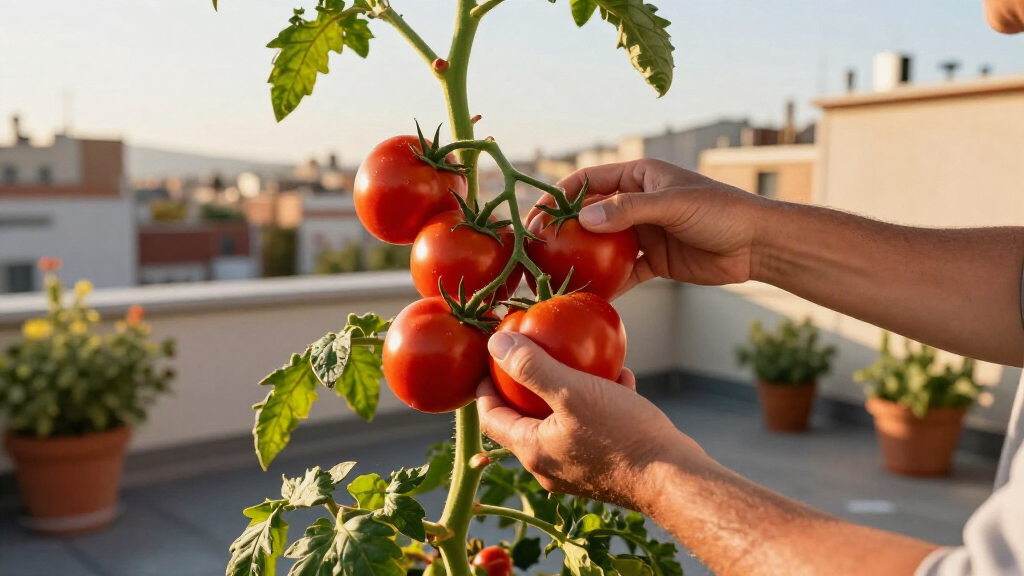
Research from the Autonomous University of Barcelona indicates that rooftops across the city could generate up to 31% of the tomatoes consumed locally. This finding underscores the potential for urban farming to supplement food supply chains, though further analysis is needed to confirm feasibility.
A recent study by the Autonomous University of Barcelona suggests that municipal rooftops in Barcelona could produce up to 31% of the tomatoes consumed within the city. This finding highlights the potential of urban agriculture to contribute significantly to local food supplies, especially in densely populated areas where space is limited.
The study, conducted by researchers at the Autonomous University of Barcelona, analyzed the available rooftop space across the city’s municipal buildings and assessed the potential for tomato cultivation. They estimate that, with appropriate infrastructure and investment, nearly a third of the city’s tomato consumption could be met through rooftop farming.
While the exact figures are preliminary, the research underscores the feasibility of integrating urban agriculture into Barcelona’s city planning. The project considers factors such as sunlight exposure, structural capacity of rooftops, and access to water. The researchers emphasize that this approach could reduce dependency on imported produce and lower carbon emissions associated with transportation.
City officials and urban planners are now examining the practical implications of these findings, including potential pilot projects and policy adjustments to support rooftop farming initiatives. The study does not specify the timeline for implementation but highlights the significant environmental and economic benefits of expanding urban agriculture.
Implications for Urban Food Security and Sustainability
This research points to a substantial opportunity for Barcelona to enhance its food security and sustainability efforts. By utilizing rooftops for tomato production, the city could decrease its reliance on food imports, reduce transportation emissions, and promote local food resilience. Urban farming can also create green spaces, improve air quality, and foster community engagement, making it a multifaceted asset for city development.
However, the practical challenges, including structural safety, water management, and economic viability, remain to be thoroughly addressed. The findings could influence future policies aimed at integrating agriculture into urban infrastructure, aligning with broader sustainability goals.
Popular right now

Ninja DualZone Smart Air Fryer, 10 Qt, 6-in-1, DZ950

Shark Navigator Robot Vacuum with Self-Empty Base, Dark Grey (RV2120AE)

Bose QuietComfort Headphones (2nd Gen), Wireless Noise-Cancelling Over-Ear Headphones, Eucalyptus Green
As an affiliate, we earn on qualifying purchases.
Barcelona’s Urban Agriculture Initiatives and Growing Interest
Barcelona has been increasingly exploring urban agriculture as part of its climate adaptation and sustainability strategies. Previous projects have focused on community gardens and green rooftops, but large-scale rooftop farming remains largely experimental. The recent spike in coverage and research interest reflects a broader trend toward sustainable city living and local food production.
The idea of using city rooftops for food cultivation is not new globally, but Barcelona’s dense urban environment presents unique challenges and opportunities. The recent study is part of a growing body of research assessing how cities can leverage unused spaces to produce food and reduce their environmental footprint.
While the concept has gained attention, it is still in the early stages of practical application, with many technical and regulatory hurdles to overcome before widespread adoption can occur.
Unresolved Questions About Practical Implementation
While the study presents promising estimates, several key questions remain unanswered. These include the actual structural capacity of rooftops to support agriculture, the cost of necessary modifications, water access and management, and potential regulatory barriers. The feasibility of scaling such projects across the entire city is still under review, and real-world pilot programs are needed to validate the findings.
Additionally, the impact on existing building safety standards and the long-term maintenance costs are not yet fully understood. Researchers emphasize that further studies are required to move from theoretical potential to practical application.
Next Steps for Urban Farming in Barcelona
Researchers and city officials are expected to initiate pilot projects to test rooftop tomato cultivation under real conditions. These pilots will help assess technical challenges, economic viability, and community acceptance. Policy frameworks and funding mechanisms are also likely to be developed to support scaling successful models.
Public engagement campaigns may follow to inform residents about the benefits and limitations of rooftop farming. The city might also explore partnerships with local farmers and agritech companies to develop infrastructure and expertise. The timeline for widespread adoption remains uncertain, but initial steps are expected within the next 12 to 24 months.
Key Questions
How much rooftop space is available for farming in Barcelona?
The study analyzed municipal rooftops across the city, but exact available space varies by building. Detailed assessments are ongoing to determine the most suitable locations for urban agriculture projects.
What are the main challenges to implementing rooftop tomato farms?
Challenges include structural safety of rooftops, water supply and management, sunlight exposure, and regulatory approvals. Addressing these will require technical adjustments and policy support.
Could rooftop farming significantly reduce food imports in Barcelona?
The study suggests that up to 31% of the city’s tomato consumption could be met locally, which could decrease dependency on imported produce and enhance food resilience.
Is this initiative already underway?
At present, the project is in the research and planning phase. Pilot programs are expected to start within the next year to test feasibility and develop practical models.
What types of infrastructure improvements are needed?
Necessary improvements include reinforcement of rooftops, irrigation systems, and possibly protective structures to optimize growing conditions and ensure safety.
Source: local