
TL;DR

Get garden gear delivered free with Prime
- Fast, free delivery on millions of items
- Prime Video, Amazon Music and more included
- Member-only deals all year
A Grow Organic guide says chicken manure can add nutrients and organic matter to garden soil, but the correct amount depends on soil needs and the product’s treatment. It advises testing soil, following product directions, and treating manure with unknown processing as raw when planning harvest intervals.
Grow Organic’s chicken manure guide says gardeners should test soil, check how manure was treated and follow product directions before applying it, because excessive nutrients can damage plants and untreated manure may carry illness-causing germs. The advice matters to vegetable growers because safe handling and the time between application and harvest depend on whether manure is raw or properly processed.
Chicken manure supplies nitrogen, phosphorus and potassium, as well as organic matter that can help soil structure and water retention, according to the guide. Its nutrient strength varies with bedding, storage and treatment. The guide cautions that nutrient-rich material is not automatically safe or suitable: excess salts and ammonia can burn plants, while using manure to meet nitrogen needs can add more phosphorus than the soil requires.
The guide distinguishes fresh, aged, composted and pelleted manure. Fresh manure may contain germs that cause illness. Simply storing or drying it does not establish that those germs are gone, and pellet form does not prove a product is safe. For composted manure, gardeners should check processing details; a managed composting process involves moisture, air, heat and suitable organic materials. An earthy smell alone is not proof that safety standards were met.
For application rates, the guide says there is no single amount for every garden. It recommends a soil test and checking a product label or manure test, while accounting for nutrients applied previously. Its example of a label rate—5 pounds per 100 square feet, or 1.6 pounds for a 32-square-foot bed—is a calculation demonstration, not a general recommendation. Gardeners should weigh material when directions specify pounds and spread it evenly, avoiding concentrated pockets near roots.
Safe Rates Protect Plants and Harvests
Using manure without matching its nutrients to the soil can harm plants and contribute to nutrient buildup. Soil testing and measured applications help gardeners avoid adding more than crops need. The guide also flags a food-safety issue: material that looks or smells finished may still require careful treatment and harvest planning.
For raw manure in organic food production, USDA guidance cited by Grow Organic sets minimum periods between soil incorporation and harvest: 120 days if edible portions touch soil or soil particles, and 90 days if they do not. Soil splash counts as contact. These intervals are counted to harvest, not planting. The guide presents them as planning guidance for home gardens too, while noting that properly processed materials may be subject to different rules.
As an affiliate, we earn on qualifying purchases.
Treatment Changes Manure Guidance
The source presents chicken manure as a potential fertilizer, not a universal garden amendment. Its usefulness depends on crop nutrient needs, soil conditions and processing. Corn and leafy crops may benefit when the soil needs nutrients, but crop type alone is not enough to determine an application rate. Tomatoes, for example, can receive needed nutrients from manure, but excess nitrogen may promote leaf growth over fruit.
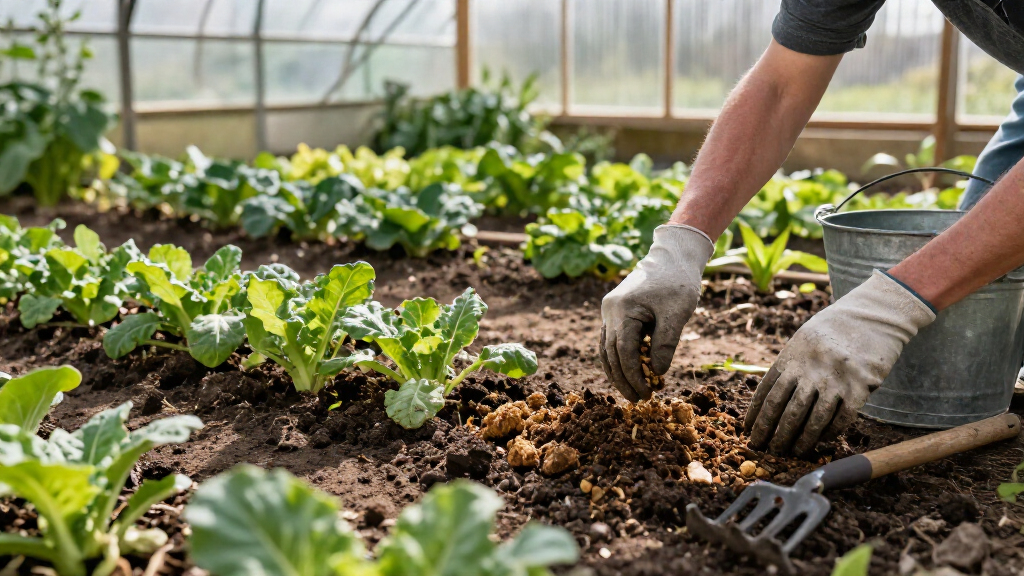
Application also depends on timing and placement. For bed preparation, the guide advises spreading the measured amount evenly and mixing it as directed. For established plants, it recommends using a suitable treated product, following its label, keeping manure off stems and edible parts, and watering it in without runoff. It advises avoiding application to frozen, flooded or saturated soil. Gloves, handwashing and clean tools are part of its handling advice.
“There is no single rate for every product or vegetable garden.”
— Grow Organic guide
Product Treatment and Rates Vary
The supplied source does not state the guide’s publication date, and it does not provide a universal application rate. Manure nutrient levels and treatment processes vary, so gardeners need the current label, a manure test or soil-test recommendations to determine what is appropriate. The guide’s bed-rate figures are examples for particular use cases, not a substitute for those checks.
It is also not clear from appearance, smell or pellet shape alone whether a given product meets a particular safety standard. When treatment details are unknown, the guide advises treating the material as raw and following raw-manure timing guidance. It does not specify a single composting procedure or claim that every product marketed as composted has met a defined standard.
Check Labels Before Garden Use
Before applying manure, gardeners should test the soil, review product processing details and follow the label. They should measure the amount, account for earlier applications and keep records of application dates and quantities to help prevent nutrient buildup. If processing is unknown, they should plan harvest timing as if the manure were raw.
After application, keep manure off edible parts and plant stems, avoid runoff toward crops and water sources, and use gloves before washing hands and tools. The guide does not identify a new regulatory change or product announcement; its advice is to use available soil and product information to decide whether manure is suitable and when crops can be harvested.
Key Questions
How much chicken manure should I add to garden soil?
There is no universal rate. Use soil-test results and the product label or a manure test, and account for nutrients applied previously. Measure by weight if the label gives a weight-based rate.
Is aged chicken manure safe to use on vegetables?
Not necessarily. Storage or drying alone does not prove that illness-causing germs have been eliminated. Check how the manure was treated; if that is unknown, the guide recommends treating it as raw.
How long should I wait before harvesting after applying raw manure?
The USDA guidance cited by the source sets minimum intervals of 120 days when edible portions contact soil or soil particles and 90 days when they do not. Soil splash counts as contact, and the interval runs to harvest.
Can chicken manure burn plants?
Yes. The guide says excess salts and ammonia can burn plants. Apply only an appropriate measured amount, follow product directions and avoid concentrated piles near roots.
What precautions should I take when applying it?
Use gloves, wash hands and clean tools. Keep manure off edible parts and stems, and water according to the label without allowing runoff toward crops or water sources.
Source: rss
Halloween Picks
halloween
As an affiliate, we earn on qualifying purchases.