TL;DR

Get garden gear delivered free with Prime
- Fast, free delivery on millions of items
- Prime Video, Amazon Music and more included
- Member-only deals all year
A Homes & Gardens report warns that planting spring bulbs in waterlogged soil can lead to rot and prevent them from emerging. Gardeners can test drainage with a filled planting hole, improve heavy soil with organic matter, or use raised beds and pots with drainage holes.
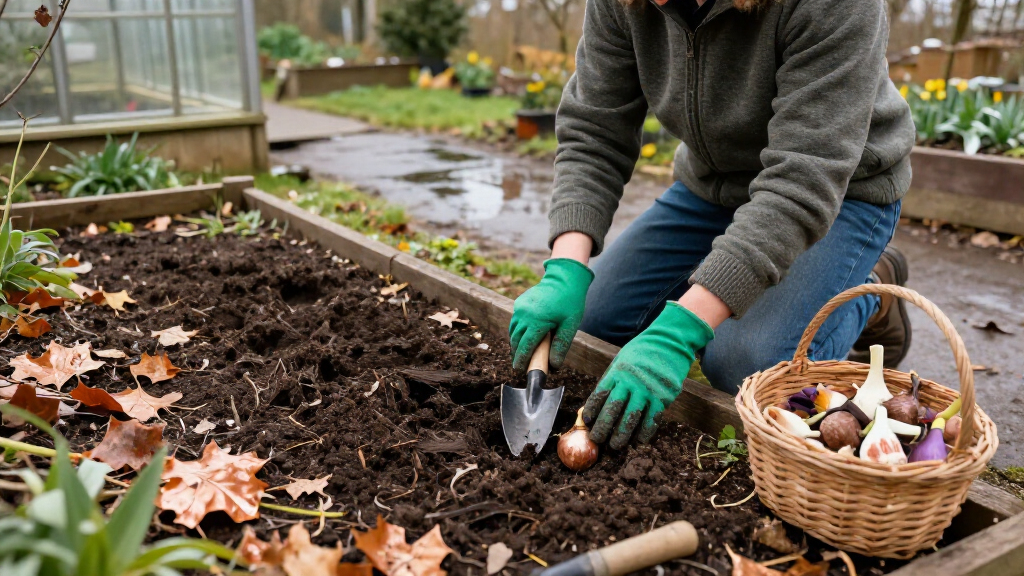
A Homes & Gardens report advises gardeners to check soil drainage before planting spring bulbs in fall, warning that waterlogged ground can cause bulbs to rot over winter and fail to emerge. The guidance matters as October is a prime planting period for many varieties, including daffodils, hyacinths, snowdrops and alliums.
Bulbs need some moisture to establish roots after planting, but the report distinguishes that from soil that remains saturated. In wet, poorly drained ground, bulbs can sit in cold waterlogged soil through winter. The report says this raises the risk of rot rather than a spring display.
Garden expert Lindsey Chastain explains that a bulb’s fleshy tissue stores the moisture and nutrients it needs to grow. When the tissue is waterlogged, she says, it can rot; saturated soil also limits oxygen around the bulb. Heavy clay soil can be especially challenging because its dense structure drains slowly, though conditions vary by site.
For a basic drainage check, the report cites Damon Tang, founder of US Grow Zones, who recommends digging a hole about 12 inches deep and 8–12 inches wide, filling it with water and checking it an hour later. If water is still standing, Tang advises choosing a better-drained location, using a raised bed or working compost into the soil. The test is presented as a practical guide, not a guarantee that every spot will suit every bulb.
Drainage Can Decide Spring Results
The advice addresses a problem that may not be visible when bulbs go into the ground: a planting site can look workable in fall but stay saturated during winter rain. If bulbs rot underground, gardeners may see few or no shoots in spring, losing both the planting effort and the expected display.
Checking the site before planting gives gardeners a chance to adjust their plans. Improving soil structure may help in some beds, while raised beds and containers offer alternatives where drainage remains poor. The report does not promise that these steps will prevent every failure; bulb health, local weather and growing conditions also matter.
Popular right now

Bose QuietComfort True Wireless Earbuds with Active Noise Cancellation, Black

Samsung 48-Inch S90H OLED 4K Smart TV (2026)

De'Longhi Magnifica Evo Fully Automatic Espresso Machine with Manual Milk Frother
As an affiliate, we earn on qualifying purchases.
Fall Planting and Wet Soil
The report identifies October as a prime time to plant many spring-flowering bulbs. After planting, bulbs need enough moisture to begin rooting. In many areas, fall rainfall provides that moisture, while gardeners in drier regions may need to water. The risk described is excess water that does not drain away, rather than ordinary soil moisture.
For heavier soils, the report recommends incorporating organic matter such as compost, well-rotted manure or leaf mold to improve soil structure. It says to add it at least a week before planting and notes that the work may need repeating annually as the material breaks down. The source does not specify how much to add or set a universal drainage threshold beyond the one-hour test.
“The bulbs store their moisture and all of the nutrients that they need to grow in the fleshy tissue, so when they are waterlogged, that rots first, and fairly quickly.”
— Lindsey Chastain, garden expert
Local Soil Conditions Still Matter
The report does not provide a forecast for any particular region or establish whether a specific garden bed is too wet for bulbs. Drainage can differ across a single property, and the one-hour hole test is offered as a screening method rather than a formal soil assessment. The guidance also does not give a universal amount of organic matter to use or a timetable for when a given bed will drain well enough.
Gardeners should check their own planting site and account for local rainfall and soil conditions. The report does not claim that poor drainage is the only reason bulbs may fail to appear.
Test Before Planting Bulbs
Before planting, gardeners can carry out the hole test and decide whether to proceed in the ground, amend the soil or move bulbs to a raised bed or container. For pots, the report recommends a well-draining potting mix, containers with drainage holes and raising pots slightly so water can escape beneath them.
Where organic matter is added to a heavy bed, the report advises incorporating it at least a week before planting and continuing to monitor drainage over time. The next practical step is to reassess the site before planting rather than assume that fall timing alone makes it suitable.
Key Questions
What is the fall bulb-planting mistake described in the report?
Planting bulbs in waterlogged or poorly drained soil. The report says prolonged saturation can lead to rot and prevent bulbs from emerging in spring.
How can I check whether my soil drains well?
Dig a hole about 12 inches deep and 8–12 inches wide, fill it with water and check it after an hour. If water is still standing, the report suggests trying a better-drained spot, a raised bed or soil improvement.
Can I plant spring bulbs in clay soil?
Clay soil can drain slowly, which makes in-ground bulb planting more difficult. The report suggests adding organic matter to improve soil structure, or using a raised bed or pot if drainage remains poor.
Can spring bulbs grow in pots?
Yes. The report says bulbs such as tulips, daffodils, hyacinths and alliums can be grown in containers. Use a well-draining potting mix and a pot with drainage holes, and keep the container from sitting in standing water.
Source: homesandgardens.com