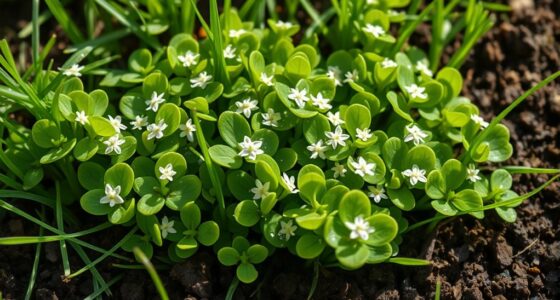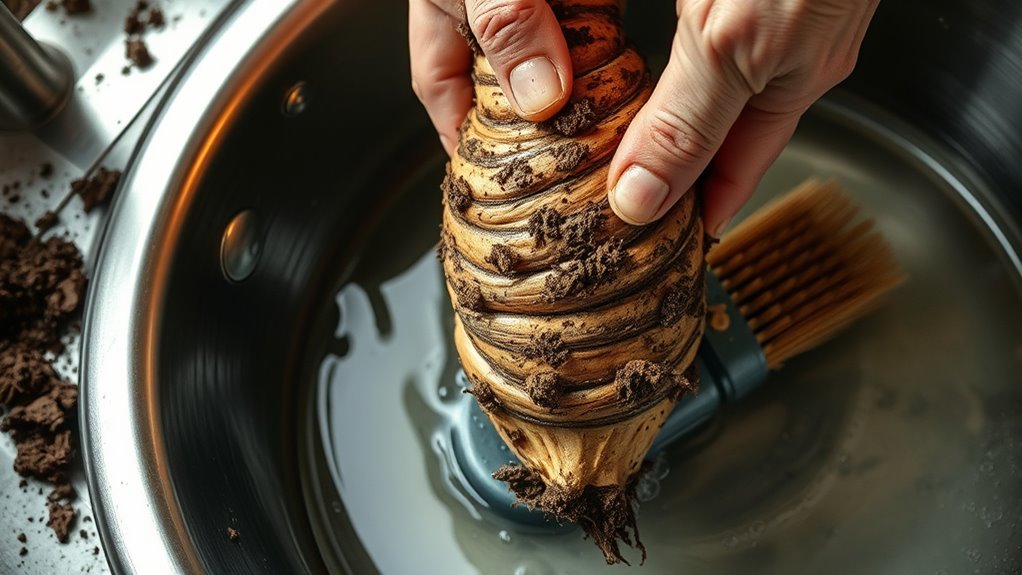

To harvest burdock root, wait until fall or early spring when the roots are mature and tender, using a garden fork or spade to loosen the soil gently, then pull with a firm grip. Clean it thoroughly under cold water with a vegetable brush, removing all dirt and debris. Peel if necessary, then slice and cook by boiling, steaming, or stir-frying for best flavor and nutrition. Want to make sure your burdock is perfect? Continue exploring!
Key Takeaways
- Harvest burdock roots in fall or early spring when roots are mature yet tender using a fork or spade carefully.
- Rinse roots thoroughly under cold water and scrub with a vegetable brush to remove soil and debris.
- Peel hairy or thick outer layers with a sharp vegetable peeler before cooking.
- Slice roots into desired shapes and cook via boiling, steaming, stir-frying, or pickling to enhance flavor and preserve nutrients.
- Proper harvesting, cleaning, and cooking maximize burdock root’s nutritional benefits and support overall health.
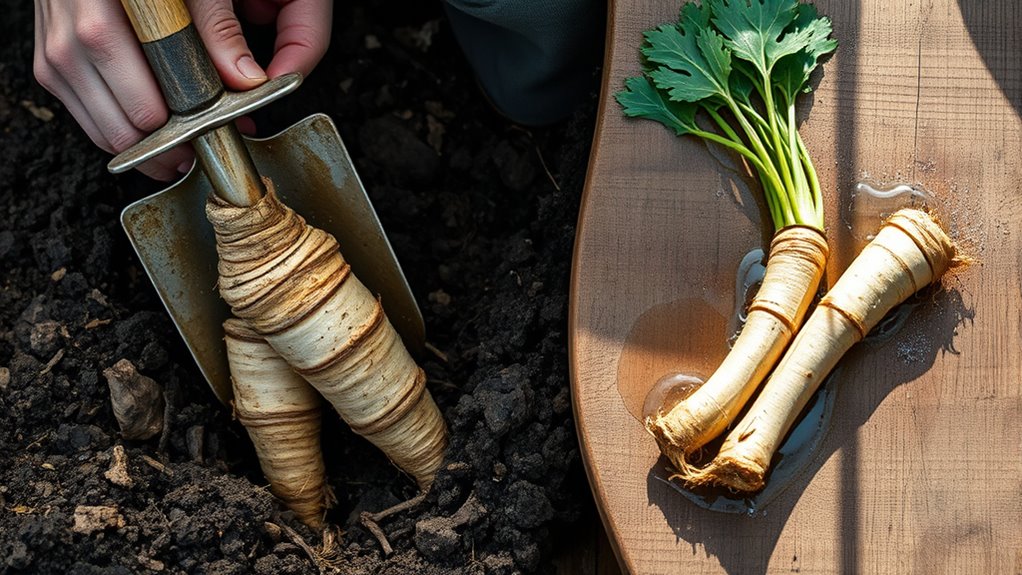
Have you ever wondered about the benefits of burdock root? If you’re seeking to harness nature’s power and reclaim your health, understanding how to harvest and prepare this root is essential. When it comes to harvesting techniques, timing is everything. You want to dig up burdock in the fall or early spring, when the roots are mature but still tender. Use a sturdy garden fork or spade to gently loosen the soil around the plant, being careful not to damage the root. Pull it out with a firm grip, and inspect it for signs of rot or disease. This careful approach guarantees you get the most nutritious benefits from your harvest. Speaking of nutritional benefits, burdock root is a treasure trove of health-boosting compounds. It’s rich in antioxidants, fiber, and essential minerals like potassium and magnesium. These nutrients work together to detoxify your body, improve digestion, and boost your immune system. By harvesting with precision and care, you access these benefits, allowing your body to thrive free from toxins and fatigue. Once you’ve pulled the root from the earth, cleaning becomes your next step. Rinse it thoroughly under cold running water to remove dirt and debris. Use a vegetable brush to scrub away stubborn soil, focusing on the knobby, hairy surface. Don’t skimp on this step—cleaning properly guarantees you eliminate any bacteria or residual dirt, making the root safe for consumption. For cooking, many prefer to peel the burdock, especially if it’s hairy or thick. Use a sharp vegetable peeler to carefully remove the outer layer, revealing the tender, white flesh inside. The root can be sliced into strips, cubes, or julienne, depending on your recipe. Cooking methods vary: boil, steam, stir-fry, or even pickle it, but always aim to preserve its crunch and nutritional integrity. Cooking burdock releases its earthy flavor and maximizes its health benefits, helping you nourish your body and mind. Additionally, understanding water-based therapies like hydrotherapy can enhance your overall wellness, complementing the benefits of incorporating burdock into your diet. This process of harvesting, cleaning, and cooking isn’t just about preparation—it’s about reclaiming your sovereignty over what you consume. You control what enters your body and how it serves your liberation from processed, artificial foods. Every step you take brings you closer to a deeper connection with nature’s abundance. So, embrace these techniques and harness the nutritional power of burdock root. It’s not just a root; it’s a tool for your health revolution, helping you feel empowered, energized, and free to live your best life.

Fresh Burdock Root, Japanese Gobo, Non-GMO, for Cooking and Planting (1 lb)
VERSATILE ROOT: Fresh burdock root (gobo) can be used for both culinary purposes and as planting material for…
As an affiliate, we earn on qualifying purchases.
As an affiliate, we earn on qualifying purchases.
Frequently Asked Questions
How Long Does Burdock Root Last in Storage?
You can store burdock root for up to two weeks in the fridge if you use proper storage methods. Keep it in a perforated plastic bag or wrap it in a damp cloth to maintain freshness. For longer shelf life, consider freezing it—blanch first, then store in an airtight container. Shelf life tips like these help you enjoy your burdock root whenever you desire, giving you freedom from frequent trips to the market.
Can Burdock Root Be Eaten Raw?
Yes, you can eat burdock root raw. Its crunchy texture and earthy flavor make it perfect for raw consumption, especially in salads or as a snack. Incorporate it into your culinary uses to enjoy its nutritional benefits and unique taste. Eating it raw allows you to experience its fresh, natural qualities, giving you a sense of liberation from traditional cooking methods and embracing a more natural, vibrant way to enjoy this versatile root.
Are There Any Health Risks From Consuming Burdock Root?
You should be aware of some toxicity concerns and allergic reactions when consuming burdock root. While it’s generally safe, eating large amounts might cause stomach upset or skin irritation. If you have allergies to plants in the Asteraceae family, you could experience reactions. To stay safe, start with small portions, and consult a healthcare professional if you notice any adverse effects. Embrace your freedom to explore but stay mindful of your body’s signals.
What Are the Best Herbs to Pair With Burdock Root?
You should pair burdock root with herbs like ginger, garlic, and green onion to enhance flavor combinations and create herbal synergy. These herbs complement burdock’s earthy taste, adding warmth and depth. Together, they empower your dishes with vibrant, revitalizing energy. Embrace these pairings to liberate your culinary spirit, transforming simple ingredients into powerful, nourishing creations that elevate your health and flavor experience.
How Can I Tell if Burdock Root Is Fresh?
You’ll know your burdock root is fresh if its visual appearance is firm, with a smooth, unblemished skin that feels sturdy to the touch. During the harvesting season, look for roots that are deeply colored and have a vibrant, glossy exterior. Fresh burdock awakens your senses, offering a crisp snap when you bend it, symbolizing liberation from old, dull routines. Trust your instincts and choose roots that radiate vigor.

GANNK Potato Apple Vegetable Peelers for Kitchen, I and Y Peelers for Fruit Veggie Potatoes Carrot Cucumber, 3 in 1 Blade Spin Design With Julienne Function
Peelers for kitchen Set: Include the 3 in 1 multifunctional Y vegetable peeler. And a I potato peelers….
As an affiliate, we earn on qualifying purchases.
As an affiliate, we earn on qualifying purchases.
Conclusion
Now that you know how to dig, clean, and cook burdock root, you’re ready to enjoy its health benefits. Did you know that burdock root is rich in antioxidants and has been used in traditional medicine for centuries? Incorporating it into your meals can boost your immunity and improve digestion. So, next time you see it at the market, give it a try—your body will thank you for the nutritious boost!

Frontier Organic Burdock Root, 1-Pound Bulk Bag, Common in Root Beer Recipes, Cut & Sifted, Sustainable Grown, Kosher (Packaging May vary)
BURDOCK ROOT – Burdock root, known for its fibrous nature, present a soft, stringy, and cotton-like texture, containing…
As an affiliate, we earn on qualifying purchases.
As an affiliate, we earn on qualifying purchases.

Bamboo Steamer 10 Inch 2 Tier Wooden Basket With Handle, Ring Adapter, Reusable Silicone Liner, Kit For Cooking Dumpling Baby Bao Bun, Dim Sum, Rice Potsticker Steaming Chinese Asian Food & Vegetables
Cook various dishes at the same time- This 2-Tier bamboo steamer is 10" wide for a large capacity
As an affiliate, we earn on qualifying purchases.
As an affiliate, we earn on qualifying purchases.