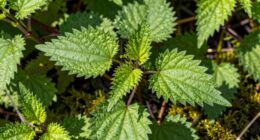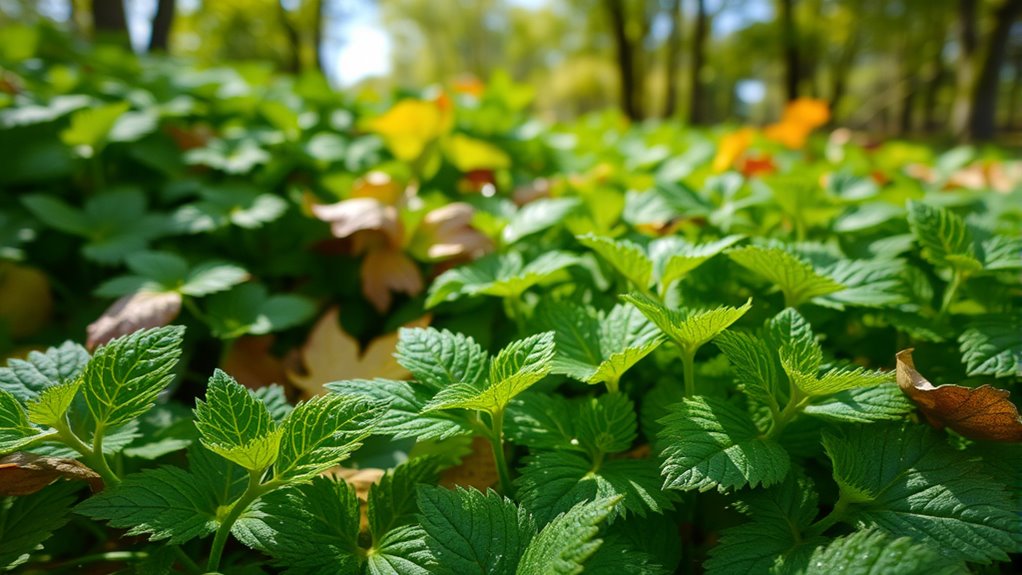

In fall, young nettle shoots emerge near the roots, offering a safe harvesting window. Look for tender, vibrant green shoots about 2-4 inches tall, especially in early mornings when plants are hydrated. Always wear gloves and use scissors to snip at the base, avoiding contact with stingy leaves. Rinse thoroughly and prepare by cooking or drying to neutralize stings and reveal herbal benefits. To discover more tips on safe harvesting and usage, keep exploring this season’s best practices.
Key Takeaways
- Focus on young, vibrant shoots near the plant’s base for safe fall harvests.
- Harvest early in the morning for optimal hydration and tenderness.
- Always wear gloves and use scissors to avoid stings during collection.
- Rinse nettles thoroughly to remove dirt, insects, and residual sting hairs.
- Properly cook or dry nettles to neutralize their sting and unlock herbal benefits.
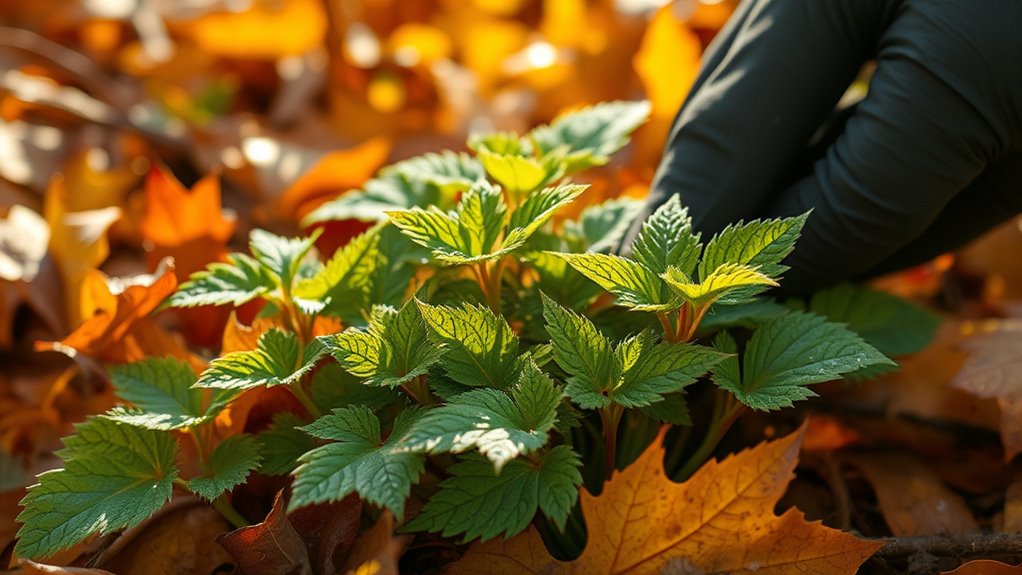
As autumn arrives, nettles begin to fade from their vibrant summer growth, but they still hold surprises for those willing to look closely. This is the time to embrace their resilience and discover the hidden gems beneath their prickly exterior. If you’re seeking liberation through nature’s gifts, understanding how to forage and handle nettles safely becomes vital. With the right foraging tips, you can access their herbal benefits without risking a painful sting, transforming these often overlooked plants into powerful allies.
First, focus on young regrowth. During fall, new shoots appear near the roots, often lower to the ground and less mature than summer’s towering plants. These tender shoots are ideal for harvesting because they contain high concentrations of nutrients and are less likely to cause irritation if handled properly. When foraging, look for vibrant green, fresh shoots that are about 2-4 inches tall. Always choose plants that are not near polluted areas or heavily trafficked paths to guarantee you’re collecting clean, safe herbs.
Handling nettles safely is vital. Always wear gloves—preferably rubber or thick fabric—to shield your skin from their tiny, stinging hairs. Use scissors or pruning shears to snip the shoots at the base, avoiding direct contact with the plant’s leaves and stems. It’s best to harvest in the early morning when the plants are most hydrated and packed with herbal benefits. Once collected, immediately rinse the nettles thoroughly in cold water to remove any dirt, insects, or residual sting hairs. Cooking or drying the nettles neutralizes their sting, making them safe to consume and preserve their herbal benefits.
Always wear gloves and handle nettles carefully to stay safe from stings.
The herbal benefits of nettles are extensive. They are rich in vitamins A, C, and K, along with minerals like iron, calcium, and magnesium. These nutrients support your immune system, boost energy, and promote healthy skin and bones. Nettles also contain antioxidants and anti-inflammatory compounds, making them a natural remedy for allergies, joint pain, and digestive issues. When prepared correctly, they can be infused into teas, added to soups, or used in pesto, offering a liberating way to harness nature’s healing power.

Cuisinart C77-SHRH 8.5" Herb Shears
Ultra Sharp Stainless Steel Blades
As an affiliate, we earn on qualifying purchases.
As an affiliate, we earn on qualifying purchases.
Frequently Asked Questions
Can Nettles Be Used for Medicinal Purposes in the Fall?
Yes, you can harvest nettles in fall for medicinal benefits. Fall harvesting targets young regrowth, which is rich in nutrients and medicinal compounds. You have the freedom to use these fresh or dried leaves to boost your health, whether for inflammation, detox, or energy. Just remember to handle them safely, wearing gloves, and always identify the plant correctly to enjoy their healing power without harm.
How Do Nettles Affect Local Ecosystems During Autumn?
During autumn, nettles influence local ecosystems by accelerating nutrient cycling, enriching the soil with their decaying leaves and stems. They also play a role in invasive species management by competing with native plants, which can threaten biodiversity. Embrace the power of nettles this season; let them liberate your environment from imbalance, supporting a resilient and thriving ecosystem. Harness their natural cycle to foster ecological harmony and reclaim control over your landscape.
Are There Any Pests That Target Nettles in Fall?
Unlike pests that shy away from nettles, some insects target them in fall, making pest management essential. You can embrace this resilient plant by choosing pest-resistant varieties that reduce your effort. While pests like caterpillars and beetles may attack, you hold the power to control them. Don’t let pests dominate—take charge and enjoy the freedom of cultivating healthy nettles without worry.
What Are the Best Tools for Harvesting Nettles Safely?
To harvest nettles safely, you should use protective gloves to prevent stings and sturdy scissors for clean cuts. These tools help you work confidently, allowing you to gather young regrowth without danger. Embrace your freedom to harvest fresh, nutritious nettles on your terms. With the right gear, you can enjoy the bounty of nature while staying safe and comfortable. Take control and harvest confidently!
Can Nettles Regrow After Severe Frost?
Yes, nettles can regrow after severe frost due to their frost resilience. You’ll notice their regrowth patterns emerge as resilient young shoots, often in early spring or when the weather warms. Don’t let the cold stop you—these hardy plants bounce back, offering you a fresh harvest. Embrace their resilience, and you’ll find that nettles remain a reliable, wild resource, even after harsh frosts.
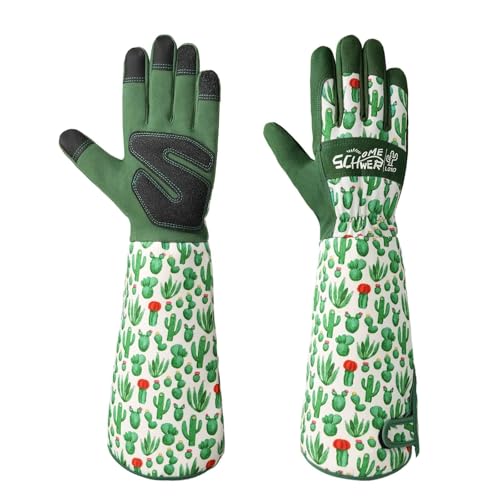
Schwer Gardening Gloves for Women, Rose Pruning Gloves with Reinforced Fingertips & Palm, Touchscreen, Breathable Long Garden Glove for Yard, Gardening Essentials & Supplies, Gifts for Gardener, M
【Long Gardening Gloves Women】This cactus printed garden glove is designed specifically for women, and the size will be…
As an affiliate, we earn on qualifying purchases.
As an affiliate, we earn on qualifying purchases.
Conclusion
As fall arrives, you might think nettles are done for the year, but don’t be too quick to dismiss them. Hidden among the fallen leaves, new regrowth could be just around the corner—ready for harvest or a surprise encounter. With safe handling, you can explore their potential and uncover nature’s secrets before winter settles in. Stay alert, stay cautious, and who knows? The next discovery could be closer than you think.

Cedilis Set of 2 Stackable Wood Pasta Herb Drying Rack, Food Dryer Stand with Net for Drying Seeds, Herb, Bud
This set includes 2 herb drying racks that can be stacked to create a 2-tier pasta drying rack….
As an affiliate, we earn on qualifying purchases.
As an affiliate, we earn on qualifying purchases.

Traditional Medicinals Organic, Nettle Tea – Supports Joint Health & Overall Wellness with Stinging Nettle – Kosher, Non-GMO, Caffeine-Free, Compostable – 16 Tea Bags
Herbal joint support: Nettle Leaf tea supports joint health and overall wellness*
As an affiliate, we earn on qualifying purchases.
As an affiliate, we earn on qualifying purchases.