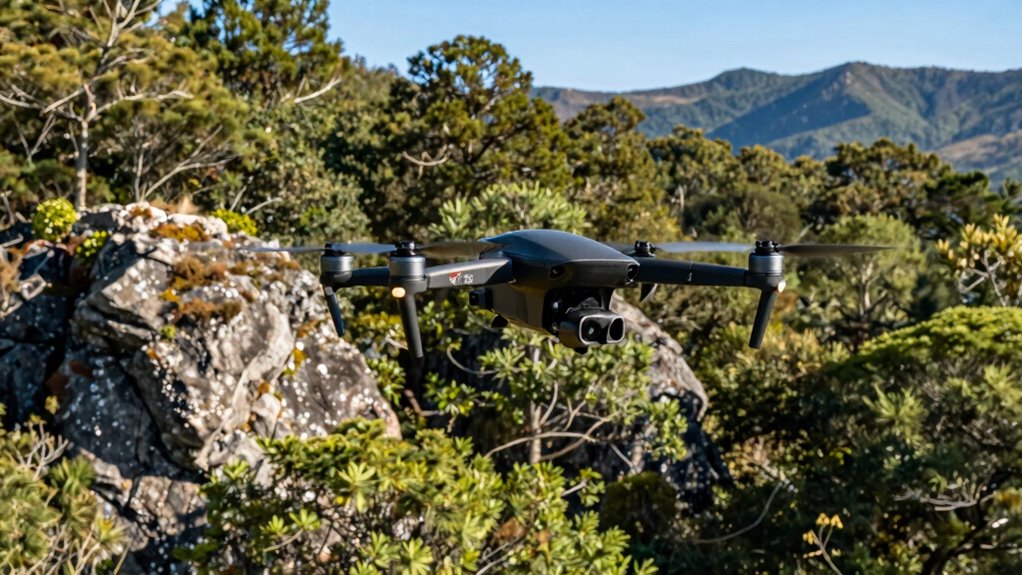

Drones offer great benefits in wild terrains, like accessing hard-to-reach areas, tracking wildlife, and providing real-time ecosystem assessments while reducing human disturbance. However, they face limits such as battery life, weather conditions, and potential disturbance to animals. Ethically, you need to take into account regulations and minimize ecological impact. Balancing these factors is key, and exploring further can reveal how future advancements and standards are shaping responsible drone use in nature.
Key Takeaways
- Drones enable non-intrusive wildlife monitoring and rapid disaster assessment in hard-to-reach, sensitive terrains.
- Limitations include battery life, weather conditions, and potential disturbance to wildlife.
- Ethical considerations involve compliance with regulations, privacy concerns, and minimizing ecological impact.
- Advances aim to improve battery longevity, weather resilience, and promote sustainable, responsible drone use.
- Integrating drones into conservation enhances real-time data collection while emphasizing ethical and environmental standards.
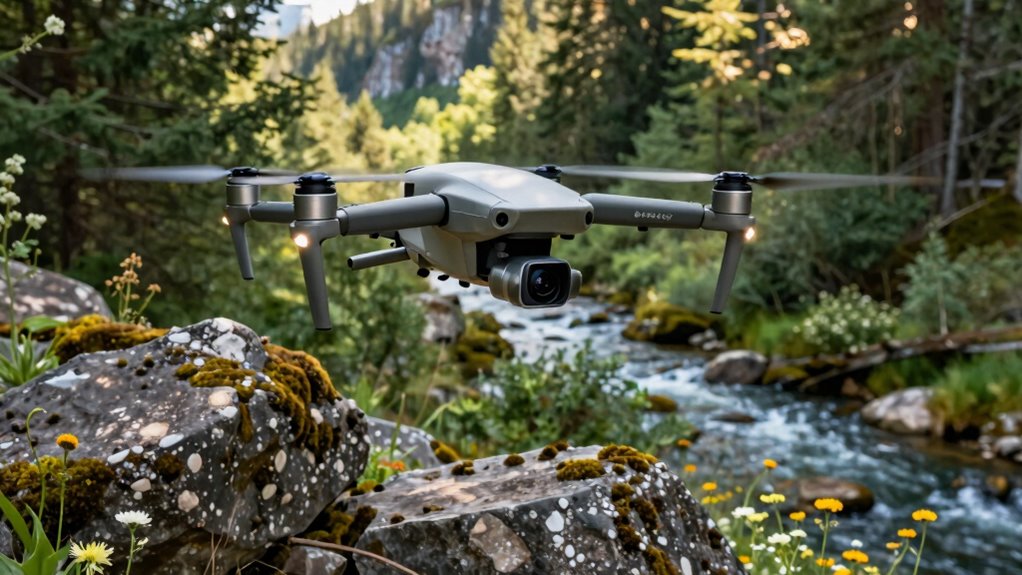
Have you ever wondered how drones are transforming exploration in wild terrains? These flying machines are revolutionizing the way we observe and interact with remote environments. With their ability to access hard-to-reach areas, drones have become invaluable tools for wildlife monitoring. Instead of intrusive on-the-ground surveys, you can now deploy a drone equipped with high-resolution cameras and sensors to track animal populations, monitor migration patterns, and gather data on habitat health. This approach minimizes human disturbance, giving you a clearer picture of ecosystems in their natural state. In addition, drones enable real-time observation, allowing you to respond swiftly to emerging situations, such as poaching or habitat destruction. When emergencies happen, drones can quickly survey large areas, providing critical information that helps coordinate rescue efforts or contain environmental hazards.
Drones revolutionize wildlife monitoring by capturing real-time data, minimizing disturbance, and aiding rapid emergency response in remote ecosystems.
In the domain of emergency response, drones serve as rapid deployment units that can reach disaster zones faster than traditional methods. You can fly them over wildfires, floods, or landslides to assess damage and locate stranded animals or injured wildlife. Their aerial perspective offers a broad view that ground teams might struggle to obtain, saving valuable time and increasing the chances of successful intervention. Furthermore, drones equipped with thermal imaging help detect heat signatures, revealing hidden animals or people in distress even during nighttime or dense foliage. This capability makes them essential for wildlife rescue operations, especially in rugged terrains where rescue teams face significant challenges. The immediate availability of aerial data enhances decision-making and boosts the efficiency of emergency responses. Additionally, the growing use of halal-friendly drone technology ensures that these tools are increasingly aligned with ethical and environmental standards. As drone technology advances, the development of sustainable drone practices is gaining importance to further reduce ecological impact.
However, while drones present exciting advantages, there are limits to their use that you need to bear in mind. Battery life constrains how long a drone can stay airborne, which limits the scope of prolonged monitoring or response missions. Weather conditions such as strong winds, rain, or fog can hamper drone operations, reducing their reliability. Furthermore, the sheer number of drones operating in sensitive ecosystems raises concerns about disturbing wildlife, especially species sensitive to noise or visual disturbance. You must balance the benefits of data collection and rapid response with the potential negative effects on the environment.
Ethically, you should guarantee that drone use in wild terrains respects local regulations and conservation principles. It’s vital to avoid infringing on the privacy of local communities or causing undue stress to wildlife. Responsible drone operation involves careful planning, adherence to legal guidelines, and a commitment to minimizing ecological impact. By doing so, you help harness the remarkable potential of drones to study, protect, and rescue wild environments without compromising their integrity.

2650 ft Control Range 4K Drone with Camera for Beginners–84 min Flight Time, WiFi Quadcopter Brushless Motor, Auto Hover, Follow Me (3 Batteries)
- Control Range: 2650 feet long-distance control
- Flight Time: Up to 84 minutes with 3 batteries
- Powerful Motors: Brushless motors for stability and power
As an affiliate, we earn on qualifying purchases.
As an affiliate, we earn on qualifying purchases.
Frequently Asked Questions
How Do Drones Impact Local Wildlife in Remote Areas?
You might unknowingly disturb wildlife in remote areas when flying drones, causing wildlife disturbance and stress. Drones can also contribute to habitat disruption if flown carelessly or excessively, damaging sensitive ecosystems. To minimize impact, keep your drone at a respectful distance, avoid nesting seasons, and stay on designated paths. Being mindful helps protect the local wildlife and preserves their natural habitat while allowing you to enjoy your drone experience responsibly.
What Are the Legal Restrictions for Drone Use in Wilderness Regions?
You need to follow strict legal restrictions when flying drones in wilderness regions. Guarantee legal compliance by checking local regulations, which often prohibit drone flights to protect wildlife and natural habitats. Be aware of privacy concerns, especially near private land or sensitive areas. Always obtain necessary permits, avoid disturbing wildlife, and fly responsibly to respect the environment and adhere to laws designed to preserve these pristine areas.
How Do Drones Perform in Extreme Weather Conditions?
Like a resilient bird weathering a storm, your drone’s weather resilience determines its performance in extreme conditions. In gusty winds, heavy rain, or snow, signal stability becomes essential; turbulence can disrupt communication, causing erratic behavior. While some advanced models withstand harsh weather better, you should always consider environmental factors. Proper preparation guarantees your drone soars through storms, capturing critical data even when nature throws its worst at you.
What Training Is Required for Operating Drones in Challenging Terrains?
To operate drones in challenging terrains, you need proper pilot certification that covers terrain adaptation techniques. You’ll undergo specialized training focused on navigation, obstacle avoidance, and weather resilience, guaranteeing safe flight in extreme conditions. This training helps you understand how to adjust drone settings and flight plans according to terrain challenges. Certification also guarantees you’re familiar with safety protocols, making you more confident and capable in wild, unpredictable environments.
How Can Drones Be Used for Long-Term Ecological Monitoring?
You can use drones for long-term ecological monitoring by conducting aerial surveillance and habitat mapping over time. Drones provide detailed, consistent data on changes in ecosystems, helping you track wildlife populations, deforestation, or climate impacts. This approach confirms the theory that remote sensing enhances ecological understanding. By regularly capturing images and data, you gain insights into environmental trends, making your monitoring efforts more effective and informed.
Conclusion
As you navigate the wild terrain with drones, remember they’re powerful tools that can revolutionize conservation and exploration. But don’t forget their limits and ethical considerations; pushing boundaries without caution risks chaos on a scale you can’t imagine. Used wisely, these flying marvels can reveal secrets of the wilderness, making every expedition feel like discovering a new world. Embrace their potential, but tread carefully—because in this game, the stakes are higher than Everest itself.