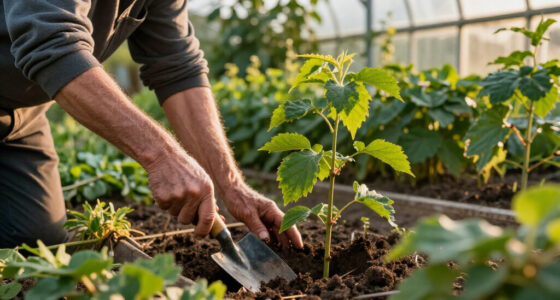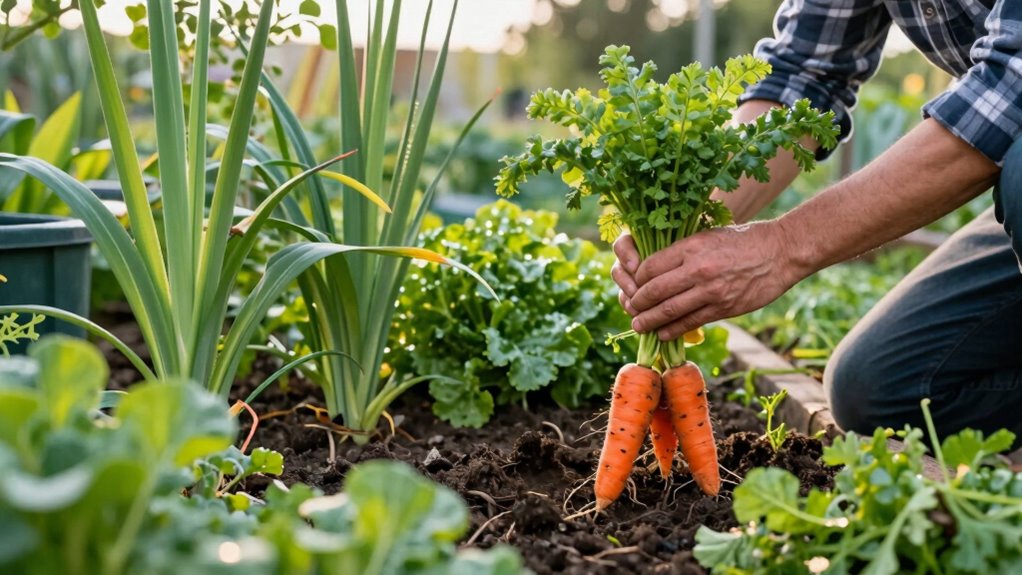

To harvest with regeneration in mind, focus on minimizing soil disturbance by avoiding heavy machinery and practicing selective harvesting, only removing mature plants gradually. Use cover crops and compost to replenish nutrients, and rotate crops to support soil health. Maintain ground cover to prevent erosion and preserve root systems. Incorporate biodiversity by planting different species and providing habitats for beneficial insects. By adopting these strategies, you’ll promote resilient ecosystems and sustain productivity—discover more ways to nurture land effectively.
Key Takeaways
- Practice selective harvesting to minimize soil disruption and preserve root systems.
- Use crop rotation and fallowing to promote soil recovery and nutrient cycling.
- Leave ground cover intact to prevent erosion and maintain soil vitality.
- Harvest at peak maturity to avoid overharvesting and support plant resilience.
- Incorporate compost, cover crops, and native plants to enhance soil health and biodiversity.
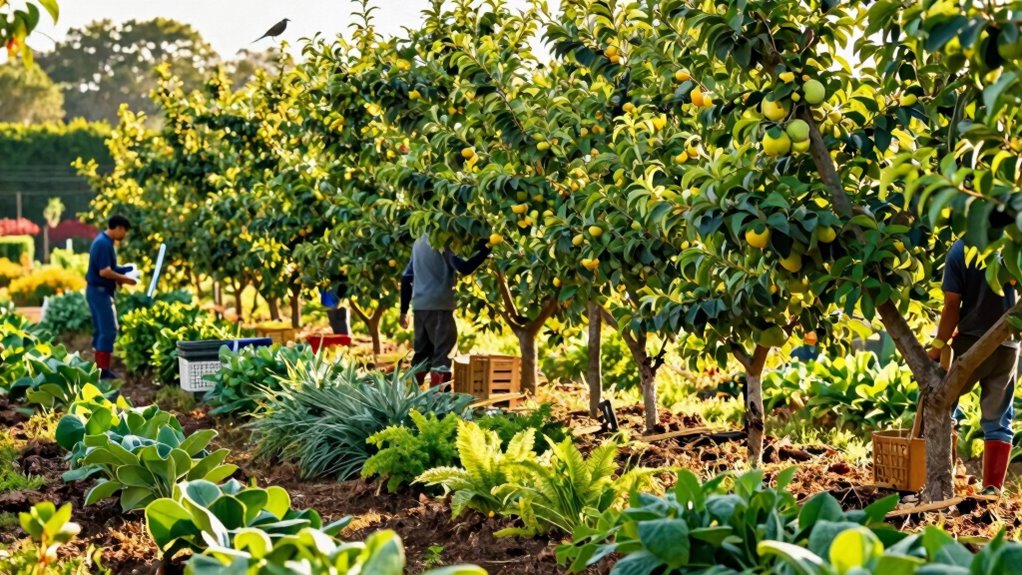
Harvesting with regeneration in mind means carefully balancing your immediate needs with the long-term health of the land. When you adopt this approach, you recognize that each harvest impacts the soil and the surrounding ecosystem. Prioritizing soil health is essential because healthy soil sustains plant growth, retains nutrients, and prevents erosion. You can enhance soil vitality by minimizing disturbance, avoiding heavy machinery, and using compost or cover crops to replenish nutrients. These practices help create a resilient soil structure, encouraging beneficial microorganisms to thrive, which in turn supports healthy plant roots and robust crops. Promoting biodiversity is also crucial because diverse ecosystems are more resilient to environmental stresses and pests.
Prioritize soil health through minimal disturbance, compost, and cover crops to support resilient, thriving ecosystems.
Beyond soil health, preserving biodiversity plays an important role in regenerative harvesting. When you diversify the species on your land, you create a more resilient ecosystem capable of recovering from disturbances. Incorporate a variety of crops, trees, or plants that attract beneficial insects and pollinators. This diversity naturally controls pests and reduces the need for chemical interventions, fostering a more balanced environment. By maintaining habitat complexity—such as leaving some areas undisturbed or planting native species—you support wildlife that contributes to the ecological stability of your land. Additionally, understanding the importance of soil microbiota helps you appreciate how beneficial microorganisms work symbiotically with plant roots to improve nutrient uptake and soil vitality. Recognizing the role of ecosystem services can further inform sustainable harvesting practices that benefit the entire landscape.
Practicing selective harvesting is another key element. Instead of clear-cutting or removing large portions of crops at once, you harvest selectively and gradually. This approach minimizes soil disruption, preserves root systems, and maintains ground cover that protects against erosion and compaction. When you choose to harvest only mature plants or specific sections, you allow the remaining vegetation to continue growing, helping replenish nutrients and maintain biodiversity. Using multi-unit setups such as robot mowers can also help maintain cover and reduce soil disturbance, supporting these regenerative practices. Incorporating timing strategies like staggered harvesting schedules can further enhance soil recovery and plant resilience.
Timing also matters. Harvest when plants are at their peak, but avoid overharvesting that depletes resources faster than they can regenerate. Implementing crop rotations and fallowing periods gives the soil time to recover, reducing nutrient depletion and breaking pest cycles. These practices promote a sustainable cycle where the land can naturally replenish itself, ensuring continued productivity without degrading the environment.
As an affiliate, we earn on qualifying purchases.
Frequently Asked Questions
How Do I Assess Soil Health Before Harvesting?
You assess soil health before harvesting by examining the soil microbiome and nutrient cycling. Check for diverse microbial life through simple tests like observing soil smell, texture, and color. Use affordable kits to measure nutrient levels such as nitrogen, phosphorus, and potassium. Healthy soil supports robust nutrient cycling and a vibrant microbiome, which are signs you’re maintaining good soil health. This guarantees your land stays productive and regenerative over time.
What Tools Are Best for Low-Impact Harvesting?
You should use tools like pruning shears or sickles for selective harvesting, which minimizes soil disturbance and preserves plant roots. A small, sharp knife can also help with precise cuts. Incorporate cover cropping tools, such as hand rakes, to manage cover crops gently and maintain soil health. These tools support low-impact harvesting by reducing soil disruption, promoting regeneration, and encouraging sustainable practices that benefit your farm’s ecosystem.
How Can Harvest Timing Affect Regeneration?
Timing your harvest carefully enhances regeneration by allowing crops to fully mature and soil to recover. You can plan crop rotation to prevent soil depletion, giving land time to replenish nutrients. Additionally, scheduling harvests to maintain wildlife corridors ensures habitats remain intact, supporting biodiversity. By aligning your harvest schedule with ecological needs, you promote sustainable growth and healthier ecosystems, guaranteeing your land remains productive for years to come.
How Do I Minimize Waste During Harvest?
To minimize waste during harvest, you should plan your crop rotation carefully to guarantee you’re harvesting only mature crops, reducing unnecessary leftovers. Use pest management techniques beforehand to prevent damage that can cause waste. Additionally, harvest in stages if possible, and handle crops gently to avoid spoilage. This approach promotes sustainable harvesting, helps regenerate your soil, and maximizes yield, all while reducing waste and supporting long-term farm health.
What Post-Harvest Practices Support Regeneration?
After harvesting, you support regeneration by maintaining crop diversity, which encourages beneficial soil microbes and reduces pest issues. Practice crop rotation and plant cover crops to replenish nutrients and improve soil health. Use integrated pest management to keep pest populations in check without harming beneficial insects. These practices help restore the ecosystem, promote biodiversity, and guarantee your land remains productive and resilient for future harvests.
Conclusion
As you finish your harvest, imagine the land gently resting, its roots whispering thanks beneath the soil. Your mindful approach leaves the earth resilient, ready to bloom anew with each season. Like a careful gardener tending a vibrant, living tapestry, you’ve nurtured the cycle of growth and renewal. With every thoughtful harvest, you help sustain this lush, thriving world—where life continues to flourish beneath your hands, promising abundance for generations to come.