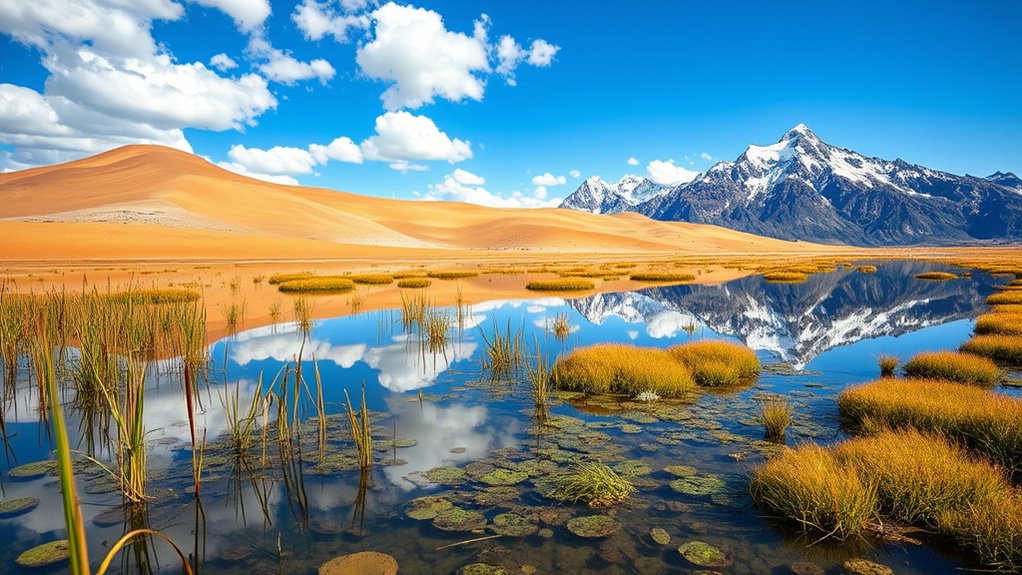

Sensitive habitats like wetlands, dunes, and alpine zones are crucial, fragile environments that sustain biodiversity and natural processes. Wetlands filter pollutants and support diverse species, while dunes act as natural coastal barriers protecting communities and ecosystems. Alpine zones are highly sensitive to climate change and human impact. Protecting and restoring these habitats helps maintain ecological balance and resilience. Continuing to explore this topic reveals how you can contribute to their preservation and guarantee future sustainability.
Key Takeaways
- Sensitive habitats like wetlands, dunes, and alpine zones are vital ecosystems that support biodiversity and ecological stability.
- Wetlands filter pollutants, buffer floods, and provide habitat for diverse plant and animal species.
- Dunes act as natural coastal barriers, protecting inland areas from storms and erosion.
- Alpine zones are fragile, high-altitude habitats highly affected by climate change and human activity.
- Protecting and restoring these habitats ensures ecological resilience and benefits future generations.
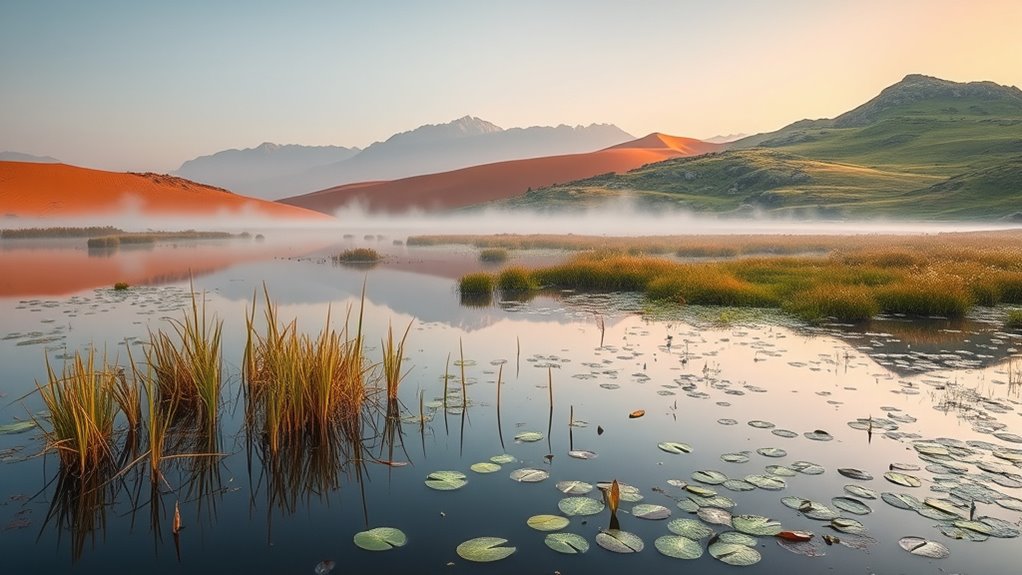
Have you ever wondered why some natural areas require special protection? It’s because these habitats, like wetlands, dunes, and alpine zones, are irreplaceable treasures that sustain life in ways you might not immediately see. They’re fragile, uniquely balanced ecosystems that need your respect and care if they’re to survive the relentless pressures of development, pollution, and climate change. Protecting them isn’t just about preservation; it’s about reclaiming your role as a guardian of nature’s resilience. When you think about wetlands, picture vast marshes and swamps teeming with life—birds, fish, plants—all interconnected in a delicate dance. Wetland restoration becomes your mission to revive these crucial areas that have been drained or degraded. Restoring wetlands isn’t just about re-flooding land; it’s about reinstating the natural processes that support biodiversity, filter pollutants, and buffer communities from floods. Your efforts in wetland restoration help repair these essential habitats, giving them a fighting chance to thrive again. Recognizing the importance of ecosystem services can deepen your understanding of their vital role.
Protect wetlands to restore vital ecosystems that filter pollutants, support biodiversity, and protect communities from floods.
Dunes, on the other hand, are dynamic landscapes that serve as natural barriers against storms and coastal erosion. They’re constantly shifting, shaped by wind and water—a tribute to nature’s power and resilience. Dune stabilization is your key to maintaining these indispensable defenses. By planting native grasses and implementing sustainable management practices, you help secure the dunes’ stability. This isn’t merely about preventing sand from drifting into human spaces; it’s about safeguarding a natural system that protects inland habitats and communities alike. When you take action to stabilize dunes, you’re helping preserve a crucial part of the coastal environment that many take for granted.
In alpine zones, the stakes are equally high. These high-altitude habitats are home to specialized plants and animals that have adapted to extreme conditions. They’re sensitive to temperature shifts and human disturbances. Protecting alpine zones requires vigilance and a commitment to minimizing human impact—like regulating tourism and reducing pollution. These areas are the front lines of climate change, and your role is to ensure they remain resilient.
Every effort you make—whether through wetland restoration or dune stabilization—contributes to the health of these sensitive habitats. You’re not just saving distant landscapes; you’re safeguarding the intricate web of life that sustains our planet. Your actions matter because they help maintain the natural balance, giving these environments the chance to recover, to flourish, and to continue offering their essential services for generations to come.
Top picks for "sensitive habitat wetland"
Open Amazon search results for this keyword.
As an affiliate, we earn on qualifying purchases.
Frequently Asked Questions
How Do Climate Changes Specifically Impact Wetland Ecosystems?
Climate change threatens your wetland ecosystems by altering water levels and temperatures, making it harder for these habitats to adapt. You can boost their climate resilience by supporting wetland restoration efforts, which help them recover and thrive. These actions empower you to protect essential ecosystems, ensuring they continue providing clean water, habitat, and flood control. Stand up for wetlands and take action—your efforts make a real difference in safeguarding nature’s balance.
What Are the Primary Threats to Dune Stability?
Dunes stand on the edge of chaos, vulnerable to the wind’s relentless push. Your main threats are dune erosion and disrupted sand stabilization, both worsened by human activities and climate change. When you disturb natural vegetation or build too close, you weaken the dune’s armor, allowing wind and water to reclaim what’s theirs. To protect these fragile landscapes, you must act now, restoring their natural defenses and letting nature do its job.
How Do Alpine Zones Adapt to Temperature Fluctuations?
In alpine zones, you’ll notice plants adapt to temperature swings through thermal insulation and plant dormancy. You can find thick, hairy coverings on leaves that trap warmth, protecting them from cold. When winter hits, plants enter dormancy, conserving energy and surviving freezing temps. These strategies allow you to explore alpine landscapes year-round, free from fear of harsh weather, embracing nature’s resilience and your own adventurous spirit.
Are There Unique Species Exclusive to Each Habitat Type?
Think of each habitat as its own secret garden, harboring unique species that thrive only there. You’ll find plant adaptations perfectly tuned to wetland water levels, dune winds, or alpine cold. These species are like exclusive members of a club, facing habitat fragmentation that threatens their existence. You can feel the liberation when you realize protecting each habitat preserves these rare, irreplaceable life forms, ensuring they continue to flourish in their natural sanctuaries.
What Conservation Strategies Are Most Effective for These Habitats?
You should prioritize restoration techniques that restore natural water flow, control invasive species, and rebuild native vegetation to protect sensitive habitats. Engaging your community in conservation efforts fosters awareness and shared responsibility, making these strategies more effective. By actively involving local populations, you empower them to defend these ecosystems against threats, ensuring their survival and allowing nature’s diversity to flourish freely.
Conclusion
As you walk through wetlands, dunes, and alpine zones, imagine the delicate balance of life thriving there—crystal-clear waters rippling, golden sands shifting with the breeze, and crisp mountain air filling your lungs. These habitats are like hidden treasures, fragile yet essential, whispering stories of resilience. Protecting them means preserving their beauty and the countless creatures that call them home. So, let’s cherish and safeguard these stunning landscapes, ensuring their wonder endures for generations to come.