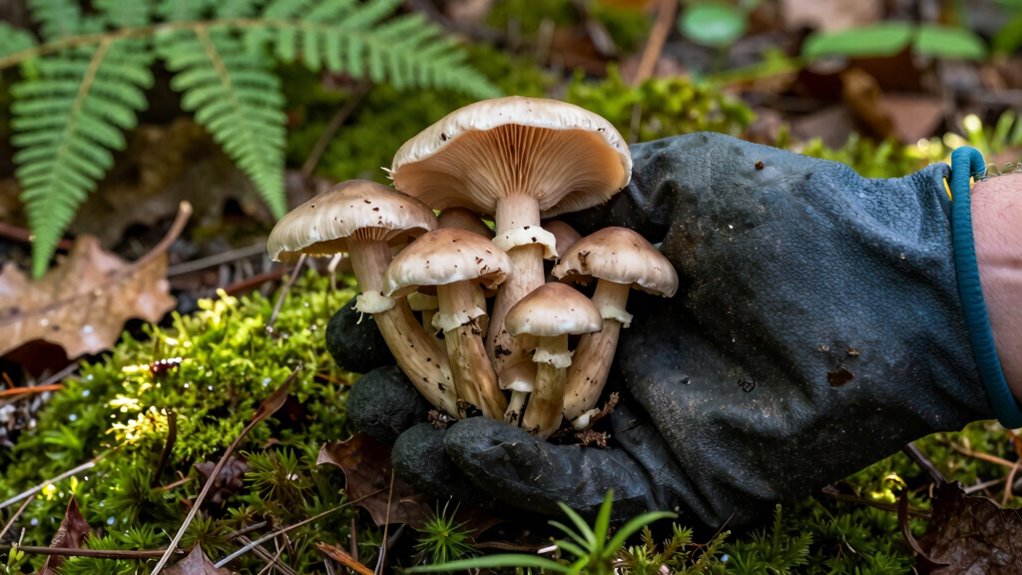

Your top habit for safer wild harvesting is mastering proper plant identification before you forage. Carefully examine leaf shapes, flowers, and growth patterns, and use reliable guides or apps to confirm your finds. Always double-check to avoid misidentifying toxic look-alikes, as mistakes can cause serious health issues. If you stay diligent with identification, you’ll protect yourself and the environment. There’s more to learn that can make your foraging safer and more sustainable—keep exploring.
Key Takeaways
- Always verify plant identification with reliable guides or experts before harvesting.
- Use visual aids and detailed observation to distinguish edible plants from look-alikes.
- Practice sustainable harvesting by collecting only what you need and from multiple locations.
- Avoid harvesting from protected or fragile environments to preserve ecosystems.
- Keep tools clean and handle plants gently to prevent disease spread and damage.
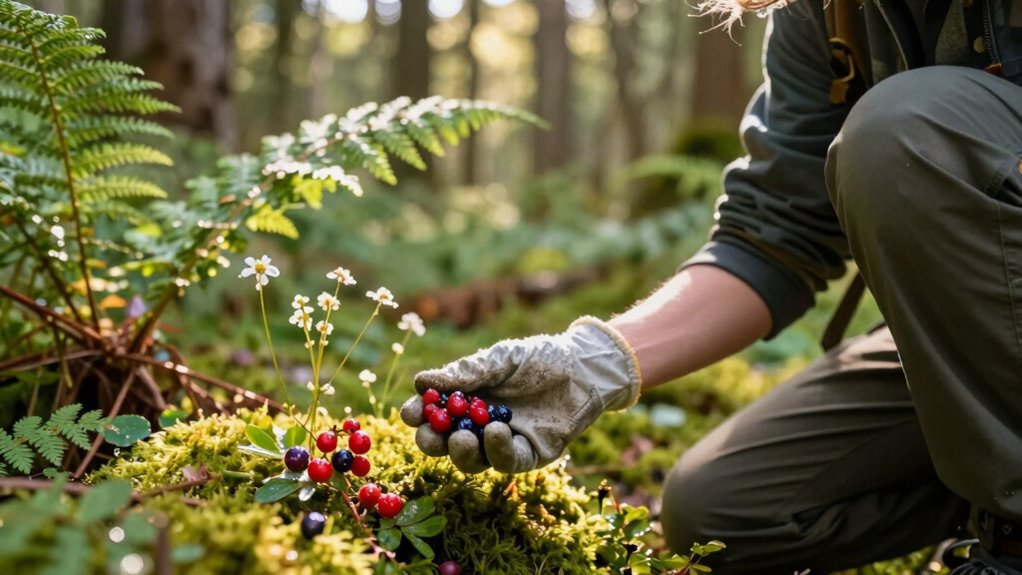
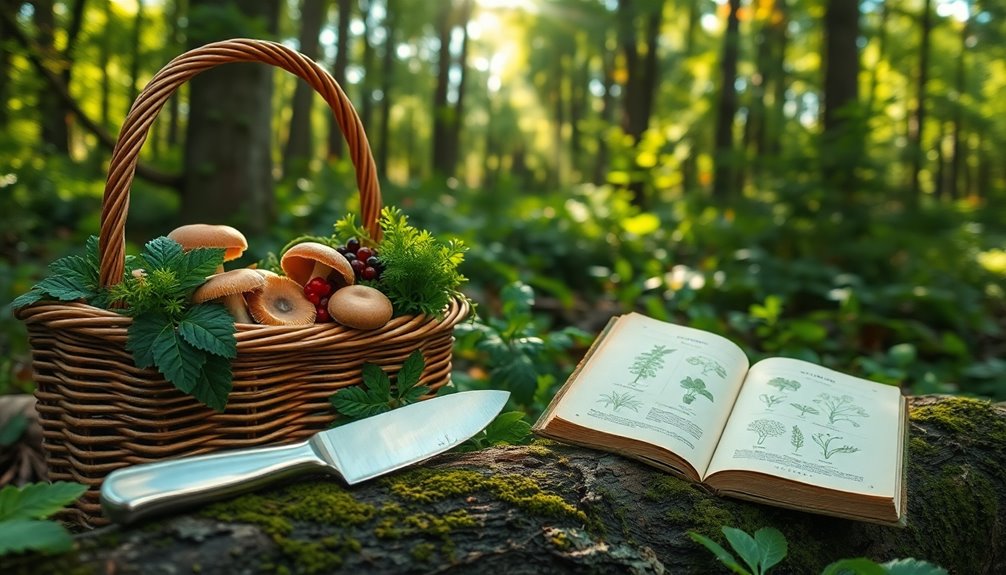
Wild harvesting can be rewarding, but it also comes with risks if you’re not prepared. The key to safe and sustainable foraging starts with one essential habit: proper wild plant identification. Before you even step into a wild area, you should learn to distinguish edible plants from their toxic look-alikes. This involves more than just recognizing a few common species; it requires diligent study and sometimes consulting reliable guides or experts. When you identify a plant correctly, you minimize the chance of poisoning yourself or harming the ecosystem. Take the time to observe details like leaf shape, flower structure, and growth patterns. Use a field guide or an app designed for wild plant identification, and always double-check your findings. Remember, misidentification can have serious health consequences, so never rely solely on memory or assumptions. Incorporating calibration techniques can improve your ability to accurately reproduce colors and details, which is especially helpful when using visual aids or photographs for plant identification. Additionally, practicing consistent observation skills can help you notice subtle differences that distinguish similar species. Along with accurate wild plant identification, adopting sustainable foraging practices is vital. This means harvesting responsibly to ensure that wild populations remain healthy and resilient. A good rule of thumb is to only take what you need, leaving enough of the plant intact so it can regenerate and support local wildlife. Avoid overharvesting rare or slow-growing species, and steer clear of plants growing in protected or fragile environments. When collecting, use clean tools to prevent spreading diseases and handle plants gently to prevent damage. It’s also wise to harvest from multiple locations rather than concentrating on one patch, reducing the impact on any single population. These practices not only preserve the environment but also guarantee future foraging opportunities.

Peterson Field Guide To Medicinal Plants & Herbs Of Eastern & Central N. America: Third Edition―A Field Guide to Discovering Nature's Remedies in Eastern and Central North America
- Comprehensive guide to medicinal plants: Eastern and Central North America
As an affiliate, we earn on qualifying purchases.
As an affiliate, we earn on qualifying purchases.
Frequently Asked Questions
How Can I Identify Edible Versus Toxic Wild Plants Accurately?
To accurately identify edible versus toxic wild plants, focus on proper plant identification techniques. Use reliable guides, apps, and field books, and compare features like leaves, stems, flowers, and growth patterns. Always double-check your findings, and if unsure, consult an expert. Remember, misidentification can be dangerous, so never consume a plant unless you’re 100% certain it’s safe. Practicing careful plant identification reduces risks and guarantees safe wild harvesting.
What Safety Gear Is Recommended for Wild Harvesting?
You should wear protective clothing, gloves, and sturdy boots to shield yourself from thorns, insects, and poisonous plants. Use wild plant tools like scissors and baskets to handle and carry your harvest safely. Always bring a hat and sunscreen to prevent sunburn, and consider goggles if you’re working with sharp tools. These safety gear essentials help you stay protected, comfortable, and focused on harvesting responsibly.
How Do I Obtain Legal Permission to Harvest Wild Plants?
To obtain legal permission to harvest wild plants, you need to check local wild plant regulations first. Contact your land management agencies or government offices to learn about specific rules. Many areas require harvesting permits, which you can usually apply for online or in person. Make sure to follow all guidelines closely, as harvesting without proper permits or violating regulations can lead to fines or legal issues.
What Are Common Signs of Plant Overharvesting in an Area?
You’ll notice plants look battered or sparse, like a garden after a storm—stems damaged, fewer leaves, or bare patches. These signs of overharvesting show you’re taking too much, disrupting growth. Using proper plant identification and following harvesting ethics helps prevent this damage. Always harvest sustainably, leaving enough behind to let the plant regenerate and maintain the health of the ecosystem, ensuring future harvests and the plant’s survival.
How Can I Sustainably Harvest Without Damaging the Environment?
To harvest sustainably, you should follow wild plant ethics and use careful harvesting techniques. Always take only what you need, avoid damaging roots, and leave enough for the plant to regenerate. Choose plants that are abundant, and avoid rare or endangered species. Respect the environment by minimizing disturbance, and consider harvesting from multiple spots to prevent overharvesting in one area. This way, you help preserve ecosystems for future foragers.
Conclusion
By adopting the habit of always researching your target plant and respecting its environment, you’ll guarantee safer and more sustainable wild harvesting. Think of yourself as a modern-day explorer, like a seasoned traveler from the Age of Discovery, carefully charting unknown lands. Remember, patience and knowledge are your best allies. With this simple habit, you’ll enjoy the bounty of nature without leaving a trail of destruction behind. Happy harvesting, and may your journey be as wise as it is adventurous!