
To master dichotomous keys, you need to understand how they guide you through a series of simple, yes-or-no choices based on observable features. Use them systematically, focusing on specific traits like leaf shape or wing patterns, and follow each step carefully to narrow down possibilities. As you get familiar with the key’s structure, identifying species becomes more straightforward and confident. Keep practicing, and you’ll discover how seamlessly field guides can turn complex information into clear answers.
Key Takeaways
- Learn to recognize and interpret clear, specific features like leaf shape or wing patterns for accurate choices.
- Use the guide’s logical layout to systematically narrow options, reducing guesswork during identification.
- Break down complex traits into manageable steps, consulting the guide or key at each decision point.
- Practice patience and deliberate examination, employing multiple senses to gather reliable evidence.
- Familiarize yourself with the guide’s structure over time to increase speed and confidence in field identifications.
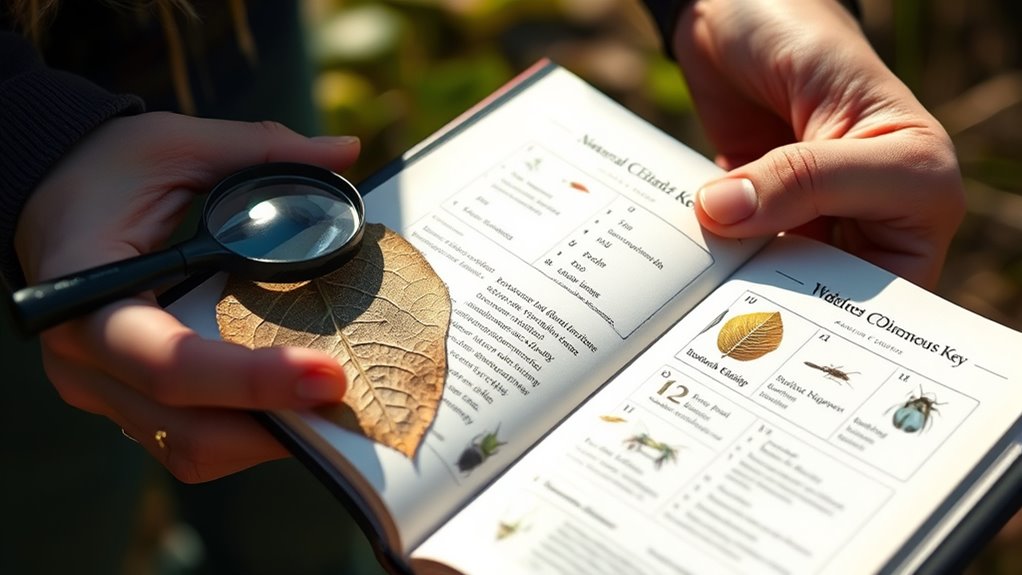
Have you ever struggled to identify a plant or insect in the wild? It’s a common frustration, but mastering identification techniques can transform your outdoor experiences from uncertain guesses into confident discoveries. The key lies in understanding how to use a well-designed field guide and how to navigate dichotomous keys effectively. These tools aren’t just for experts—they’re your gateway to liberation from confusion, empowering you to recognize the natural world with clarity and pride.
A well-crafted field guide design is essential. It’s more than just pretty pictures; it’s about how information is organized to be intuitive and accessible. Clear illustrations, logical layout, and concise descriptions help you quickly compare features. When your field guide is designed with the user in mind, it becomes a reliable companion, turning complex data into straightforward answers. As you familiarize yourself with the guide’s structure, you’ll find it easier to locate key identification features—like leaf shape, coloration, or insect wing patterns—without getting lost in unnecessary details.
Mastering dichotomous keys hinges on sharp observation and a strategic approach. These keys work by guiding you through a series of choices, each presenting two options that narrow down your possibilities. Think of it as a decision tree that leads you closer to the species or insect you’ve encountered. To succeed, focus on specific traits rather than broad assumptions. For example, instead of guessing a plant’s identity based on general appearance, examine leaf arrangements or flower structures carefully. Each choice should be based on a clear, observable characteristic, making the process systematic rather than guesswork.
Use clear, observable traits and a strategic approach to navigate dichotomous keys effectively.
Using identification techniques involves patience and practice. When you encounter a new specimen, take your time. Break down the features into manageable parts, referring back to your field guide or dichotomous key step-by-step. Trust your senses—sight, touch, and sometimes smell—to gather evidence. Don’t rush; instead, enjoy the puzzle. Over time, you’ll develop an intuitive sense for recognizing patterns and distinguishing subtle differences. Additionally, understanding the design of classic field guides can help you better interpret complex information. This not only boosts your confidence but also deepens your connection with nature.
Ultimately, liberation from uncertainty comes through understanding. By mastering the intricacies of field guide design and honing your identification techniques, you free yourself from doubt and guesswork. Every successful identification reinforces your ability to explore and appreciate the natural world on your terms. With patience, attention, and practice, you turn what once seemed complex into a straightforward adventure—making every outing an opportunity to learn, discover, and feel truly connected to your surroundings.
Frequently Asked Questions
How Do I Handle Ambiguous or Overlapping Characteristics?
When you encounter ambiguous or overlapping characteristics, embrace characteristic variability and see it as part of nature’s diversity. Focus on the most distinctive traits, and don’t get stuck on overlapping traits that cause confusion. Keep an open mind, and consider multiple features together. This approach helps you confidently navigate variability, turning confusing traits into clues, and ultimately freeing you to explore and identify species with greater accuracy and joy.
Can Dichotomous Keys Be Used for Digital Identification Tools?
Yes, dichotomous keys can be integrated into digital tools with interactive interfaces, making identification more accessible and freeing you from traditional constraints. These digital tools allow you to navigate choices seamlessly, offering quick results and visual aids. By embracing this technology, you gain independence in field identification, empowering you to explore nature with confidence. Digital dichotomous keys transform learning into an engaging, liberating experience, putting the power of discovery right at your fingertips.
What Should I Do if My Specimen Doesn’t Match Any Options?
If your specimen doesn’t match any options, don’t get stuck. Instead, explore alternative identification methods like consulting additional field guides or online resources. You can also seek expert consultation, reaching out to local naturalists or biologists for help. Remember, it’s okay to be flexible and open-minded. Sometimes, your specimen might be rare or unusual, and expert insight can lead you to the correct identification, freeing you from limitations.
How Do I Differentiate Between Closely Related Species?
Distinguish between closely related species by diving into DNA details and exploring their environments. Genetic analysis provides precise, powerful proof, revealing subtle differences. Habitat comparison uncovers unique living conditions and behaviors that set species apart. Embrace exploration, empowering your curiosity to uncover truths hidden beneath surface similarities. With these techniques, you break free from confusion, gaining clarity and confidence, unseal the secrets of nature’s intricate diversity and celebrating your journey of discovery.
Are Dichotomous Keys Effective for Identifying Juvenile or Damaged Specimens?
Dichotomous keys can be effective for juvenile identification, but damaged specimens pose challenges because key features might be missing or obscured. You might find it frustrating, but don’t give up—try to focus on the remaining visible traits or use multiple keys for confirmation. With patience, you can still *unseal* answers and gain a deeper understanding, turning obstacles into opportunities for learning and discovery.
Conclusion
By mastering dichotomous keys, you open the ability to identify countless species confidently. Did you know that over 70% of biodiversity data relies on accurate identification through these keys? So, next time you’re using a field guide, remember that honing this skill not only makes nature more accessible but also helps preserve our planet’s rich variety. Keep practicing, and you’ll turn every discovery into a rewarding success story.