When teaching kids about foraging, emphasize the importance of safety by only picking plants when an adult confirms they’re safe and teaching them to recognize visual cues like leaf shape and berry color. Instill respect for risks by reinforcing careful observation and avoiding touching unknown plants. Make learning fun through interactive activities that build confidence, and remind them to always ask before interacting with wild plants. Keep exploring these helpful tips to turn foraging into a safe, responsible adventure.

Get garden gear delivered free — and shop member deals
- Fast, free delivery on millions of items
- Access to Prime Big Deal Days deals on October 6–7
- Prime Video, Amazon Music and more included
Key Takeaways
- Teach children to always confirm plant safety with an adult before touching or tasting.
- Use visual cues like leaf shape and berry color to help kids recognize safe plants easily.
- Encourage careful observation, smelling, and gentle examination as part of learning about plants.
- Promote responsible foraging by emphasizing the risks of misidentification and toxicity.
- Make learning fun with interactive activities to build confidence and reinforce safe foraging habits.

Have you ever considered how foraging can be a fun and educational activity for kids? It’s a way to connect with nature, learn about the environment, and develop a sense of independence. But to make the experience enjoyable and safe, you need to prioritize safety precautions and teach kids about edible identification. When you’re guiding them through the wild, it’s essential they understand that not everything they find is safe to eat—this is where clear rules and knowledge become your best tools.
Start by emphasizing safety precautions right from the beginning. Explain that they should only pick plants or berries when an adult is present and has confirmed they’re safe. Make it clear that they shouldn’t touch or taste anything unfamiliar unless they have learned it’s edible. You’re not just teaching them about what’s good to eat; you’re instilling a respect for the risks involved. Encourage them to look, smell, and examine plants carefully, but never to put anything in their mouths without verification. Reinforce that if they’re unsure, it’s better to leave it alone and ask an adult to identify it properly. This foundation of caution helps prevent dangerous mistakes and builds a habit of careful observation.
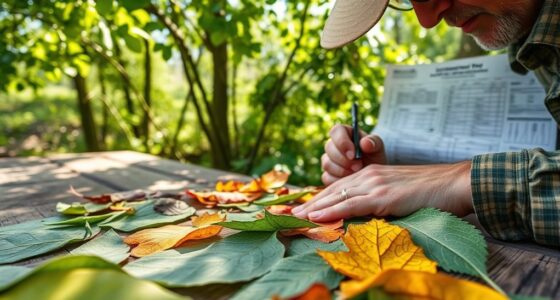
Edible identification is the cornerstone of safe foraging. You want your kids to develop an eye for distinguishing between safe, edible plants and those that are toxic. Share simple, memorable tips about how to recognize common safe plants—like the shape of leaves, color of berries, or the smell of herbs. Use comparison to other plants that are harmful, highlighting visual differences that can be spotted easily. For example, teach them that while blackberries are safe, berries from plants with waxy or milky sap are usually not. Make the process interactive—turn it into a game where they search for specific edible plants and learn to identify them correctly. The more they practice, the more confident they become in their ability to forage responsibly. Remember, understanding plant safety is essential for avoiding dangerous mistakes during foraging adventures.
As an affiliate, we earn on qualifying purchases.
Frequently Asked Questions
How Can I Ensure My Child’s Safety During Foraging Trips?
You can guarantee your child’s safety during foraging by actively supervising them with clear boundaries and engaging supervision strategies. Equip them with safety gear like gloves and hats to protect against thorns or insects. Teach them to identify safe plants and avoid dangerous ones. Stay close, monitor their actions, and foster open communication so they feel confident asking questions. This approach keeps their exploration free and safe, allowing them to learn and enjoy fully.
What Are Common Edible Plants Kids Can Easily Identify?
You can teach your kids to easily identify common wild edible berries like blackberries and strawberries, plus wild herbs such as mint and dandelion greens. Show them how to spot these plants in nature, emphasizing safety and respect for the environment. Encourage exploration and curiosity, making foraging a fun, liberating adventure. With practice, they’ll confidently recognize safe, nourishing wild foods, turning foraging into a joyful discovery.
How Do I Teach Kids to Respect Nature While Foraging?
You can teach kids to respect nature by emphasizing that every plant they encounter is like a tiny universe—fragile and deserving of care. Encourage them to master plant identification so they recognize what’s safe to pick and what’s not. Instill eco-friendly practices by showing them how to harvest sustainably, leaving plenty for wildlife and future foragers. Empower their curiosity while fostering a deep love for nature’s delicate balance.
When Is the Best Time of Year for Foraging With Children?
The best time for foraging with kids is during seasonal foraging periods, which vary by location and plant. You’ll find ideal harvesting times in spring for tender greens, summer for berries, and fall for mushrooms and nuts. By timing your foraging adventures with nature’s rhythm, you empower children to connect with the land, fostering respect and curiosity while enjoying the freedom of discovering wild edibles at their peak.
How Can I Make Foraging Educational and Fun for Kids?
You can turn foraging into a liberating adventure by engaging kids in exciting nature games that stimulate curiosity. Encourage them to explore and discover plants through plant identification challenges, making learning feel like a treasure hunt. Incorporate storytelling and hands-on activities to spark their imagination, ensuring they see foraging as an empowering way to connect with nature. Keep it fun, spontaneous, and full of surprises to foster a lifelong love for the outdoors.
Conclusion
Now that you’ve learned how to teach kids foraging safely, remember to keep it fun and engaging—like turning a simple park walk into a treasure hunt. Set clear rules, stay curious, and use your best “You are the Indiana Jones of the backyard,” attitude. With patience and guidance, those little explorers will develop skills and respect for nature that last a lifetime. After all, today’s forest adventure could be tomorrow’s epic quest!
Fall yard work Picks
leaf blowers
As an affiliate, we earn on qualifying purchases.