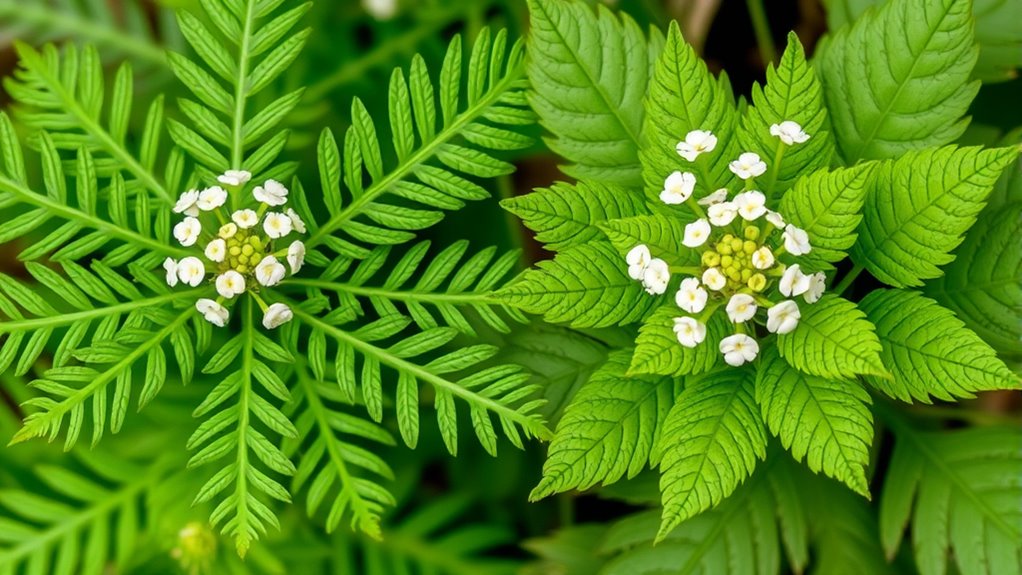

To tell hemlock from wild carrot, check the stems—hemlock is smooth, hollow, and has purple or reddish spots, while wild carrot stems are rough and hairy. Smell the plant—wild carrot smells sweet and earthy, whereas hemlock has a faint, unpleasant odor. Look at the leaves; feathery and fine in hemlock, broader and smoother in wild carrot. Knowing these differences can keep you safe—look further to get all the details.
Key Takeaways
- Hemlock has smooth, hollow stems with purple spots; wild carrot has rough, hairy, solid stems.
- Hemlock’s leaves are feathery and delicate; wild carrot’s are broader, smoother, and hairy.
- Wild carrot roots are aromatic and edible; hemlock roots are bitter and toxic.
- Hemlock prefers shaded, moist environments; wild carrot grows in open, sunny fields.
- Always verify plant features with multiple cues before consumption to avoid poisoning.
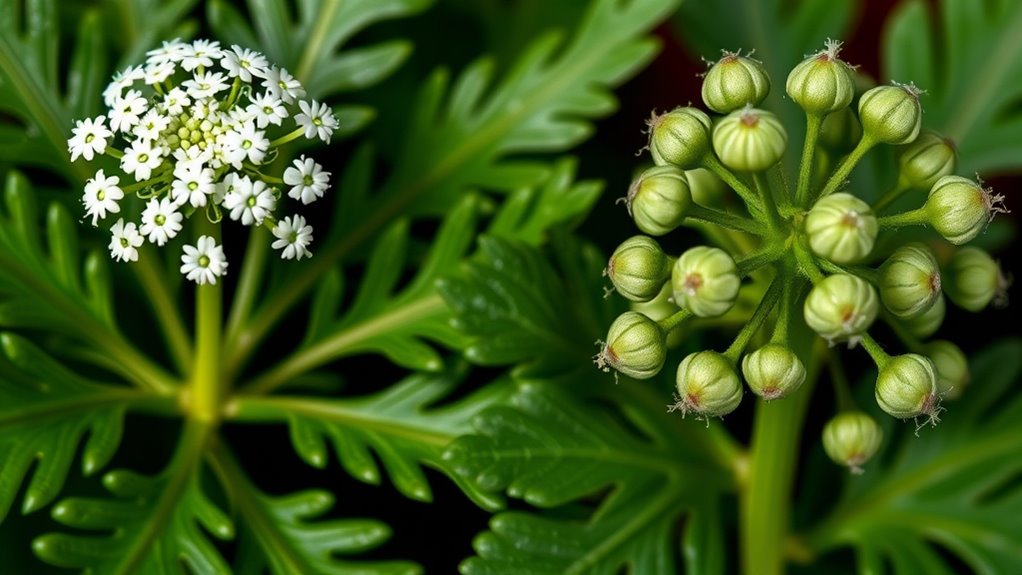
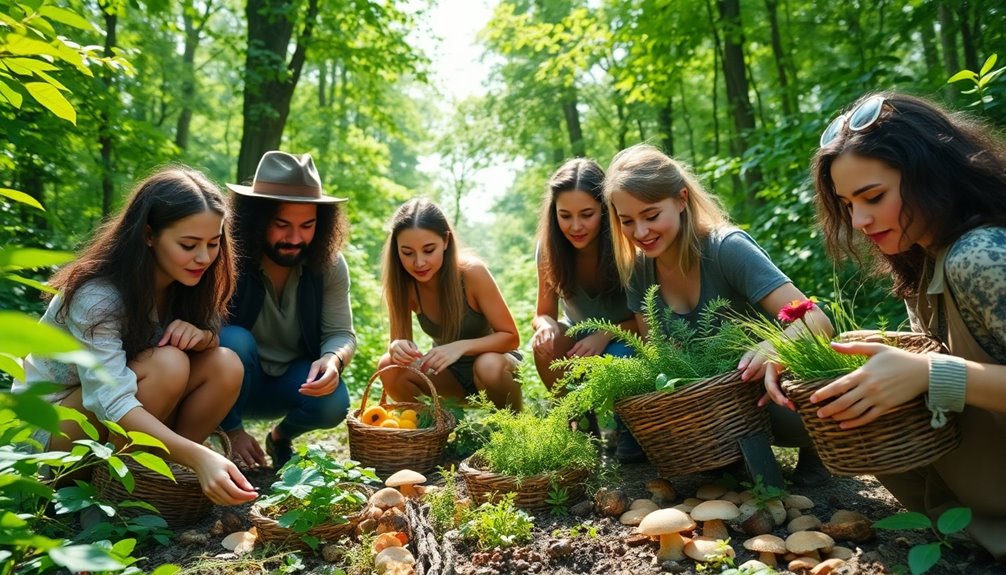
When foraging for wild plants, it’s essential to know how to distinguish between deadly hemlock and edible wild carrot, as they look quite similar in the early stages. The thrill of gathering wild foods can feel liberating, but it’s crucial to stay vigilant about poisonous lookalikes that can turn your adventure into a dangerous mistake. Hemlock and wild carrot share common features at first glance, but understanding their edibility differences is your best defense against accidental poisoning.
Hemlock, a notorious poisonous lookalike, often mimics the wild carrot’s umbrella-shaped flower cluster, or umbel, making it tricky for beginners to tell them apart. The key lies in examining the details: hemlock’s stems are smooth, hollow, and often have purple or reddish spots, whereas wild carrots tend to have rougher, hairy stems with a more solid feel. Hemlock’s leaves are finely divided and fern-like, giving a feathery appearance, but they’re also distinctly more toxic than the broad, smoother leaves of wild carrot. When you touch the plants, note the texture and feel of the stems and leaves—these subtle differences are vital clues.
Hemlock’s smooth, hollow stems with purple spots contrast the rough, hairy stems of wild carrots.
The edibility differences between these plants aren’t just about taste; they’re about survival. Wild carrots have a sweet, earthy aroma, and their roots are crunchy and aromatic when fresh. Hemlock, however, has a faint, unpleasant smell, and its roots are bitter and often contain a foul taste that warns of danger. Never rely solely on visual cues—smell, texture, and plant habitat are critical in your identification process. Look for the plant’s growth environment: wild carrots thrive in open fields and disturbed ground, while hemlock prefers shaded, moist areas in forests or along stream banks. Recognizing these habitat cues helps you make smarter, safer choices. Additionally, understanding the plant’s structure can further aid in accurate identification and avoid dangerous mistakes.
The decision to forage must be rooted in respect for these edibility differences and poisonous lookalikes. If you’re unsure, it’s better to leave the plant untouched than risk poisoning yourself. It’s always wise to consult multiple reliable sources or an expert before consuming wild plants. Developing a keen eye for the subtle distinctions—like the purple-spotted stems of hemlock versus the hairy, solid stems of wild carrot—empowers you to enjoy foraging without fear. Remember, the thrill of liberating yourself through nature is amplified by your ability to identify edible treasures safely. Take your time, observe carefully, and trust your knowledge over assumptions. Your safety hinges on these details, making the difference between a nourishing wild harvest and a dangerous mistake.
Frequently Asked Questions
Can Wild Carrots Be Safely Cultivated at Home?
Yes, you can safely cultivate wild carrots at home if you follow proper cultivation techniques and soil requirements. Choose a sunny spot with well-draining soil, and make certain it’s free from weeds and chemicals. Plant seeds directly in the ground, keep the soil moist, and give your wild carrots space to grow. With proper care, you’ll enjoy fresh, homegrown carrots without the risk of confusion with toxic lookalikes.
Are There Any Medicinal Uses for Wild Carrots?
They say, “Don’t judge a book by its cover,” and that’s true for wild carrots. Their medicinal properties have long been valued in herbal remedies, offering potential benefits like digestive support and anti-inflammatory effects. You can harness these natural healing powers, but remember to be cautious—proper identification is key. Embrace nature’s remedies with respect, and you’ll find a path toward wellness that’s both freeing and rooted in tradition.
How Do Environmental Factors Affect Plant Appearance?
Environmental factors profoundly influence plant morphology and drive adaptation. You’ll notice that sunlight, soil type, and moisture levels cause plants to grow differently—wild carrots may develop thicker roots in dry conditions, while hemlocks adapt their needle density for cooler climates. These changes free you from rigid plant appearances, revealing nature’s versatility. Embrace this variability as a proof to how plants evolve to thrive in diverse environments, embodying the spirit of adaptation and resilience.
What Are Common Look-Alikes of Hemlock?
You might stumble upon wild parsley or fool’s parsley, which closely resemble hemlock but are toxic plants. These look-alikes often share delicate, umbrella-shaped flower clusters, making misidentification easy. To guarantee safe, confident wild plant exploration, focus on distinguishing features like stem markings and leaf patterns. Remember, proper toxic plant identification is your best tool for edible plant safety, freeing you to enjoy nature’s bounty without risking poisoning.
Are There Legal Restrictions on Foraging Wild Carrots?
You should check local harvesting regulations and foraging permit requirements before gathering wild carrots. In some areas, foraging is legal and encouraged, but others have restrictions to protect native plants. To stay free and compliant, research your local laws, obtain any necessary permits, and respect conservation efforts. By doing so, you can enjoy foraging wild carrots responsibly without risking legal trouble or harming the environment.
Conclusion
Just like walking a tightrope between danger and safety, knowing your plants can prevent a deadly mistake. I once met a forager who mistook hemlock for wild carrot and narrowly avoided poisoning. Remember, a small detail can be the difference between a tasty snack and a life-threatening error. Trust your checklist, stay vigilant, and don’t take chances. When it comes to these plants, a little knowledge keeps you safely balanced on the right side.