
TL;DR

Get garden gear delivered free with Prime
- Fast, free delivery on millions of items
- Prime Video, Amazon Music and more included
- Member-only deals all year
A Homes & Gardens report advises homeowners to inspect trees after leaves fall and before winter storms, looking for dead or hanging branches, cracks, fungal growth and unstable trunk unions. Arborists quoted in the report say to seek professional help for large limbs, significant leaning or other serious structural concerns; the timing and risk vary by tree and site.
Homeowners are being urged to inspect trees before winter weather, when strong winds, snow and ice can put added stress on weak or damaged limbs. A Homes & Gardens report featuring advice from arborists says a visual check after deciduous trees lose their leaves can make some problems easier to spot and give homeowners time to address hazards near homes, vehicles, driveways and walkways.
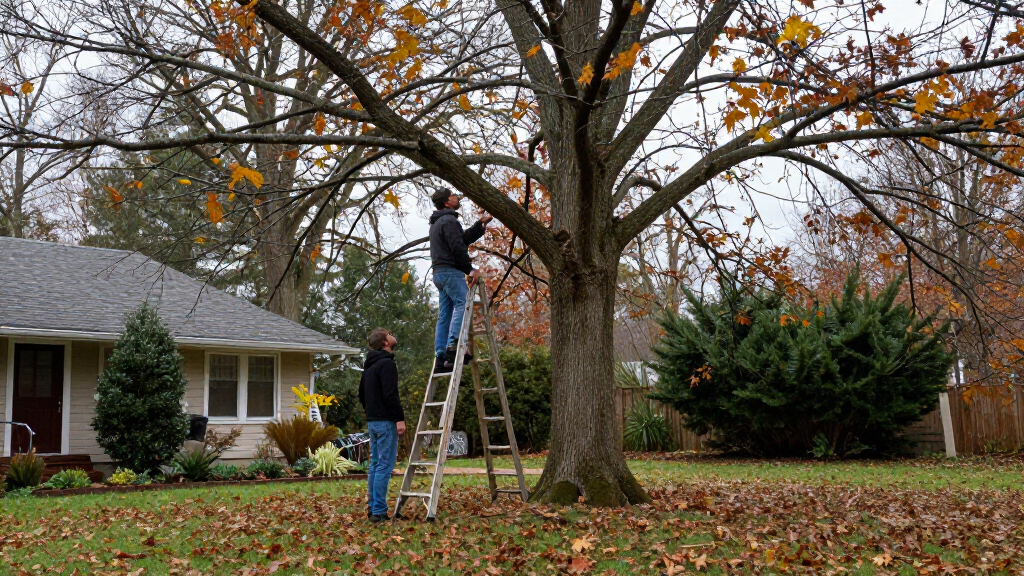
The report recommends looking over trees from several angles, including the parts of the canopy that extend above places where people or property could be affected. Binoculars can help with a ground-level view of higher branches. The inspection is intended to identify visible warning signs; it is not a formal risk assessment, and homeowners should not climb trees or use a ladder to reach unsafe areas.
Signs to look for include dead or hanging branches, cracks, diseased or dying growth, weak connections between major stems, and fungal growth on branches, trunks or near the root collar. The report says fungal growth can be associated with weakness in a tree’s branches, trunk or root system, but it does not mean every tree showing fungus is certain to fail.
Levi Williams, a Tree Risk Assessment Qualified ISA Certified Arborist with Tree Scouts Tree Service, advises checking canopies over “important targets,” including homes, streets, vehicles and pedestrian walkways. For trees with two similar-sized trunks, Basil Camu, co-founder of Leaf & Limb, says the union may be prone to splitting; the report also identifies a V-shaped connection as more concerning than a U-shaped one. These are inspection clues, not a substitute for a qualified assessment.
Reducing Storm Risks Around Homes
Finding a damaged limb before a storm may allow time to arrange an assessment or pruning before wind, snow or ice adds pressure. A falling branch can injure people or damage a house, car or path, while cleanup and repairs may be costly. The report frames the inspection as a preventive step, not a guarantee that a tree will withstand severe weather.
The advice also points to the value of judging a tree by its surroundings. A branch over an empty area presents a different immediate concern from one above a frequently used walkway or roof. Camu recommends first considering what a branch would hit if it fell. Where people or property could be affected, the response may involve structural pruning or other professional care rather than removing the whole tree.
Timing matters because homeowners may have an opportunity to act before the season’s storms. The report says safety pruning can be done in October and November, while some other pruning may be better left until late winter or early spring. The appropriate timing depends on the problem and the tree; the article does not set a universal schedule.
As an affiliate, we earn on qualifying purchases.
Why Fall Makes Tree Checks Easier
Winter weather can affect trees in different ways: wind shakes branches, while snow and ice add weight. Weak limbs may be more susceptible to breakage under that stress. Deciduous trees also lose their leaves in fall, which can improve visibility into the canopy and make it easier to notice deadwood or structural concerns that foliage might conceal.
The Homes & Gardens report distinguishes a homeowner’s visual inspection from specialist work. Smaller dead, damaged or diseased branches may be manageable with appropriate pruning tools for someone competent to use them safely. Large limbs, high branches, serious cracks, a new lean or signs of root movement call for a professional arborist’s assessment, according to the report. It does not recommend removing a tree solely because it has multiple trunks or visible fungal growth.
Williams’s recommendation is specifically to make basic checks before incoming winter storms. The report also notes other seasonal care, such as protecting young trees, but its central advice is to identify possible hazards and determine whether they need attention before severe weather arrives.
“I would always advise homeowners to do basic inspections of their trees before incoming winter weather storms.”
— Levi Williams, Tree Risk Assessment Qualified ISA Certified Arborist with Tree Scouts Tree Service
When a Tree Needs Expert Review
A visual check cannot determine with certainty whether a tree will fail in a storm, and the report provides no numerical estimate of risk reduction from inspections or pruning. The condition of a tree, its location, the severity of the weather and what lies beneath its branches all affect the assessment. Fungal growth, cracks or a particular trunk shape are warning signs to examine, not proof that a tree is about to fall.
The report does not identify a single inspection date that applies everywhere or specify how local climate and tree species should change the schedule. It also does not detail the level of damage or risk at any particular property. Homeowners who see major limbs, substantial leaning, cracks, a cavity around much of the trunk, or roots lifting should contact a qualified arborist rather than attempt hazardous work themselves.
Arrange Pruning Before Severe Weather
Homeowners can begin with a ground-level inspection of their trees and note concerns, especially over places people use or property they want to protect. If pruning is needed, the report says some safety work may be done in October or November; other work may be better timed for late winter or early spring. A qualified arborist can advise on the timing and method for the specific tree.
For serious structural concerns or work involving high, large limbs, the next step is to arrange a professional assessment before storms arrive, where conditions allow. The report does not provide a local emergency service timeline or say that every flagged tree will need pruning or removal. Its practical conclusion is to identify visible concerns early and leave high-risk work to trained professionals.
Key Questions
When should I inspect trees before winter?
The report recommends checking after leaves begin to fall and before winter storms arrive. The best timing can vary by location, tree and weather.
What warning signs should I look for?
Look for dead or hanging branches, cracks, diseased growth, fungal growth, weak unions between major stems, a new lean, or lifted roots. These signs do not by themselves establish that a tree will fail.
Can I prune a tree myself?
The report says small dead, damaged or diseased branches may be within reach of a homeowner with suitable tools and the ability to work safely. Do not climb or attempt work on large or high limbs; contact a qualified arborist for significant hazards.
Does a tree with fungus need to be removed?
Not necessarily. The report says fungal growth can be associated with weakness, but does not say it always means a tree is unsafe or must be removed. Have concerning growth assessed by an arborist.
Should every tree near a house be cut back?
No. The report recommends considering what a branch could hit and whether people or property are at risk. An arborist can advise whether pruning, another form of support or no immediate work is appropriate.
Source: rss
Halloween Picks
halloween
As an affiliate, we earn on qualifying purchases.