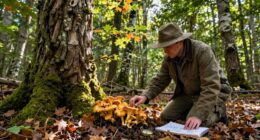
To build a better mushroom search pattern, focus on understanding spore dispersal and habitat preferences. Use systematic grid or zig-zag routes to cover areas thoroughly, especially where spores are likely to land — such as near decaying logs, shade, or moist soil. Expand your search downwind or downstream of known patches, considering wind and water dispersal. Combining this biological insight with organized searching increases your chances of finding mushrooms. Explore more strategies to enhance your foraging success.

Get garden gear delivered free — and shop member deals
- Fast, free delivery on millions of items
- Access to Prime Big Deal Days deals on October 6–7
- Prime Video, Amazon Music and more included
Key Takeaways
- Divide the search area into grids or zig-zag paths for systematic coverage.
- Prioritize areas with suitable habitats like decaying wood, leaf litter, or moist soil.
- Expand search zones downwind or downstream based on spore dispersal patterns.
- Focus on moist, shaded environments where spores are more likely to land and grow.
- Use environmental cues such as dampness and organic matter to guide focused foraging.
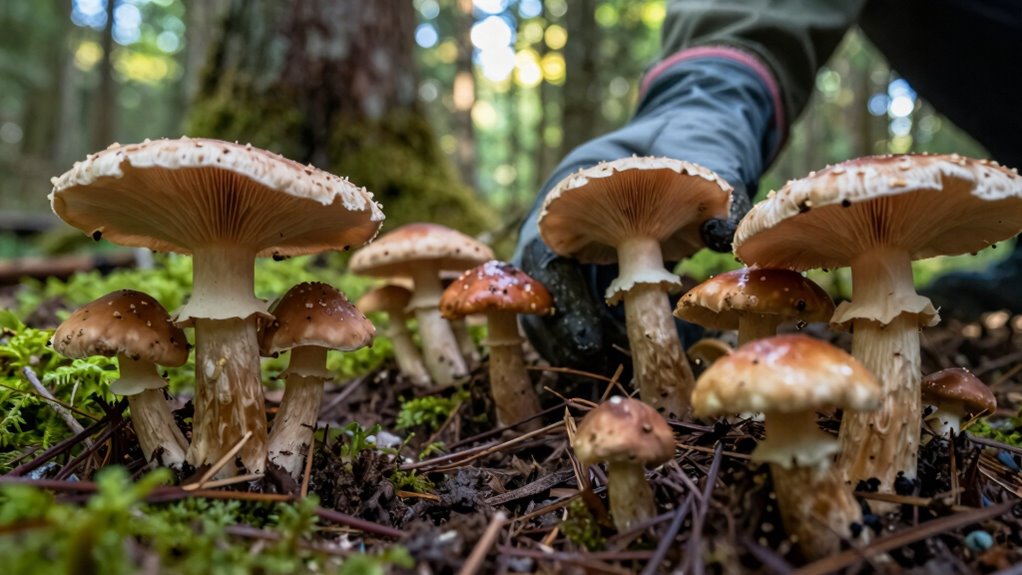
Finding edible mushrooms in the wild can be challenging, especially if you’re relying on traditional search methods that often miss promising patches. To improve your chances, you need a smarter approach—one that considers how mushrooms grow and spread. Understanding spore dispersal is key. Mushrooms release spores into the air, which then settle in suitable mushroom habitats. These spores can travel considerable distances, but they tend to land in places that offer the right combination of moisture, soil type, and organic material. By paying attention to these factors, you can predict where mushrooms are more likely to thrive.
Understanding spore dispersal helps locate thriving mushroom habitats more effectively.
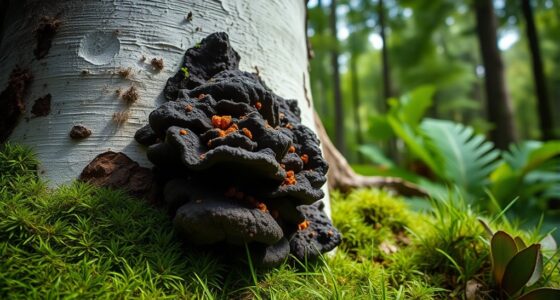
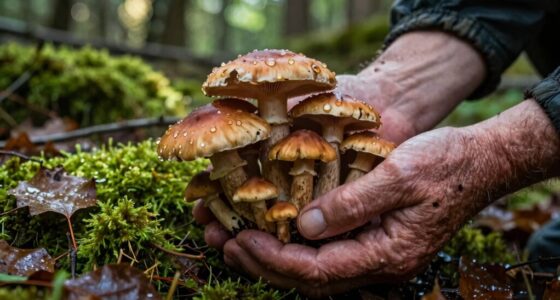
When building a better mushroom search pattern, start by studying the habitat preferences of the species you’re after. Some mushrooms favor shaded, damp areas with rich organic matter—like the base of decaying trees or under dense leaf litter. Others prefer open, grassy fields or disturbed soils. Instead of randomly wandering, focus your search on these known habitats. Recognize patterns where spores might land and germinate, such as near fallen logs, stumps, or areas with consistent moisture. These spots act as natural hubs for mushroom growth because they provide the nutrients and environment spores need to develop.
Your search pattern should be systematic rather than haphazard. Break the area into manageable sections and scan each thoroughly. Use a grid or zig-zag pattern to ensure you don’t overlook promising patches. As you search, observe the terrain and environmental conditions—shady spots, damp soil, and decaying organic material are promising signs. Pay special attention to areas where previous mushrooms have been found, since spores tend to settle near existing mycelium, the underground network that produces mushrooms.
Additionally, consider how spore dispersal influences mushroom distribution. Spores don’t just fall straight down; they are often carried by wind, animals, or water. This means that mushrooms can appear slightly away from the initial spore release point, sometimes downwind or downstream. Incorporate this knowledge into your pattern by expanding your search zone around known mushroom habitats, especially in windy conditions or after rain. This strategic expansion increases your chances of discovering new patches. Moreover, understanding the role of mycelium in mushroom growth can help you identify productive areas even before mushrooms appear.
In essence, building a better mushroom search pattern involves understanding the biology of spore dispersal and the characteristics of mushroom habitats. By focusing on where spores land and thrive, and by adopting a systematic search approach, you can markedly improve your success rate. This method saves time, reduces frustration, and turns foraging into a more rewarding and efficient adventure.
Frequently Asked Questions
What Tools Are Best for Mushroom Searching?
You should use a sturdy basket or mesh bag for mushroom foraging to keep your finds fresh and visible. A sharp knife helps with precise harvesting, while a guidebook or app enhances your identification techniques. A small brush can clean mushrooms without damage. Don’t forget to carry a notebook for notes on habitats. These tools make searching more effective and guarantee you correctly identify edible versus toxic varieties.
How Do Weather Conditions Affect Mushroom Growth?
Think of mushroom growth as a delicate dance with the weather. Climate impact and rainfall influence the stage where mushrooms perform. Warm, moist conditions encourage their emergence, like a gentle rain awakening hidden treasures beneath leaves. Conversely, drought or cold spells slow their dance, leaving fewer mushrooms. You notice how after heavy rains, mushrooms appear overnight, confirming how vital rainfall influence is to their growth. Adjust your search patterns accordingly to catch them at their prime.
Are There Legal Considerations When Foraging?
Yes, you need to take into account legal compliance and foraging regulations when foraging for mushrooms. Always research local laws before heading out, as some areas require permits or prohibit foraging altogether. Respect private property rights, avoid protected or endangered species, and follow guidelines to minimize environmental impact. Staying informed and compliant helps guarantee your foraging is legal, safe, and sustainable, allowing you to enjoy mushroom hunting responsibly.
Which Mushroom Species Are Safest to Identify?
Picture a lush forest, ripe with edible treasures yet shadowed by poisonous lookalikes. You should identify mushrooms like chanterelles, shiitake, and oyster mushrooms, which follow clear edibility guidelines. These are among the safest to recognize when you learn their distinctive features. Always double-check for poisonous lookalikes, as mistaking them can be deadly. Stick to well-documented species, and when in doubt, consult experts. Safe foraging starts with knowledge and caution.
How Can I Record My Search Patterns Effectively?
To record your search patterns effectively, start by mapping out mushroom habitats on a map or notebook, noting key features like terrain and plant types. Use search pattern mapping to track where you’ve already searched, so you avoid missing spots. Take photos and jot down details about each find, including location and habitat specifics. This organized approach helps you refine your search pattern, making future hunts more efficient and thorough.
Conclusion
As you refine your search pattern, remember that the best discoveries often come from unexpected turns and overlooked spots. Stay sharp and adaptable, because the next mushroom might be hiding where you least expect it. Keep your eyes open and your mind curious—something extraordinary could be just around the corner. The secret to a truly successful hunt lies in your willingness to explore the unknown. Are you ready to uncover what’s waiting just beyond the familiar?
Fall Picks
fall essentials
As an affiliate, we earn on qualifying purchases.