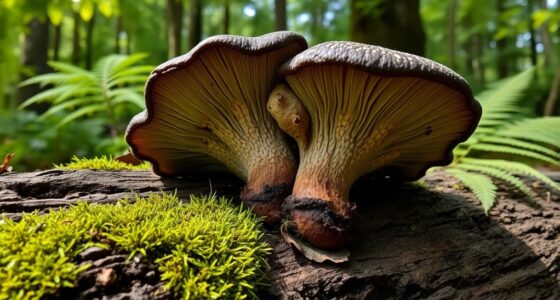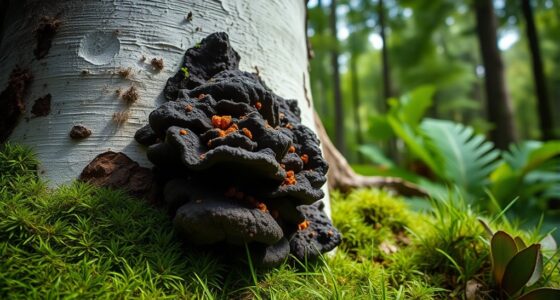
Hen of the Woods (Maitake) and Berkeley’s Polypore differ in texture, flavor, and appearance. Maitake has a layered, ruffled look and a rich, earthy taste, making it ideal for culinary uses. In contrast, Berkeley’s Polypore is tough, shelf-like, and offers a subtle, earthy flavor suited for medicinal teas. To distinguish them and learn how to find these mushrooms responsibly, explore more about their unique characteristics and harvesting tips.
Key Takeaways
- Hen of the Woods (Maitake) has a layered, ruffled appearance and grows at the base of oak trees, while Berkeley’s Polypore is tough, shelf-like, on decaying hardwoods.
- Maitake offers a rich, earthy flavor ideal for culinary uses; Berkeley’s Polypore has a subtler, earthy taste and is mainly used medicinally.
- Maitake is found in late summer and fall, specifically around oak trees; Berkeley’s Polypore prefers rotting hardwoods and can be harvested year-round.
- Maitake has a softer texture suitable for sautéing and soups; Berkeley’s Polypore is tough, often used in broths or stews.
- Proper identification and sustainable harvesting are essential for both, with Maitake being edible and Berkeley’s Polypore mainly medicinal.

Are Hen of the Woods and Berkeley’s Polypore truly rivals in the world of wild mushrooms? The answer depends on your perspective—whether you seek culinary delight or natural mastery. Both mushrooms hold their ground, but they offer distinct experiences. When you venture into foraging, understanding their differences gives you the power to make bold choices and access nature’s bounty. Foraging tips are essential to confidently identify and harvest these fungi, guaranteeing safety and maximizing their potential. Hen of the Woods, also known as Maitake, is a favorite among those who want to harness the mushroom’s culinary versatility. Its layered, ruffled appearance invites you to experiment in the kitchen, where it can be sautéed, added to soups, or made into flavorful teas. The rich, earthy flavor of Maitake lends itself well to a variety of dishes, making it a prized ingredient for liberation through the palate. Meanwhile, Berkeley’s Polypore, often overlooked, commands respect for its unique characteristics. This tough, shelf-like mushroom grows on decaying wood, and its flavor is more subdued—great for those who want a subtle, earthy addition to broths or stews. It’s also prized for its medicinal properties, adding a layer of purpose beyond the plate. When harvesting either mushroom, focus on foraging tips that emphasize sustainability and accurate identification. For Hen of the Woods, look for clusters at the base of oak trees during late summer and fall, and guarantee the fruiting body has a consistent, layered appearance without any slimy or discolored patches. Berkeley’s Polypore prefers rotting hardwoods and should be picked with care, avoiding any that show signs of mold or insect damage. The freedom to forage depends on respecting the environment and your limits—never take more than you need, and always be certain of your identification. Both mushrooms open doors to liberation—Hen of the Woods through its culinary delights and medicinal benefits, Berkeley’s Polypore through its resilience and subtle flavor. By mastering foraging tips, you empower yourself to connect deeply with nature, harvesting with confidence and purpose. Recognizing the importance of high contrast ratio in evaluating visual quality, you can better understand how these mushrooms contribute to a balanced and rewarding foraging experience. Whether you choose to bring Maitake into your kitchen or explore the quiet strength of Berkeley’s Polypore, you step into a world where wild mushrooms become allies in your journey toward independence. Embrace the adventure, trust your knowledge, and let these fungi elevate your experience of the wild.
Frequently Asked Questions
Which Mushroom Has Higher Medicinal Benefits?
You’ll find Hen of the Woods offers higher medicinal benefits due to its rich medicinal compounds that boost your immune system and support overall health. Its bioactive substances help combat illness and promote vitality, giving you a sense of liberation from health worries. Berkeley’s Polypore also provides health benefits, but Maitake’s potent compounds make it the superior choice for maximizing your well-being and harnessing nature’s healing power.
Are Both Mushrooms Equally Easy to Identify?
You might think both mushrooms are equally easy to identify, but the truth is, their visual differences and habitat clues are subtle yet essential. Maitake’s layered, feather-like appearance contrasts sharply with Berkeley’s Polypore’s shelf-like, woody growth. To truly recognize them, you must observe details and habitats carefully. Embrace the thrill of identification, knowing that revealing these secrets brings you closer to liberation in your foraging journey.
Can These Mushrooms Be Cultivated at Home?
Yes, you can cultivate these mushrooms at home if you understand their growth conditions. Maitake needs a sturdy substrate like hardwood logs or sawdust, while Berkeley’s Polypore prefers similar wood-based environments. By controlling humidity, temperature, and airflow, you set the stage for mushroom growth. Embrace the freedom to grow your own fungi, breaking free from store-bought limitations, and enjoy fresh, self-sustained harvests right in your space.
Do They Have Different Culinary Uses?
You’ll love discovering how these mushrooms ignite your culinary creativity. Hen of the Woods offers a rich, earthy flavor perfect for hearty dishes, while Berkeley’s Polypore brings a milder, woody note ideal for delicate sauces. Their culinary versatility lets you craft everything from robust stir-fries to subtle broths, empowering your kitchen freedom. Embrace their unique flavor profiles and transform everyday meals into extraordinary experiences—your taste buds deserve liberation!
Are There Any Toxicity Concerns With Either?
You don’t need to worry about toxicity levels with Hen of the Woods or Berkeley’s Polypore when properly identified. However, misidentification can lead to poisoning symptoms like stomach upset or allergic reactions. Always verify accurate identification and avoid consuming unknown or questionable mushrooms. By doing so, you free yourself to enjoy these fungi safely, embracing the liberating experience of foraging without the risk of poisoning.
Conclusion
Ultimately, both Hen of the Woods and Berkeley’s Polypore offer unique delights, like two stars in the same constellation. While Hen of the Woods impresses with its rich, meaty flavor perfect for hearty dishes, Berkeley’s Polypore provides a more delicate, subtle taste suited for gentle broths. Your choice depends on what culinary journey you seek—either way, these mushrooms are treasures waiting to be uncovered, adding depth and elegance like jewels in your kitchen’s crown.