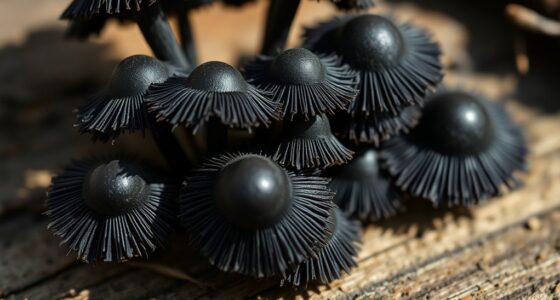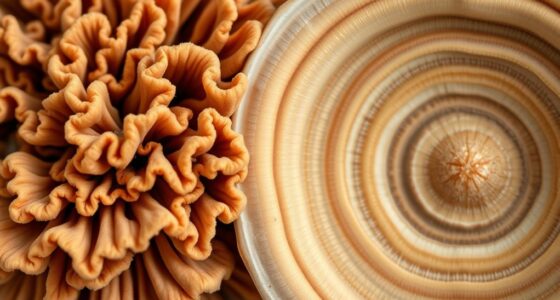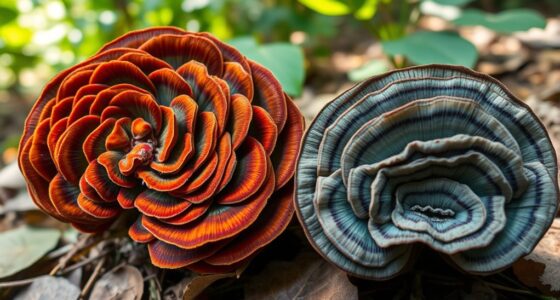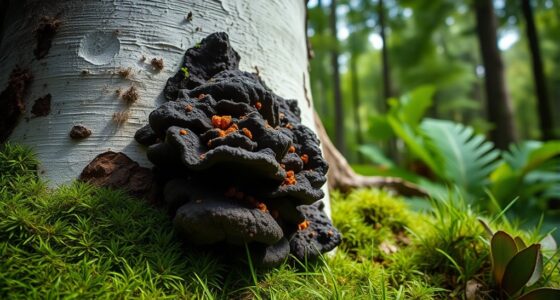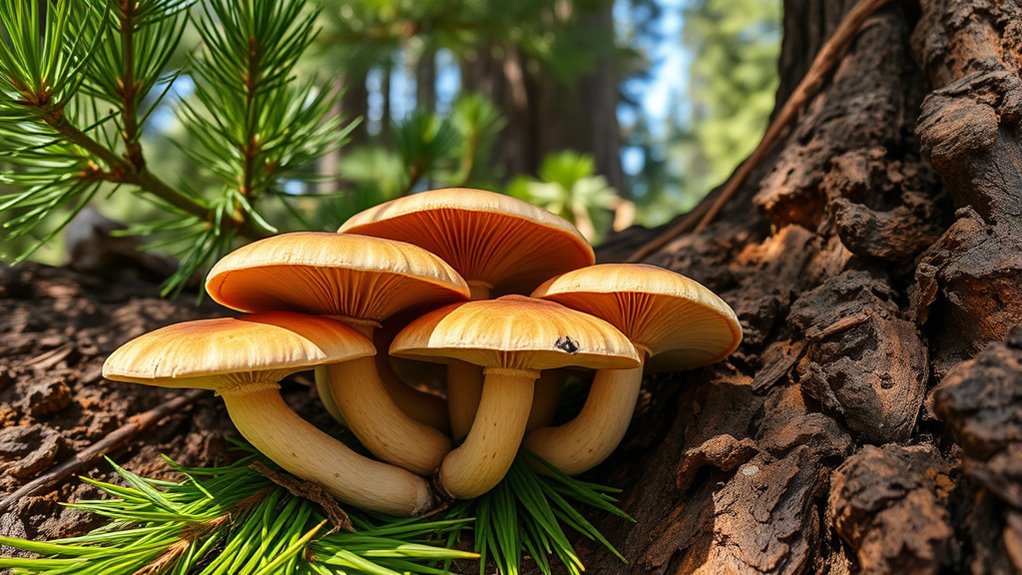

To forage matsutake, focus on pine habitats where these mushrooms thrive beneath mature trees. Look for thick, rough caps with a cracked surface and a sturdy, fibrous stem. Their most distinctive feature is the spicy, pine-like aroma that’s hard to mistake. Use environmental clues like the scent of pine soil and mossy, well-drained terrain. By paying close attention to these details, you’ll improve your success—and if you keep exploring closely, you’ll discover even more tips.
Key Takeaways
- Matsutake mushrooms have a distinctive spicy aroma easily recognizable during foraging.
- They grow predominantly in pine forests, often beneath mature pines and conifers.
- The soil in their habitat has a subtle pine scent, indicating potential mushroom presence.
- Look for mossy, well-drained soil with pine needle mulch in uneven terrains.
- Proper identification and sustainable harvesting preserve Matsutake populations and forest health.
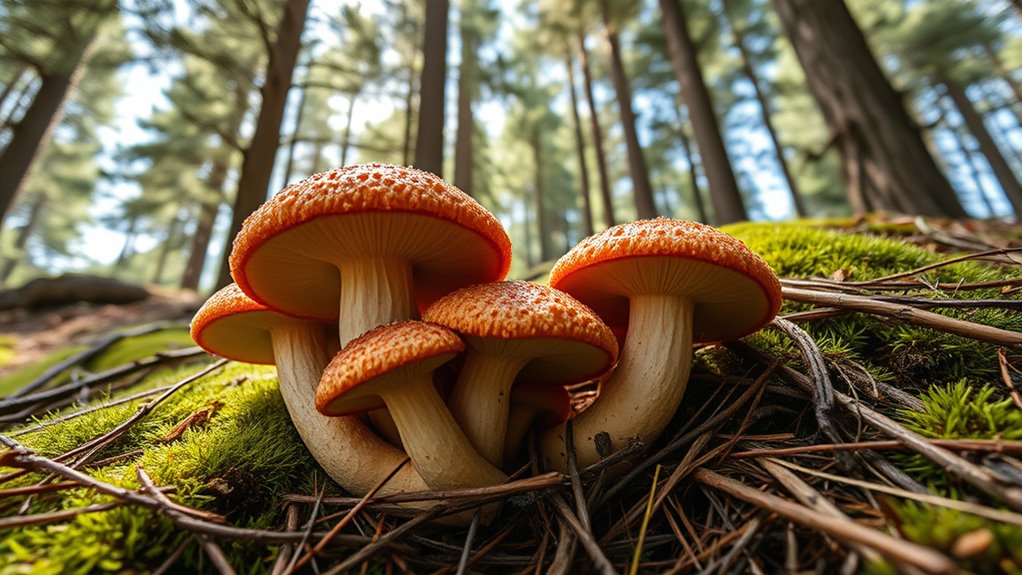
Have you ever considered the thrill of foraging for matsutake mushrooms? There’s something invigorating about stepping into the wild, guided by instinct and keen observation, seeking these elusive treasures. The key to a successful hunt lies in mastering mushroom identification—knowing exactly what to look for and how to distinguish matsutake from other fungi. Their thick, white to brownish cap, often with a rough, cracked surface, and the sturdy, fibrous stem are tell-tale signs. The gills are usually hidden beneath the cap, and the mushroom emits that unmistakable, spicy aroma, a hallmark of matsutake’s distinct aroma that sets it apart from other wild fungi. Recognizing these features with confidence means you can forage with purpose, ensuring you’re collecting the right mushrooms without risking confusion or mistakes.
But beyond identification, your approach must be rooted in sustainable harvesting. This isn’t just about gathering; it’s about respecting the ecosystem that produces these prized mushrooms. When harvesting matsutake, carefully cut the mushroom at the base rather than pulling it out forcefully. This preserves the mycelium—the underground network that sustains future growth—allowing mushrooms to regenerate and ensuring that your foraging remains a gift to the environment rather than a burden. Practicing sustainable harvesting means you’re not just taking from nature; you’re nurturing it, keeping this delicate balance intact so others can enjoy the hunt long after you’ve left the forest.
Matsutake thrive in pine habitats, often nestled beneath the canopy of mature pines and other conifers. The pine scent in the soil is a subtle yet important cue. When you venture into these areas, listen to your instincts and observe the terrain closely. The terrain is often uneven, and the mushrooms tend to grow in association with the roots of specific trees. Seek out the mossy, well-drained soil, where the pine needles create a natural mulch, fostering the perfect environment for matsutake to flourish. This habitat knowledge empowers you to focus your efforts, making your foraging more efficient and meaningful.
Additionally, understanding the funding opportunities available for sustainable harvesting initiatives can support your efforts and help promote conservation.
Ultimately, foraging matsutake isn’t just about the act itself; it’s about embracing a liberating connection with nature. By honing your mushroom identification skills and practicing sustainable harvesting, you align yourself with the rhythm of the forest. You become not just a gatherer, but a guardian of this treasure, ensuring that the pursuit remains sustainable, respectful, and true to the wild spirit that calls you.

VylerSky Foraging Bag – Mushroom Foraging Kit with Bag and Knife, Great for Mushroom Decor Lovers
🍄Great Mushroom Foraging Bag – Incredible collapsible mesh sack with a foraging pouch attached. Use the included mushroom…
As an affiliate, we earn on qualifying purchases.
As an affiliate, we earn on qualifying purchases.
Frequently Asked Questions
How Can I Differentiate Matsutake From Similar Fungi?
You can differentiate matsutake by its thick, white stem with a rough, brownish cap that’s often pinched or umbilicate. Its strong, spicy aroma is unmistakable. Be careful—mistaking it for toxic lookalikes can cause mushroom poisoning risks. Always follow foraging etiquette by double-checking identification and avoiding uncertain specimens. Trust your senses and experience, but never risk your health—liberate yourself from doubt by consulting expert guides.
What Tools Are Best for Harvesting Matsutake Mushrooms?
You’ll want a sharp knife and a sturdy basket for harvesting matsutake mushrooms. Use a knife to cut the mushroom at the base, avoiding damage to the mycelium, which supports future growth. A basket allows spores to disperse naturally, aiding sustainable foraging. Always prioritize mushroom identification and foraging safety—never pick anything you’re not 100% sure about. This way, you enjoy liberation through responsible harvesting and preserve the forest’s delicate balance.
Are There Specific Times of Year Optimal for Foraging?
You should target late summer to early fall for the best seasonal timing, as matsutake thrive then. Look for warm, dry weather conditions, especially after rain, which boosts their growth. This period offers the thrill of the hunt and a chance to connect with nature’s wild bounty. Trust your instincts, embrace the adventure, and harvest when the conditions feel right—freedom is found in the pursuit.
Can Matsutake Be Cultivated Commercially?
Think of cultivating matsutake as maneuvering a labyrinth of challenges—it’s not a straightforward quest. Despite market demand, cultivation remains difficult due to unique habitat needs and symbiotic relationships with trees. You won’t find easy shortcuts; traditional farming struggles to replicate their natural environment. Yet, if you seek liberation from wild harvesting limits, investing in research and innovative methods could someday open commercial cultivation, freeing you from the constraints of wild foraging.
What Are the Best Ways to Store Harvested Matsutake?
To keep your matsutake fresh, use preservation methods like wrapping them in paper towels and storing them in a paper bag or breathable container. Avoid plastic, which traps moisture and causes spoilage. Keep them in the refrigerator’s crisper drawer, ideally between 34-38°F. For longer storage, consider drying or freezing. Proper storage containers and quick handling will help preserve their aroma and texture, giving you more liberation to enjoy their unique flavor.

Fruits of the Forest: A Field Guide to Pacific Northwest Edible Mushrooms
As an affiliate, we earn on qualifying purchases.
As an affiliate, we earn on qualifying purchases.
Conclusion
As you venture into pine forests, let the distinct aroma of matsutake guide you like a secret handshake with nature. Remember, each mushroom is a treasure hidden in the earth’s embrace, waiting for you to uncover its story. By respecting its habitat and savoring the hunt, you become part of a timeless dance with the forest. So go ahead, chase that elusive scent—your adventure is the key to nature’s hidden riches.

Opinel No. 08 Mushroom Knife – Pick + Clean Mushrooms, Beechwood Handle, Integrated Brush, Curved Sandvik Steel Blade, Made in France
FRENCH STYLE FORAGING: The Opinel No. 08 Mushroom Knife is the ideal tool for picking morels, ceps, chanterelles,…
As an affiliate, we earn on qualifying purchases.
As an affiliate, we earn on qualifying purchases.
Tall Tails Rock Foraging Mat for Dogs – Slow Feeder Puzzle Mat for Easy & Engaging Feeding
8.5" X 8" silicone slow feeder for dogs
As an affiliate, we earn on qualifying purchases.
As an affiliate, we earn on qualifying purchases.