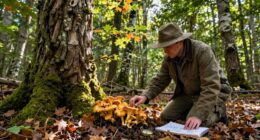
Knowing which substrates mushrooms prefer helps you target the right environments, making your foraging more efficient. When you understand the typical materials mushrooms grow on, like decayed wood or nutrient-rich soil, you can focus your search on these promising spots. This targeted approach increases your chances of finding edible varieties and avoids wasting time. Keeping these patterns in mind can greatly boost your success—if you want to discover more tips, just keep exploring how substrate knowledge can sharpen your mushroom-hunting skills.

Get garden gear delivered free — and shop member deals
- Fast, free delivery on millions of items
- Access to Prime Big Deal Days deals on October 6–7
- Prime Video, Amazon Music and more included
Key Takeaways
- Understanding substrate preferences guides foragers to environments where specific mushrooms are more likely to grow.
- Recognizing ideal substrates speeds up search efforts by targeting promising habitats.
- Knowledge of substrates helps identify new mushroom species based on their natural growing materials.
- Familiarity with substrates enhances the ability to distinguish between edible and toxic fungi.
- In cultivation, matching mushrooms to suitable substrates increases success rates and yields.
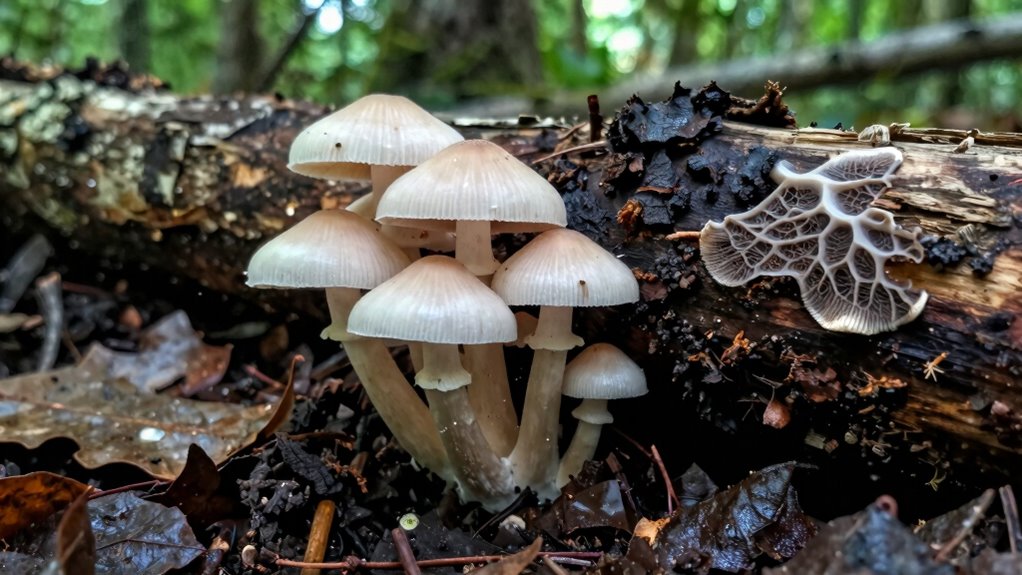
Understanding the right substrate is essential for successful mushroom foraging and cultivation. When you know what materials mushrooms thrive on, you markedly improve your chances of finding them in the wild and cultivating healthy specimens at home. This knowledge allows you to identify the best environments and understand which fungi are likely to grow on specific substrates. To sharpen your skills, you should learn mycology techniques—methods that help you analyze and understand fungi more deeply. These techniques include examining the physical characteristics of mushrooms and understanding their preferred growing conditions. One critical skill is spore identification, which involves studying the spores’ color, shape, and size under a microscope. Recognizing spores correctly helps you distinguish edible species from toxic ones, reducing the risk of dangerous mistakes.
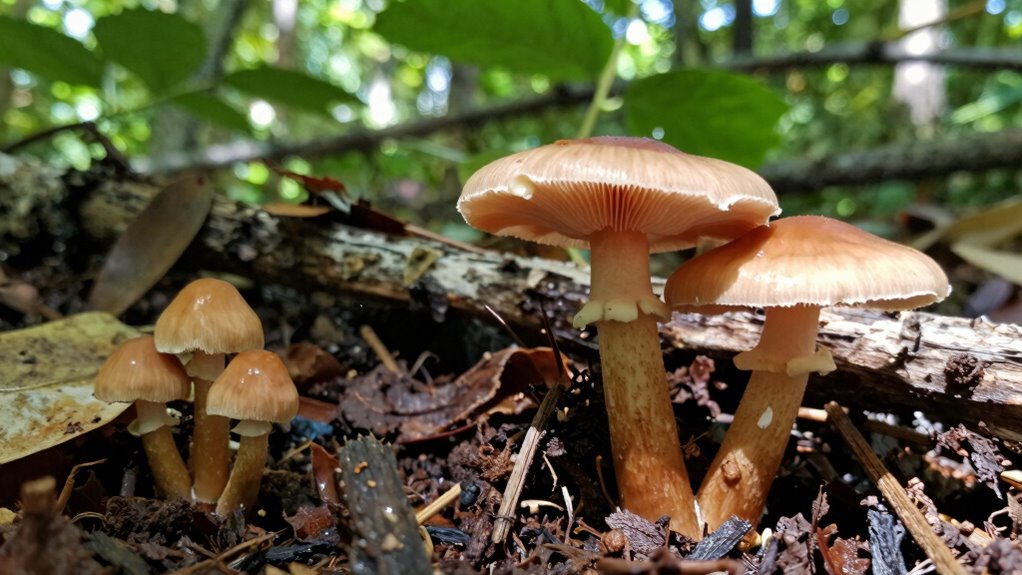
When you familiarize yourself with various substrates, you start to notice patterns in where certain mushrooms appear. For example, some species prefer decayed wood, while others grow on composted organic matter or soil rich in specific nutrients. By observing these preferences, you can target your searches more effectively. If you’re foraging, understanding these substrate preferences guides you toward promising areas, saving you time and increasing your harvest success rate. When cultivating mushrooms at home, selecting an appropriate substrate becomes essential. You want to choose the right organic material—like straw, sawdust, or manure—that matches the species you’re trying to grow. Proper substrate preparation, including sterilization or pasteurization, also plays an important role in preventing contamination and ensuring your mushrooms thrive. Developing a keen understanding of substrate preferences can greatly enhance your success rate in both wild foraging and home cultivation. Additionally, gaining knowledge about fungal ecology can offer insights into how fungi interact with their environment, further refining your search and cultivation strategies. Understanding the growth conditions that promote healthy fungi growth can help you optimize your efforts and improve yields.
Furthermore, understanding the natural ecology of fungi and their interactions with different environments can help you make more informed decisions about where to search or cultivate. Developing your mycology techniques also involves learning how to identify spores accurately. Spores are like the fingerprints of fungi; they reveal a lot about the species. Using a microscope, you observe their color, shape, and surface texture, which helps you confirm if you’ve found the right mushroom or if it’s a look-alike. This skill is especially important when foraging in the wild, where many mushrooms look similar but vary in toxicity. Accurate spore identification, combined with knowledge of the substrate preferences, boosts your confidence and safety in mushroom hunting. It also deepens your understanding of fungal ecology, making your foraging more precise and enjoyable. Recognizing the specific environmental conditions that favor different fungi can further improve your search efficiency.
As an affiliate, we earn on qualifying purchases.
Frequently Asked Questions
How Does Substrate Type Influence Mushroom Growth Speed?
You’ll see that substrate type directly impacts mushroom growth speed by providing specific nutrients and conditions. A nutrient-rich substrate accelerates growth, while a poor one slows it down. However, choosing the wrong substrate increases contamination risks, which can stunt or halt development. By understanding the right substrate for your mushroom species, you optimize growth speed and reduce contamination, ensuring healthier, faster-growing mushrooms.
Can Substrate Composition Indicate Mushroom Species?
You might wonder if substrate composition can indicate mushroom species. While it’s not definitive, mycelium interactions and nutrient absorption patterns often vary among species, giving clues to identification. Different substrates promote specific fungi, as certain nutrients and textures favor particular mushrooms. By understanding these subtle relationships, you can better predict which species are likely to grow on a given substrate, improving your foraging success and ensuring accurate identification.
What Common Mistakes Occur When Identifying Substrates?
You often mistake substrates by overlooking contamination or misjudging moisture levels. If you neglect signs of contamination like mold or unusual smells, you risk misidentifying fungi or missing key growth clues. Also, if you don’t check moisture levels, you might think a substrate is unsuitable or wrongly identify what mushrooms are likely to grow. Paying close attention to contamination and moisture ensures accurate identification and better mushroom hunting results.
Are Certain Substrates Better for Beginner Mushroom Hunters?
You’ll find that certain substrates are better for beginners, especially those less prone to contamination. For example, straw and wood chips are easier to work with than soil, which often has high soil acidity and hidden contaminants. Notably, studies show that 60% of contamination issues arise from improper substrate selection. By understanding substrate properties, like acidity and contamination risks, you can markedly improve your chances of a successful mushroom harvest.
How Do Environmental Changes Affect Substrate-Based Mushroom Identification?
Environmental changes can profoundly impact substrate-based mushroom identification by influencing microbial interactions and contamination levels. When conditions shift, microbes may outcompete or alter mushroom growth, making identification trickier. You might notice unusual growth patterns or contamination signs that obscure key features. Staying aware of these changes helps you recognize when environmental factors are affecting your finds, so you can adjust your search strategies and better identify mushrooms based on substrate conditions.
Conclusion
Knowing about mushroom substrates truly boosts your chances of finding rare and delicious fungi. When you understand which materials mushrooms thrive on, you can target those specific areas confidently. Some experts believe that certain substrates even influence mushroom appearance and growth patterns, making accurate knowledge a game-changer. So, next time you’re out foraging, trust your substrate insights—they could be the key to uncovering hidden mushroom treasures most others overlook.
Fall Picks
fall essentials
As an affiliate, we earn on qualifying purchases.