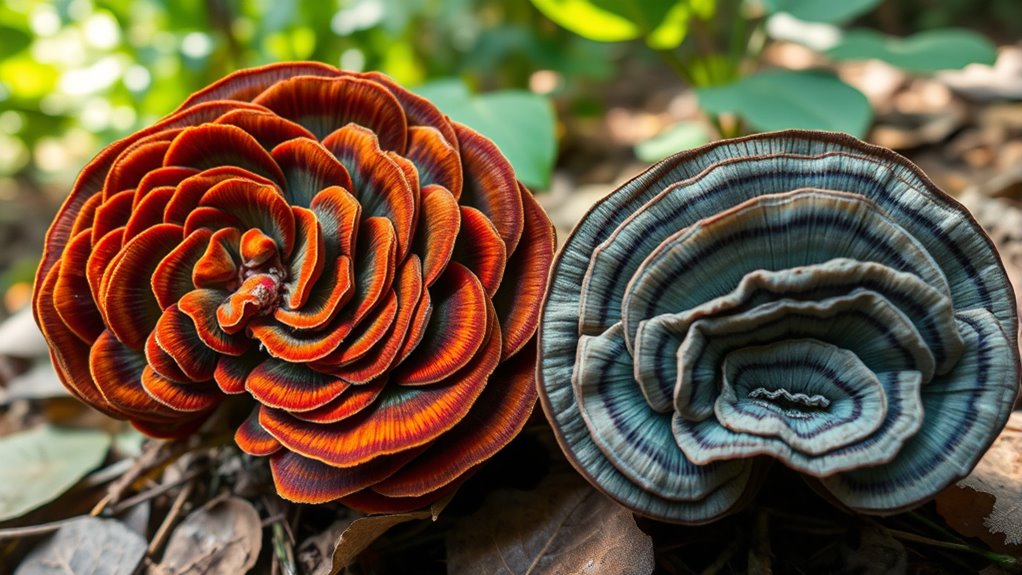

To tell turkey tail apart from false varieties, look for their vibrant, concentric rings with bright blues, greens, browns, and whites, and check the underside for tiny pores instead of gills. Authentic turkey tail grows on hardwood in layered, fan-shaped patches and has a velvety surface, while look-alikes often have duller colors or smooth textures. Carefully examining these features can help you identify them confidently—keep exploring to discover more distinguishing clues.
Key Takeaways
- Authentic turkey tail has vibrant, concentric color bands and a velvety surface, unlike duller, less colorful look-alikes.
- Examine the underside; true turkey tail features tiny pores, whereas false varieties often have gills or smooth surfaces.
- Genuine turkey tail grows on hardwood logs or stumps in layered, overlapping formations in wooded areas.
- Color patterns and texture are key; real turkey tail displays a striking, banded, textured appearance with concentric rings.
- Always confirm identification with expert guides or tools to avoid confusing false, potentially toxic look-alikes.

Have you ever wondered how to tell genuine turkey tail mushrooms apart from their false counterparts? If you’re passionate about mushroom identification and seeking liberation through safe foraging, understanding the subtle differences becomes essential. The world of wild fungi offers abundant treasures, but it also demands respect and knowledge to avoid dangerous mistakes. When it comes to turkey tail versus false turkey tail, your awareness can mean the difference between a nourishing find and a risky misstep.
Genuine turkey tail mushrooms, scientifically known as Trametes versicolor, are easily recognizable by their colorful, fan-shaped caps that resemble the tail of a turkey. Their surface displays concentric rings of vibrant colors—blue, green, brown, and white—giving them a striking, banded appearance. These fungi grow on dead or decaying hardwood, often in overlapping layers, creating a layered, textured look. The underside reveals tiny, pore-like structures rather than gills, which is a key feature for mushroom identification. The porous surface is vital for distinguishing authentic turkey tail from look-alikes and helps guarantee foraging safety.
False turkey tail mushrooms, on the other hand, can look deceptively similar but lack some of these defining features. They often have duller colors, less vibrant banding, or irregular shapes that don’t resemble a fan. Some species mimic the appearance of turkey tail but are either less colorful or have different textures—such as smooth or leathery surfaces instead of the velvety feel of the real thing. A common pitfall is mistaking other polypores or bracket fungi for true turkey tail, which can be dangerous if ingested. This makes careful mushroom identification imperative for safe foraging.
To avoid confusion, always examine the mushroom’s color patterns, texture, and underside structure. Authentic turkey tail’s concentric rings and porous underside are reliable indicators. Remember, the environment also provides clues—look for these fungi on hardwood logs or stumps in wooded areas. Never rely solely on visual similarities; if you’re uncertain, consult a field guide or expert mycologist. The stakes are high—mistaking false turkey tail for the real deal can lead to poisoning or adverse health effects.
Your goal is liberation through knowledge, empowering you to confidently identify safe, edible fungi. Mushroom identification isn’t just about recognition; it’s about respecting the fungi and assure your safety. By honing your skills and staying vigilant, you can enjoy the bounty of the woods without risking your health. Be cautious, stay informed, and trust your knowledge to forage safely—true turkey tail mushrooms are a rewarding find, but only when you’re sure of their authenticity. Incorporating AI-powered identification tools can further enhance your ability to distinguish between real and false varieties, ensuring safer foraging experiences.
Frequently Asked Questions
Can False Turkey Tail Mushrooms Be Toxic?
False turkey tail mushrooms can indeed be toxic, so you should be cautious. Your concern about toxicity is valid, especially if identification accuracy isn’t perfect. Always double-check with reliable sources before foraging. If you’re seeking the freedom to explore wild mushrooms, prioritize safety and proper identification. Remember, mistaking a toxic false turkey tail for a true one can lead to unpleasant or dangerous health effects. Stay informed and cautious.
Are There Any Look-Alikes Besides False Turkey Tail?
Beyond false turkey tail, you’ll find other look-alikes like the Jack-O-Lantern mushroom or certain polypores that mimic its mushroom morphology. While these fungi might seem similar, precise identification techniques—like examining spore color, underside pore structure, and habitat—are essential. Don’t rely solely on appearance; instead, embrace the freedom of knowledge, empowering you to distinguish safe, edible mushrooms from risky imposters confidently.
How Long Do Turkey Tail Mushrooms Typically Last After Harvesting?
After harvesting, turkey tail mushrooms typically last about 1 to 2 weeks if you store them properly. To extend their freshness, use storage methods like refrigerating in paper bags or drying them thoroughly. Keep in mind the decomposition timeline; they’ll start degrading after a week or so, losing potency. Proper storage gives you more freedom to enjoy their benefits longer, so don’t neglect these simple steps to maximize their lifespan.
Is There a Seasonal Difference in Identifying Turkey Tail?
You’ll notice seasonal variations in identifying turkey tail, as their growth patterns change with the environment. In spring and fall, they flourish, showing vibrant colors and distinct bands. During winter, they might be less visible, blending into the bark. Embrace these seasonal shifts, and let nature’s rhythm guide you. Recognizing these variations allows you to freely forage, connecting deeply with the natural cycle and truly appreciating the mushroom’s vibrant, evolving presence.
Can False Turkey Tail Grow Indoors or in Gardens?
Yes, false turkey tail can grow indoors and in gardens. You have the freedom to cultivate it in your own space, whether in a controlled indoor environment or amidst garden growth. Just guarantee proper conditions, like humidity and substrate, to support its development. Embrace the liberation of growing your own fungi, and enjoy the process of nurturing something unique and resilient right in your personal sanctuary.
Conclusion
Now that you know how to tell Turkey Tail from false, you’re practically a mushroom detective! With a keen eye for color, shape, and texture, you can spot these fungi faster than a lightning bolt. Remember, false Turkey Tail might try to fool you, but your newfound knowledge is like a superpower—saving you from mistakes that could be as costly as a treasure chest. Happy mushroom hunting, and stay sharp out there!