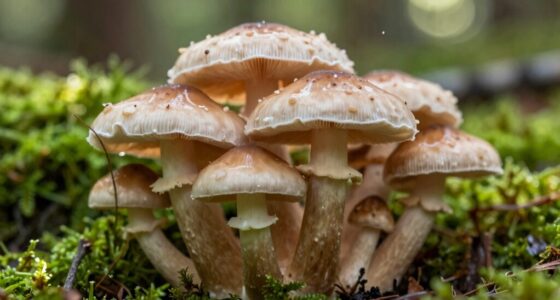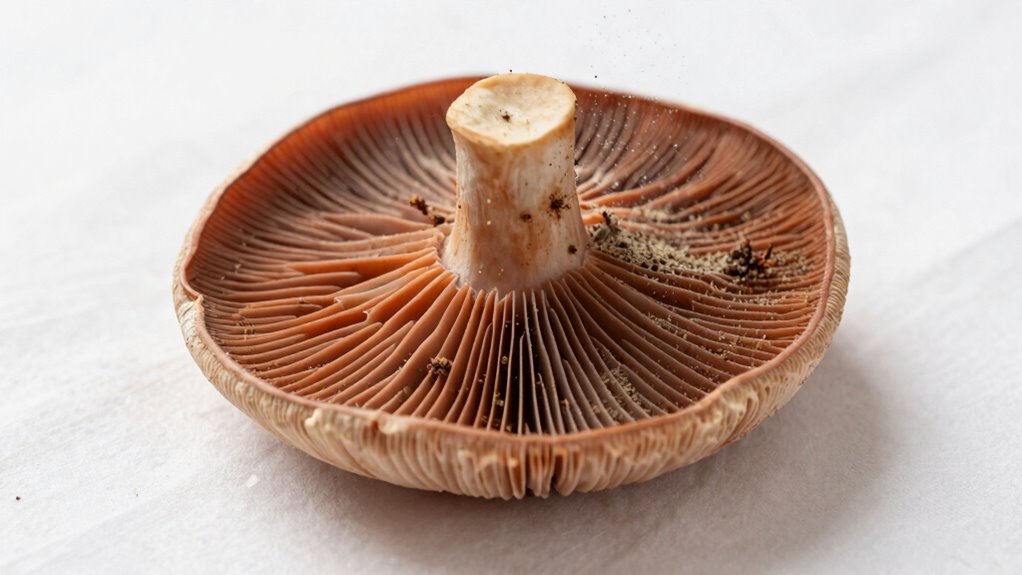

To use spore prints correctly, start by placing a mature mushroom cap, gills down, on white paper or foil, then cover it to prevent air disturbance. After several hours or overnight, lift the cap to reveal the spores’ color and pattern. Compare the print with reliable guides to identify the species accurately. Pay attention to subtle differences, as this helps distinguish safe mushrooms from toxic ones. If you want to master the details, keep exploring further.
Listen free for 30 days with Audible
Thousands of audiobooks and originals — cancel anytime.
As an affiliate, we earn on qualifying purchases.
Key Takeaways
- Carefully observe the spore print color and pattern to accurately identify mushroom species.
- Compare the spore print with reliable guides or keys for correct identification.
- Use the spore print as a primary clue alongside other features like gill or cap shape.
- Confirm species before harvesting or cultivating, especially when distinguishing edible from toxic varieties.
- Utilize the spore print to create spore syringes or cultures for mushroom cultivation.
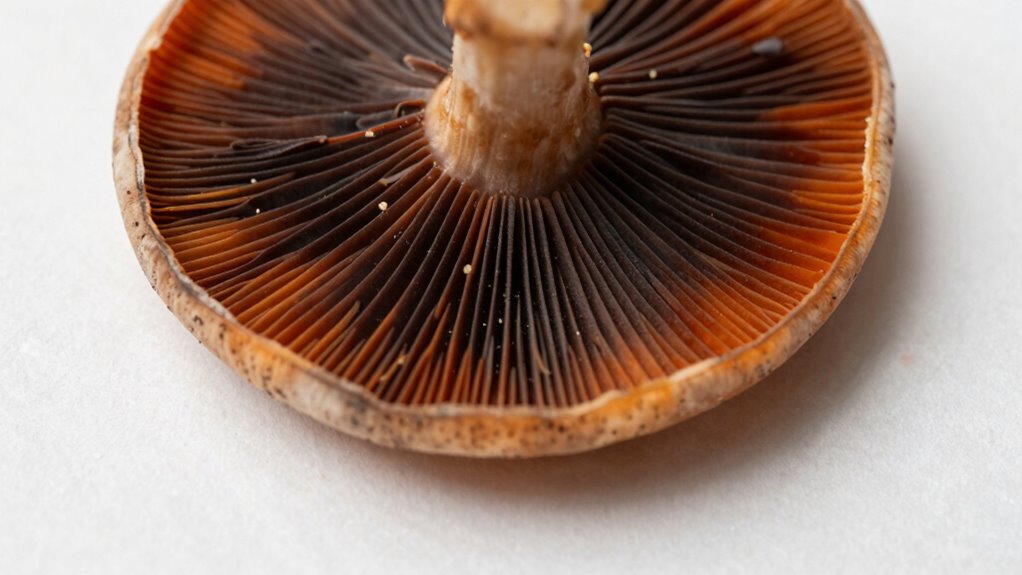
Spore prints are a valuable tool for mushroom identification and cultivation, providing essential information about a mushroom’s species. When you create a spore print, you’re capturing the color and pattern of the spores released by the mushroom’s gills or pores. This spore print color is a key indicator that helps you accurately identify the mushroom. Different species produce distinct spore colors, ranging from white and pink to purple, black, or rusty brown. Recognizing these subtle differences allows you to distinguish edible mushrooms from toxic ones more confidently.
Spore prints reveal key color differences that help distinguish safe, edible mushrooms from toxic ones.
To use spore prints effectively for mushroom identification, you need to prepare the print correctly. Select a mature mushroom with healthy gills or pores, then carefully cut or gently lift the cap. Place it gills or pore side down on a piece of clean, white paper or foil, and cover it with a glass or bowl to prevent air currents from disturbing the spores. Leave it undisturbed for several hours or overnight. When you lift the cap, you’ll see the spores have fallen onto the paper, revealing the spore print color. This process is simple but essential for accurate identification because the spore color provides a visual cue that, combined with other mushroom features, leads you to the correct species. Additionally, understanding the spore print color can help you differentiate between closely related species with similar cap characteristics. Recognizing the importance of spore print techniques can improve your overall identification accuracy and confidence.
Once you have your spore print, compare its color to reliable identification guides or mushroom keys. The spore print color is often one of the first clues in narrowing down options, especially since many mushroom species can look similar in terms of cap shape and size. Be attentive to the hue, texture, and even the pattern of the spores, as some prints have a uniform color, while others may show variation or a gradient. This detail can be the difference between mistakenly harvesting a toxic species and confidently collecting a safe, edible mushroom.
Using spore prints for mushroom identification isn’t just about safety; it also aids in cultivation efforts. If you’re growing mushrooms, the spore print can serve as a starting point for creating spore syringes or cultures. By understanding the spore color, you guarantee you’re working with the right strain, which is essential for successful cultivation. Ultimately, mastering the use of spore prints enhances your ability to identify, collect, and grow mushrooms responsibly, making it a critical skill for any mushroom enthusiast.
As an affiliate, we earn on qualifying purchases.
Frequently Asked Questions
Can Spore Prints Be Used for Identifying Mushroom Species Accurately?
Yes, spore prints can be used for identifying mushroom species accurately. By examining spore print colors, you gain valuable clues for mushroom identification techniques. You should collect a clean spore print and compare its color to known references. This method enhances your ability to distinguish between edible and toxic species, making spore prints an essential tool in mushroom foraging and identification.
How Long Do Spore Prints Remain Viable for Analysis?
Spore viability typically lasts about a year if you store your spore prints properly. To guarantee print preservation, keep them in a sealed paper envelope or micropore tape, away from direct sunlight and moisture. Over time, spores may lose their ability to germinate, so it’s best to analyze them within this period. Regularly check for any signs of mold or deterioration to maintain the quality of your spore prints.
Are Certain Mushroom Spores Toxic or Safe to Handle?
Spores toxicity can vary wildly; some are deadly, while others are perfectly safe. You must exercise handling precautions, such as wearing gloves and working in a well-ventilated area, because even seemingly harmless spores can cause allergic reactions or illness. Always identify your mushroom species accurately before handling spores. When in doubt, treat all spores with respect and caution, as the difference between safe and toxic can be a hair’s breadth.
What Tools Are Best for Collecting and Transferring Spore Prints?
You’ll want fine-tipped tweezers or a sterilized scalpel to carefully collect spores from the spore print, ensuring you don’t disturb the color and pattern. For transferring spores, use a sterile, dampened piece of paper or glass slide. These tools help you control spore dispersal methods while preserving the spore print color. Always handle with care, especially if the spores are from potentially toxic mushrooms, to prevent contamination or accidental ingestion.
Can Spore Prints Be Used to Cultivate Mushrooms at Home?
Yes, you can use spore prints to cultivate mushrooms at home. Think of spores as tiny seeds, ready to bloom with proper care. Store your spore prints carefully to prevent contamination, keeping them in a clean, airtight container. When you’re ready, transfer spores onto a sterile substrate, avoiding spore print contamination. With patience and attention, you’ll turn those prints into healthy mushroom growth, just like planting a garden of fungi.
Conclusion
Using spore prints correctly guarantees you accurately identify mushroom species and avoid potential hazards. It might seem intimidating at first, but with a little practice, you’ll become confident in your technique. Don’t rush the process—taking your time to examine and compare spores can prevent mistakes. Remember, precision and patience are key, so trust your method and enjoy exploring the fascinating world of fungi safely and responsibly.
NFL season / tailgating Picks
team gear
As an affiliate, we earn on qualifying purchases.