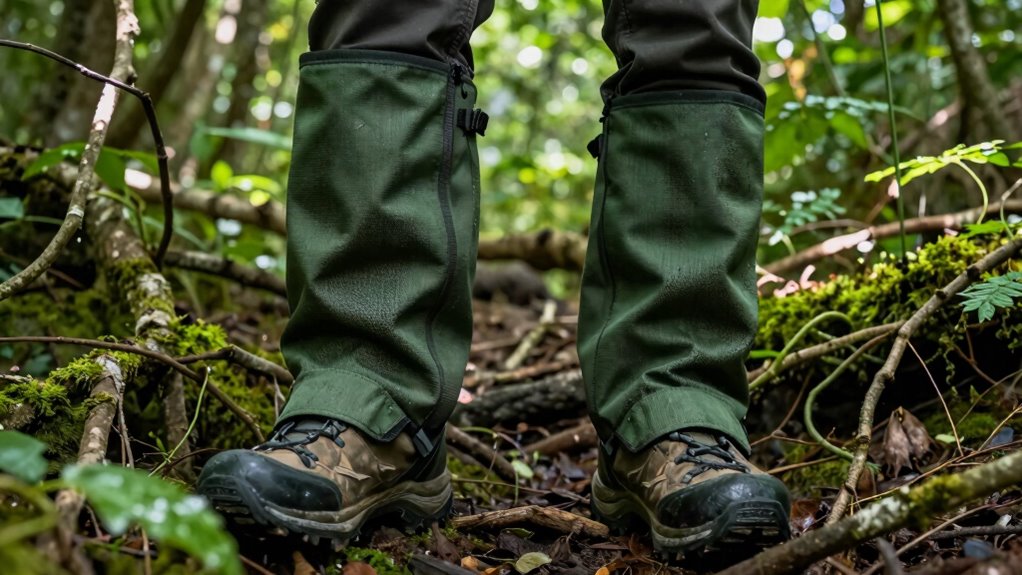

When tackling dense terrain, brush gaiters and protective layers keep you safe from debris, thorns, and scratches. They form a barrier that helps prevent injuries, minimize wildlife disturbance, and protect your clothing from mud and rocks. Opt for lightweight, durable, and waterproof options that suit the terrain and weather. Layering with abrasion-resistant clothing adds extra protection. Want to discover more ways to stay safe and preserve the environment? Keep exploring to find out!
Key Takeaways
- Brush gaiters create a barrier against debris, thorns, and plant materials, protecting legs in dense terrain.
- They help minimize wildlife disturbance and trail erosion by guiding controlled movement.
- Selecting lightweight, waterproof, and breathable gaiters enhances comfort and protection in wet or dense environments.
- Combining gaiters with abrasion-resistant pants offers extra defense against scratches and pokes.
- Proper protective layers support environmental conservation by reducing habitat disruption and trail widening.
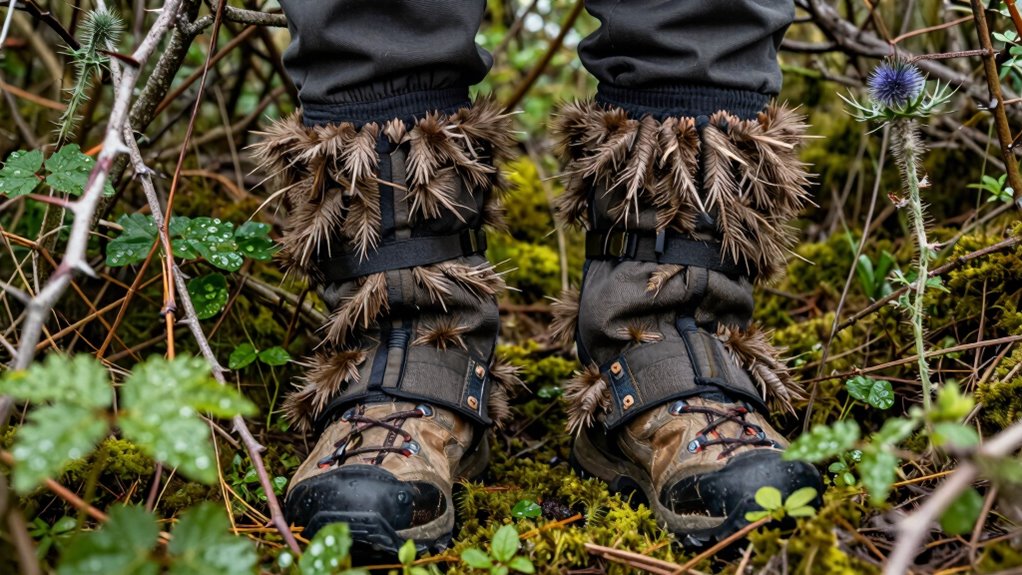
Maneuvering dense terrain can be challenging, and having the right protective gear is essential to stay comfortable and safe. When you’re orienteering thick brush, brush gaiters become a crucial part of your gear. They provide a barrier that keeps debris, thorns, and plant materials from scratching or poking your legs. But beyond comfort, they serve an environmental purpose. Properly fitted gaiters help prevent you from disturbing nearby wildlife, which can be especially important in sensitive habitats. By keeping your movements controlled and minimizing noise, you reduce the chances of wildlife disturbance, allowing animals to go about their routines undisturbed.
In addition to protecting your legs, brush gaiters also play a role in preventing trail erosion. When you walk through muddy or loose terrain, your footwear can carry soil and plant material off the trail, contributing to erosion and widening the path. Gaiters help contain this by acting as a barrier that prevents mud and small rocks from splashing onto your pants and shoes, reducing the overall impact of your footsteps. This is especially indispensable in fragile environments where erosion can lead to habitat loss and increased runoff. Wearing gaiters encourages you to stay on established trails and avoid creating new paths, supporting conservation efforts.
The protective layers you choose should be durable yet lightweight enough for extended wear. Waterproof gaiters, for example, can keep you dry in wet conditions, but they also need to be breathable to prevent overheating. When selecting your gear, consider the terrain’s density and moisture levels, as well as the types of vegetation you’ll encounter. Layering with additional protective clothing, like long pants made from abrasion-resistant material, further enhances your defenses against thorns and branches. You’ll find that a good combination of gear not only boosts your comfort but also minimizes your environmental footprint.
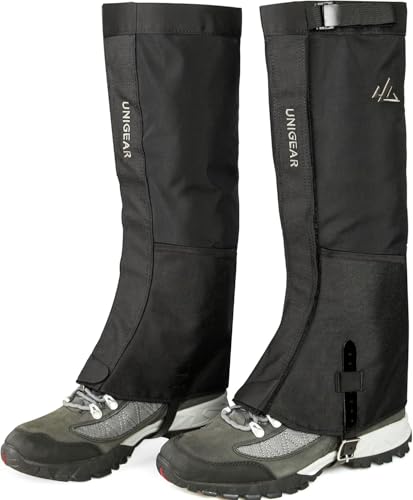
Unigear Snow Leg Gaiters, Waterproof Boot Gaiters for Hiking Walking Climbing Hunting Skiing 1000D Fabric (Large)
- Durable Material: TASLON upper and 1000D Nylon lower
- Water Resistant: Waterproof TPU coating with >8000mm rating
- Breathable Fabric: Moisture-permeable for comfort and dryness
As an affiliate, we earn on qualifying purchases.
As an affiliate, we earn on qualifying purchases.
Frequently Asked Questions
How Do Brush Gaiters Compare to Standard Gaiters in Durability?
Brush gaiters are generally more durable than standard gaiters because of their material comparison, often made from tougher, more resistant fabrics like ballistic nylon or reinforced polyester. Durability factors such as abrasion resistance and water resistance are higher in brush gaiters, making them better suited for dense terrain where you encounter thick brush, thorns, and rough vegetation. This extra durability helps protect your legs and extends the lifespan of the gaiters.
Are Brush Gaiters Suitable for All Types of Dense Terrain?
Brush gaiters broadly bolster your boots against biting brush, but they’re not perfect for all terrains. You’ll find they favor flexible trail conditions, offering some terrain adaptability, yet struggle with extremely dense or rugged regions. For versatile ventures, choose gaiters that balance durability and flexibility, ensuring your gear guards against debris while maintaining trail agility. So, assess your terrain’s toughness before trusting brush gaiters to protect you in every dense domain.
What Materials Are Most Effective for Protective Layers in Thick Brush?
For thick brush, the most effective protective layers combine plant resistance and material flexibility. You should look for fabrics like ripstop nylon or reinforced polyester, which resist tears and withstand plant thorns. These materials are flexible enough to move with your movements, preventing chafing. Opt for layers that offer a balance of durability and flexibility, ensuring you stay protected without sacrificing comfort.
How Maintenance Differs Between Brush Gaiters and Other Protective Gear?
Think of maintaining protective gear like caring for a garden; brush gaiters need regular cleaning routines to remove mud and debris. Unlike other gear, they often face more wear and tear, so replacement frequency might be higher—sometimes every season. You’ll want to check for tears or fraying after each hike, ensuring they stay effective. Proper maintenance keeps your gear reliable and extends its lifespan, much like tending a healthy garden.
Can Brush Gaiters Prevent All Types of Plant-Related Injuries?
Brush gaiters can considerably reduce plant-related injuries, but they can’t prevent all types. Wildlife interference might still cause damage, and some plants have thorns or chemicals that can penetrate gaiters. If the gaiters are not chemical resistant, certain plants’ toxins could seep through, posing a risk. As a result, while they provide valuable protection, you should stay cautious in dense terrain, especially around dangerous plants and wildlife.
Conclusion
When traversing dense terrain, don’t underestimate the power of brush gaiters and protective layers. They act as your shield against thorns, dirt, and surprises hidden beneath the foliage. Remember, an ounce of prevention is worth a pound of cure—stay protected to keep moving forward. With the right gear, you’ll find that what once seemed intimidating becomes just another part of the adventure. Trust your gear, and let nature’s challenges be your stepping stones.