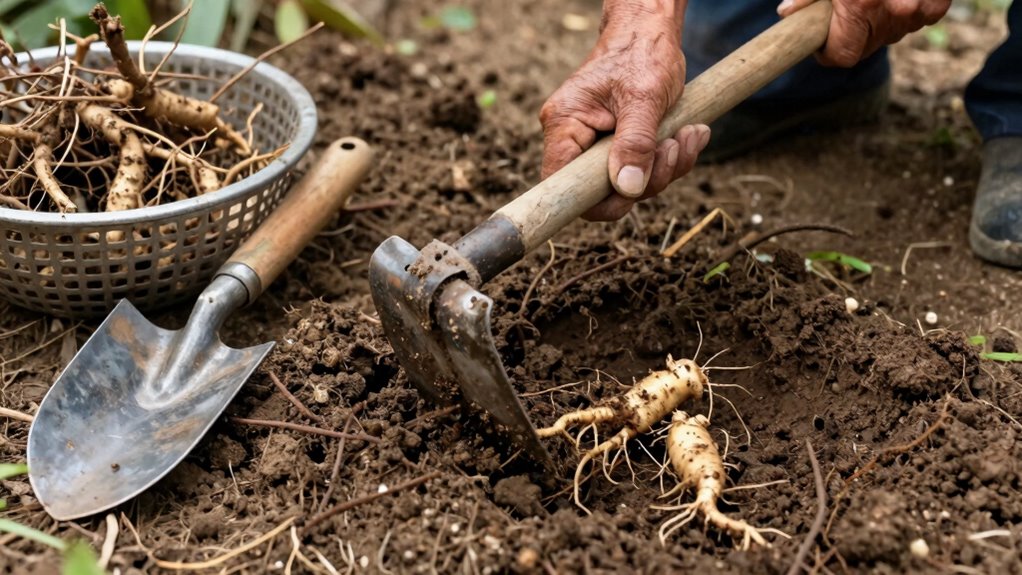

To harvest roots efficiently and keep your soil healthy, use specialized tools like dibbers, hand trowels, and narrow forks to carefully lift roots without tearing the surrounding soil. Practice gentle, controlled movements, avoiding brute force, to prevent damage to both roots and soil structure. Proper tool selection and digging techniques help make the process cleaner and easier, while organic amendments improve soil health over time. Keep going to discover more ways to optimize your root harvesting practices.
Key Takeaways
- Use specialized tools like dibbers, hand trowels, and narrow forks for precise, gentle root lifting and minimal soil disturbance.
- Employ controlled, careful movements to loosen soil and prevent root damage during harvesting.
- Select organic soil amendments to improve soil structure, making roots easier to extract cleanly.
- Practice gentle prying and avoid brute force to reduce soil sticking and maintain soil integrity.
- Incorporate sustainable soil management techniques, including cover cropping and minimal tillage, for cleaner, more efficient harvesting.
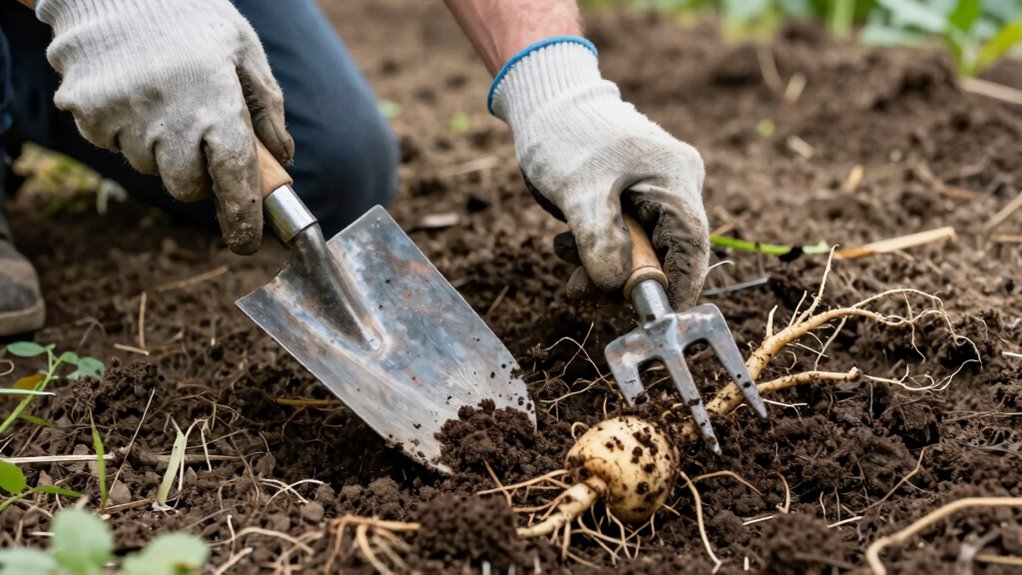
Harvesting roots can be labor-intensive, but using the right tools and techniques makes the process cleaner and more efficient. When you’re digging up roots, especially in organic gardening or sustainable farming practices, it’s vital to minimize soil disruption and preserve the health of your soil. This is where specialized root harvesting tools come into play. Tools like dibbers, pitchforks, and hand trowels allow you to carefully lift roots without tearing the surrounding soil or damaging the plants. Using these tools with precision helps you avoid excessive soil disturbance, which aligns with sustainable farming techniques aimed at maintaining soil structure and fertility.
Using specialized tools like dibbers and hand trowels minimizes soil disturbance during root harvesting.
Incorporating organic soil amendments into your soil before planting or after harvesting can greatly improve soil health. Organic amendments like compost, aged manure, or biochar enrich the soil with nutrients and beneficial microorganisms, which support healthy root growth and make harvesting easier over time. When you regularly add these amendments, your soil becomes more friable, reducing the effort needed to dig roots and decreasing the likelihood of damaging the roots or compacting the soil. This approach fits seamlessly into sustainable farming techniques by promoting natural soil fertility and reducing reliance on chemical inputs.
Using proper digging practices is vital for cleaner harvesting. Instead of brute force, employ gentle, controlled movements when loosening the soil around roots. For example, inserting a narrow garden fork or a specialized root rake into the soil and carefully prying it apart minimizes soil sticking to the roots and decreases soil compaction. This not only makes retrieval more straightforward but also helps keep the roots intact, which is important if you’re harvesting for culinary purposes or seed saving. These cleaner practices also reduce the mess and make cleanup easier afterward. Proper soil management techniques ensure a healthier environment for future plant growth and sustainable farming.
Furthermore, adopting sustainable farming techniques means thinking about the long-term health of your soil ecosystem. Avoid excessive tilling, which can disturb beneficial soil organisms and lead to erosion. Instead, focus on minimal disturbance, using tools and practices that preserve soil integrity. Cover cropping between harvests helps protect the soil from erosion, retain moisture, and add organic matter, supporting a sustainable cycle that benefits root harvesting. When you combine the right tools, organic amendments, and careful digging practices, you create an environment that’s productive and resilient, making root harvesting less strenuous while supporting overall soil health. Soil structure is a fundamental aspect of maintaining a healthy environment for root growth and sustainable farming.

Root Hook Japanese Garden Tool for Loosing Soil, Heavy Duty Japanese Steel, Root Pick Tool for Repotting Bonsai and Transplanting Flower, Made in Japan, Silver
- Tool Type: Single claw root pick for gardening
- Material: Heavy-duty Japanese steel blade
- Handle: Comfortable wooden grip
As an affiliate, we earn on qualifying purchases.
As an affiliate, we earn on qualifying purchases.
Frequently Asked Questions
What Are the Best Tools for Harvesting Delicate Roots?
You should use sharp, precise tools like a hand trowel or a root pruning saw to harvest delicate roots gently. These tools help you avoid damage during the process. Focus on soil aeration beforehand to loosen the soil, making it easier to access roots without breaking them. Carefully work around the root system, maintaining its integrity, and always handle roots with care to guarantee healthy plant growth afterward.
How Can I Prevent Root Damage During Digging?
To prevent root damage during digging, you must be cautious from the start. Keep the soil moist, as dry soil increases root sensitivity and the risk of breakage. Gently loosen the soil around the roots, avoiding harsh prying or heavy equipment. Slowly and carefully lift the roots with proper tools, paying close attention to their delicate structure. This mindful approach *guarantees* healthier roots and a better harvest, every time.
What Safety Precautions Should I Take While Using Digging Tools?
You should always wear proper safety gear like gloves, sturdy boots, and eye protection before digging. Keep your tools well-maintained to prevent accidents—check for sharp blades or loose handles. Always use the right tool for the job, and handle it carefully to avoid injury. Be aware of your surroundings, and work slowly and deliberately. Regularly inspect your tools and replace any damaged parts to guarantee safe, effective digging.
How Do Weather Conditions Affect Root Harvesting?
Think of root harvesting like catching fish—weather conditions really influence your success. When soil is too wet from rain, roots can be easily damaged, making harvesting tricky. Conversely, dry soil can be tough to dig, risking breakage. Soil moisture and seasonal timing are key; harvest during ideal moisture levels and appropriate seasons to guarantee healthy roots and smooth digging. Proper timing prevents damage and maximizes your yield.
Are There Eco-Friendly Alternatives to Traditional Root Digging Tools?
Yes, there are eco-friendly alternatives to traditional root digging tools. You can explore sustainable tool options like hand-held, sharp-edged tools made from recycled or biodegradable materials. Organic digging methods involve manual techniques such as using garden forks or hands, which minimize soil disturbance and reduce environmental impact. These practices promote healthier soil ecosystems, conserve resources, and support sustainable harvesting, making your root collection both effective and eco-conscious.
Conclusion
By choosing the right root harvesting tools and embracing cleaner digging practices, you’re not just digging up roots—you’re tending to the earth’s gentle heartbeat. Every careful motion is like a dance with nature, preserving its delicate balance. With mindful tools and respectful techniques, you’ll harvest bountiful roots while safeguarding the soil’s future. So, step softly, dig wisely, and let your gardening journey blossom into a symphony of harmony between you and the land.