
Using a wood splitter makes firewood prep faster and easier, but safety and proper technique are essential. Always check your equipment for good condition, wear safety gear, and handle tools carefully, cutting away from your body. Store your wood properly to keep it dry and ready for use. Following these tips can make the process more efficient and safe. Keep exploring to learn more about optimizing your firewood prep and equipment handling.
Key Takeaways
- Wood splitters significantly speed up firewood prep and reduce physical effort compared to manual splitting.
- Proper safety precautions, including safety gear and equipment checks, are essential when operating wood splitters.
- Using a splitter correctly involves keeping hands clear of moving parts and following manufacturer guidelines.
- Organized storage and covering of firewood prevent moisture buildup and extend wood lifespan.
- Sustainable practices like proper stacking and resource management ensure a reliable, eco-friendly firewood supply.
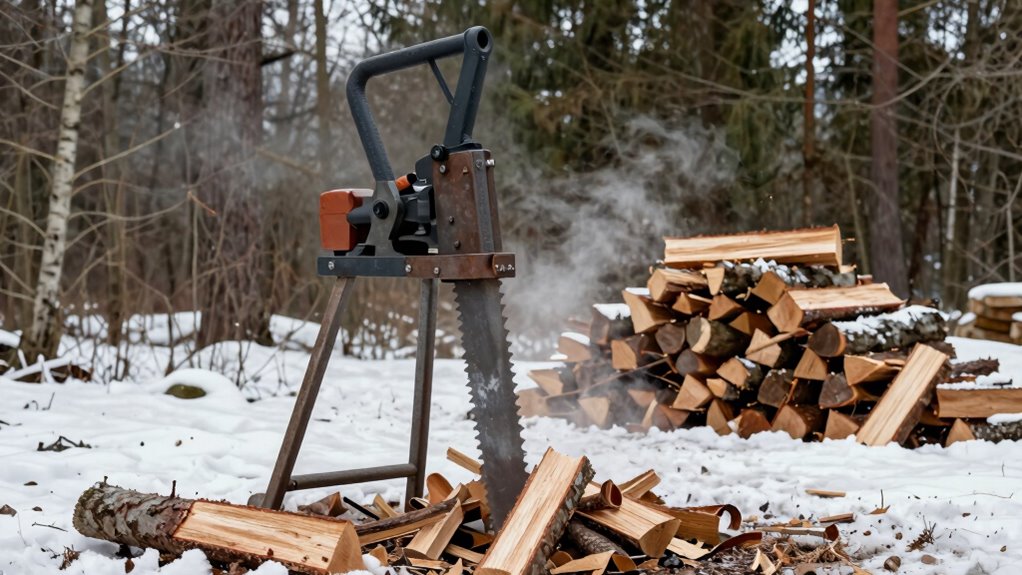
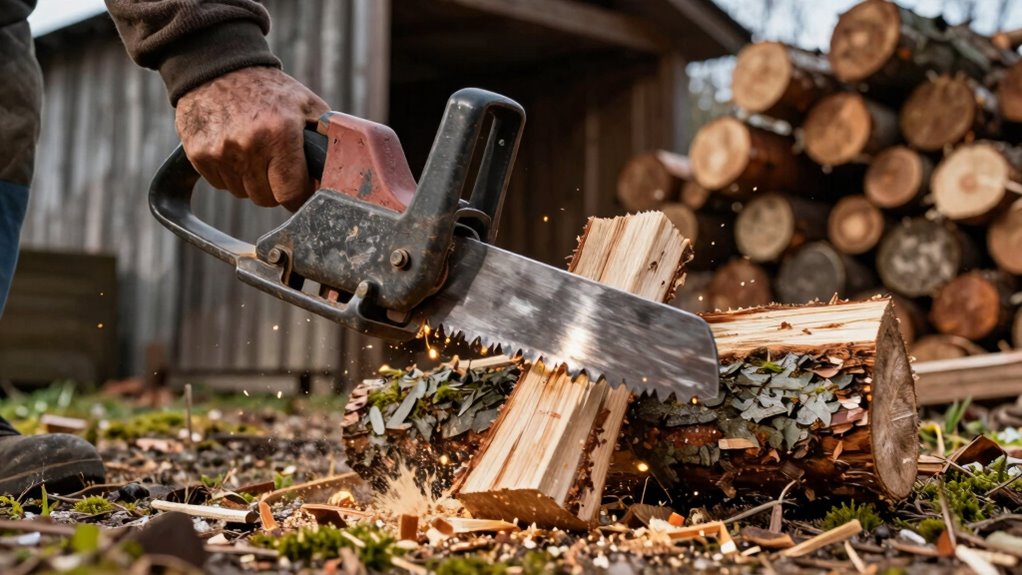
Have you ever wondered how to make firewood preparation safer and more efficient? If you’re tackling the task yourself, it’s essential to understand the importance of proper tools and techniques. Using a chainsaw is often the fastest way to cut logs into manageable pieces, but it comes with inherent risks. Practicing chainsaw safety isn’t just about wearing protective gear—though that’s crucial—but also about understanding how to handle the saw correctly, maintaining focus, and avoiding common mistakes that can lead to injuries. Keep your hands steady, cut away from your body, and always check that your equipment is in good condition before starting. When you’re finished, make sure to store your firewood properly—firewood storage is key to keeping your supply dry, pest-free, and easy to access. Proper stacking in a well-ventilated area prevents moisture buildup and mold, which can ruin your wood and make it harder to burn efficiently. Research shows that proper firewood storage can extend the lifespan of your wood and improve its burning efficiency. Using a wood splitter can significantly speed up your firewood prep, especially when dealing with larger logs. It reduces the physical strain and minimizes the risk of splinters or mishandling that can happen when manually splitting wood with an axe. When operating a wood splitter, always follow safety guidelines. Keep your hands away from moving parts, and never bypass safety features. Wear eye protection, and make sure the area around the machine is clear of obstacles and bystanders. The key to making your firewood prep safer is consistent awareness of your surroundings and equipment. Additionally, proper safety practices play a vital role in preventing accidents and injuries. Incorporating safety gear such as gloves and ear protection can further reduce the risk of injury while working with power tools. While machines make the process faster, don’t neglect the importance of proper firewood storage. Stacking your split logs off the ground, using pallets or a firewood rack, helps prevent moisture absorption and decay. Cover your stacks with a tarp to keep rain and snow off, but leave the sides open for air circulation. This ensures your firewood remains dry and ready for use when the cold weather hits. Efficient storage also means organizing your wood so you can easily access it without disturbing the entire stack. Paying attention to sustainable practices can help you manage your resources responsibly and ensure a continuous supply. In the end, integrating safety into your firewood preparation routine—whether through cautious chainsaw use, safe operation of a wood splitter, or proper firewood storage—makes the process safer, faster, and more productive. By prioritizing safety and organization, you’ll enjoy your firewood supply with less hassle and more peace of mind. Additionally, understanding the existential themes related to resource management can deepen your appreciation of sustainable practices.
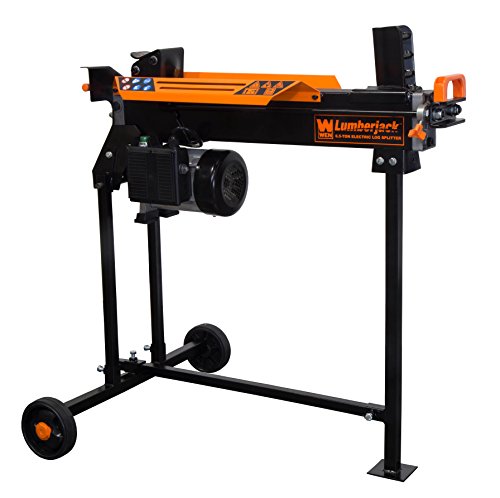
WEN Electric Log Splitter, 6.5-Ton Capacity with Portable Stand (56208)
- Motor Power: 15A motor with 13,000+ lbs pressure
- Flexible Stand Use: Use with or without 34-inch stand
- Easy Transportation: Pull handle and never-flat wheels included
As an affiliate, we earn on qualifying purchases.
As an affiliate, we earn on qualifying purchases.
Frequently Asked Questions
What Safety Gear Is Recommended When Using a Wood Splitter?
When using a wood splitter, you should wear protective gloves to guard your hands from splinters and debris, and ear protection to shield your ears from loud noise. Safety goggles are also essential to protect your eyes from flying wood chips. Always confirm your clothing is snug to avoid entanglement, and keep a safe distance from moving parts. These safety measures help prevent injuries and make your wood-splitting experience safer.
How Do I Maintain and Store a Wood Splitter Properly?
Did you know proper maintenance prolongs your wood splitter’s lifespan by up to 30%? To keep it in top shape, regularly check hydraulic fluid levels and clean the ram and wedge. For storage tips, make sure the splitter is clean, dry, and stored in a sheltered area to prevent rust. Cover it with a weatherproof tarp if kept outside, and disconnect power sources when not in use.
Can a Wood Splitter Handle All Types of Firewood?
A wood splitter can’t handle all types of firewood equally. Its capacity depends on the wood types you’re splitting; some splitters struggle with dense or knotty woods. Check your splitter’s capacity to guarantee it matches your typical wood types, like hardwoods or softwoods. For tougher woods, you might need a more powerful splitter. Always follow the manufacturer’s guidelines to avoid damage and ensure safe, efficient operation.
What Are the Signs That a Wood Splitter Needs Repair?
If your wood splitter struggles to split logs, makes unusual noises, or moves slowly, it’s a sign it needs repair. Pay attention to declining hydraulic pressure and engine performance; these indicate issues with the system or motor. You might notice leaks or jerky movements, signaling maintenance is due. Addressing these signs early prevents further damage, ensuring your splitter works efficiently when you need it most.
How Much Fuel Does a Typical Wood Splitter Consume?
A typical wood splitter uses about 0.5 to 1.5 gallons of fuel per hour, depending on its size and power. For maximum fuel efficiency, consider the fuel types you use; gasoline-powered splitters often consume more fuel than electric ones. Regular maintenance, such as checking the oil and filters, helps reduce fuel consumption. Always follow the manufacturer’s guidelines to guarantee your splitter runs efficiently and safely.
Conclusion
So, when you invest in a wood splitter, you’re not just saving time—you’re making firewood prep safer and more efficient. Imagine Sarah, who used to spend hours splitting logs by hand. Now, with her splitter, she quickly prepares enough firewood for winter, freeing up her weekends for other activities. A good splitter transforms the chore into a manageable task, turning firewood prep from a formidable job into a straightforward, even enjoyable, part of your seasonal routine.