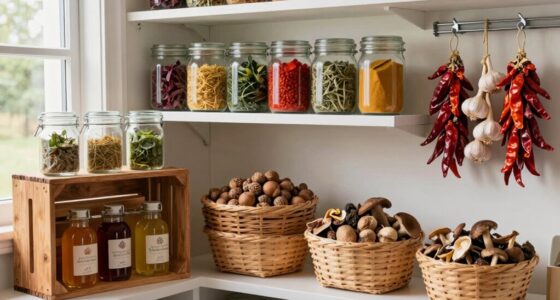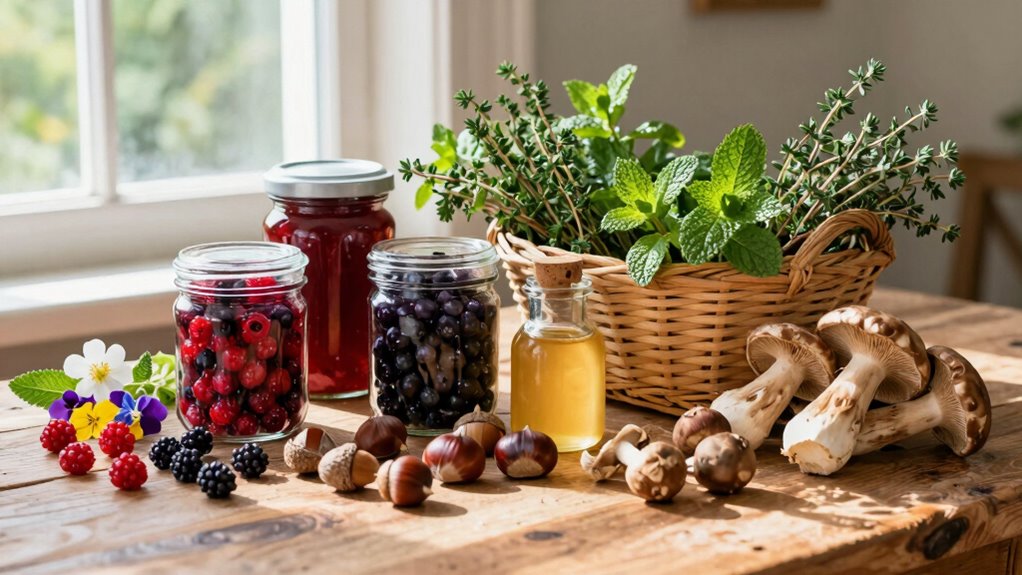
To build a small but useful foraged pantry, start by learning to identify safe, nutrient-rich wild foods like herbs, berries, nuts, and greens through reliable guides or local workshops. Harvest sustainably by taking only what you need and leaving enough for future growth. Preserve your bounty by drying, freezing, or canning to extend its shelf life. Thinly spread your harvest for long-term use and habitat health, and you’ll find that continued learning can help you expand your pantry further.

Get garden gear delivered free with Prime
- Fast, free delivery on millions of items
- Prime Video, Amazon Music and more included
- Member-only deals all year
Key Takeaways
- Identify and harvest versatile, long-lasting wild foods like herbs, berries, nuts, and greens for pantry staples.
- Properly dry, cure, or preserve foraged items using methods like dehydration, freezing, or canning.
- Keep a well-organized storage system to easily access and rotate your foraged supplies.
- Focus on sustainable harvesting to ensure ongoing availability of resources for future foraging.
- Continuously learn and document new foraged foods to expand and diversify your pantry options.
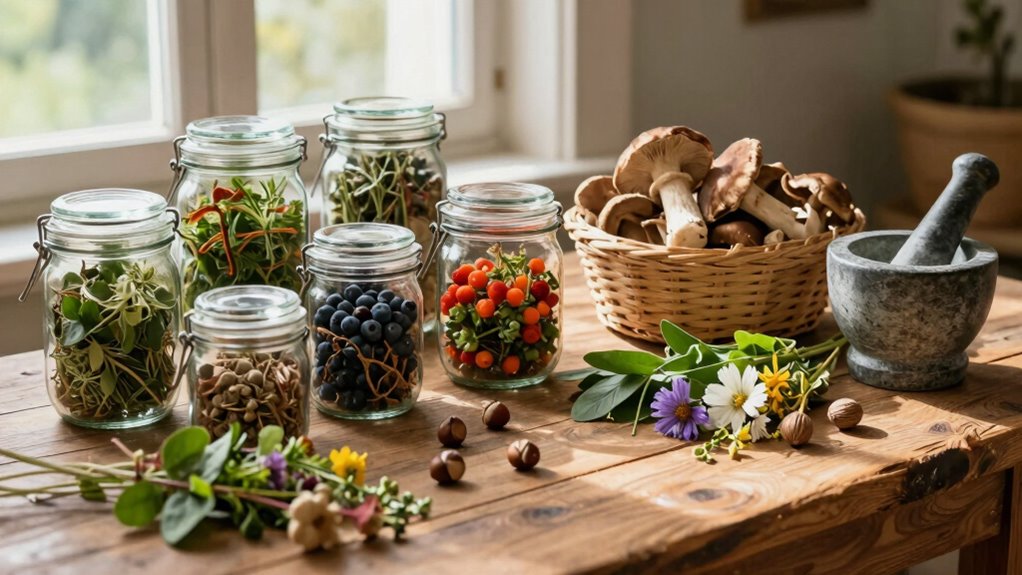
Creating a small but useful foraged pantry allows you to harness nature’s bounty and become more self-sufficient. To do this effectively, you need to master wild edible identification. This skill is essential because it helps you distinguish between edible plants and their toxic look-alikes. Start by learning key features of common foraged foods like wild herbs, berries, nuts, and greens. Use reliable guides, attend workshops, or join foraging groups to build your knowledge. The goal is to recognize plants confidently and avoid any dangerous mistakes. Once you can identify wild edibles accurately, you can harvest with confidence. Silly misidentifications or miscommunication between foragers can sometimes lead to dangerous errors, so thorough education is key.
Sustainable harvesting techniques are equally important. You want to gather what you need without damaging the plant populations or the environment. Always harvest in moderation—take only what you need, and never strip a plant entirely. For example, when picking wild herbs, snip only a few stems, leaving enough for the plant to regenerate. For berries, pick only ripe ones and leave the unripe or damaged fruit on the plant. When collecting nuts or seeds, avoid overharvesting to ensure future growth. Respect the habitat by staying on established trails and avoiding fragile ecosystems. This approach guarantees that your foraging practices remain environmentally friendly and that the plants will continue to thrive for future seasons. Learning about wild edible identification can greatly enhance your foraging success while protecting the environment.
wild edible plant identification guide
As an affiliate, we earn on qualifying purchases.
As an affiliate, we earn on qualifying purchases.
Frequently Asked Questions
How Do I Identify Edible Foraged Plants Safely?
To identify edible foraged plants safely, start with thorough wild plant identification by using reliable guides or apps. Always double-check features like leaf shape, flowers, and growth patterns. Learn to recognize and avoid poisonous plants, noting their distinctive warning signs. When unsure, consult experienced foragers or experts before consuming any plant. Practice caution, and never eat a plant unless you’re absolutely certain it’s safe, prioritizing poison avoidance at all times.
What Are the Best Seasons for Foraging Specific Pantry Items?
Timing is everything when it comes to foraging, so pay close attention to seasonal shifts. Spring awakens wildflower pairings and tender greens, while late summer and fall bring hearty mushrooms and berries. Use your foraging equipment tips to identify peak times and maximize your harvest. Stay alert, and you’ll discover the best seasons to gather each pantry item, ensuring freshness, flavor, and abundance in your foraged pantry year-round.
How Do I Store Foraged Foods to Maximize Shelf Life?
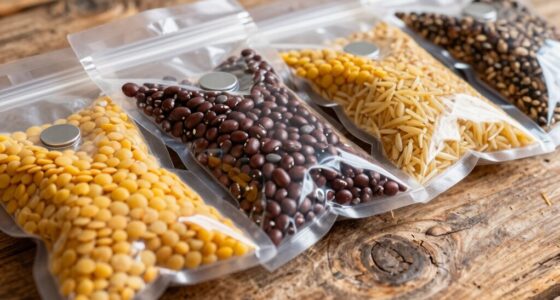
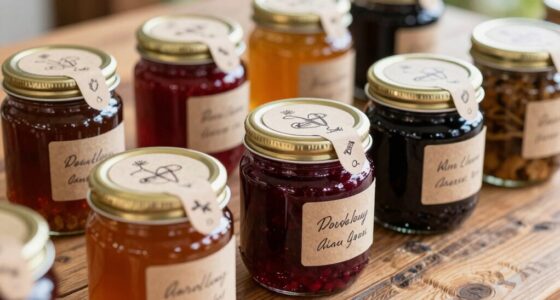
You should use proper preservation techniques like drying, freezing, or pickling to extend your foraged foods’ shelf life. Store them in airtight storage containers, such as glass jars or vacuum-sealed bags, to prevent spoilage and pests. Keep items in cool, dark places, like a pantry or cellar, and label everything clearly. Regularly check your pantry to remove any spoiled items and guarantee your foraged foods stay fresh longer.
Are There Any Legal Restrictions on Foraging in Public Areas?
Yes, there are legal restrictions on foraging in public areas. You need to check local laws and regulations, as some parks, forests, or public lands prohibit collecting plants or fungi without permits. Always respect property boundaries and posted signs. To avoid fines or legal issues, research your area’s rules beforehand and obtain necessary permissions if required. Staying informed guarantees you forage responsibly and legally.
How Can I Ensure Sustainable Foraging Practices?
Imagine your foraging as a dance with nature—tread lightly to keep it thriving. To guarantee sustainable practices, follow wildcrafting ethics by harvesting only what you need, leaving enough for wildlife and future growth. Consider getting foraging certifications to deepen your knowledge and commitment. Always identify plants properly, avoid overharvesting, and respect local regulations. This mindful approach helps protect ecosystems while enriching your pantry sustainably.
Conclusion
Building a small foraged pantry is like planting seeds for independence—you’re creating a resourceful foundation that can nourish you in many situations. With just a few key ingredients gathered from nature, you’ll have a versatile supply that’s both satisfying and sustainable. Remember, the true value isn’t just in the items themselves, but in the confidence and connection you develop with your environment. Keep exploring, and your pantry will continue to grow, like a garden blossoming with each new find.
Halloween Picks
halloween
As an affiliate, we earn on qualifying purchases.